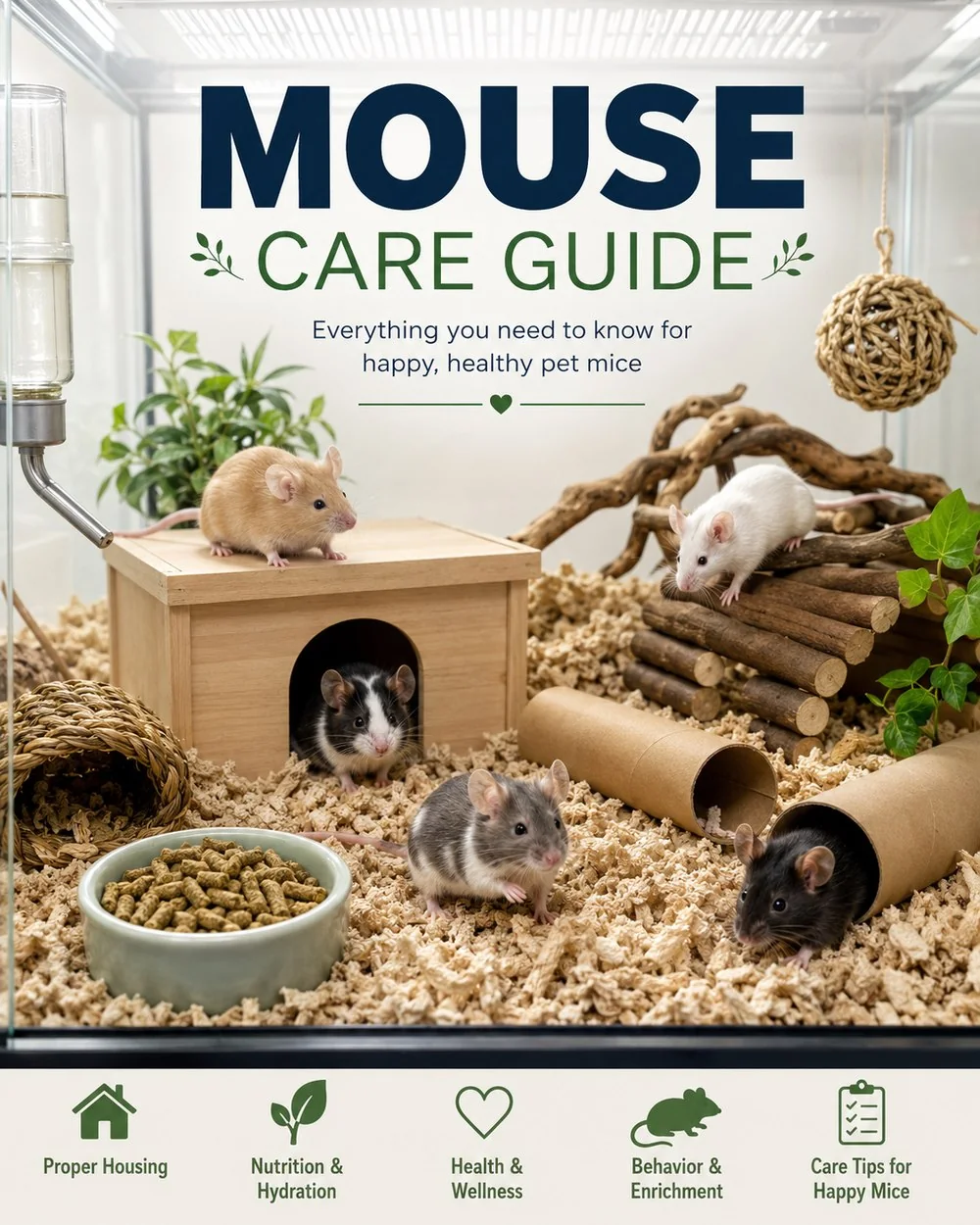
MOUSE CARE GUIDE
A Complete Guide to Health, Nutrition, Housing, Behavior & Lifelong Wellness
Robert L. Linville, DVM
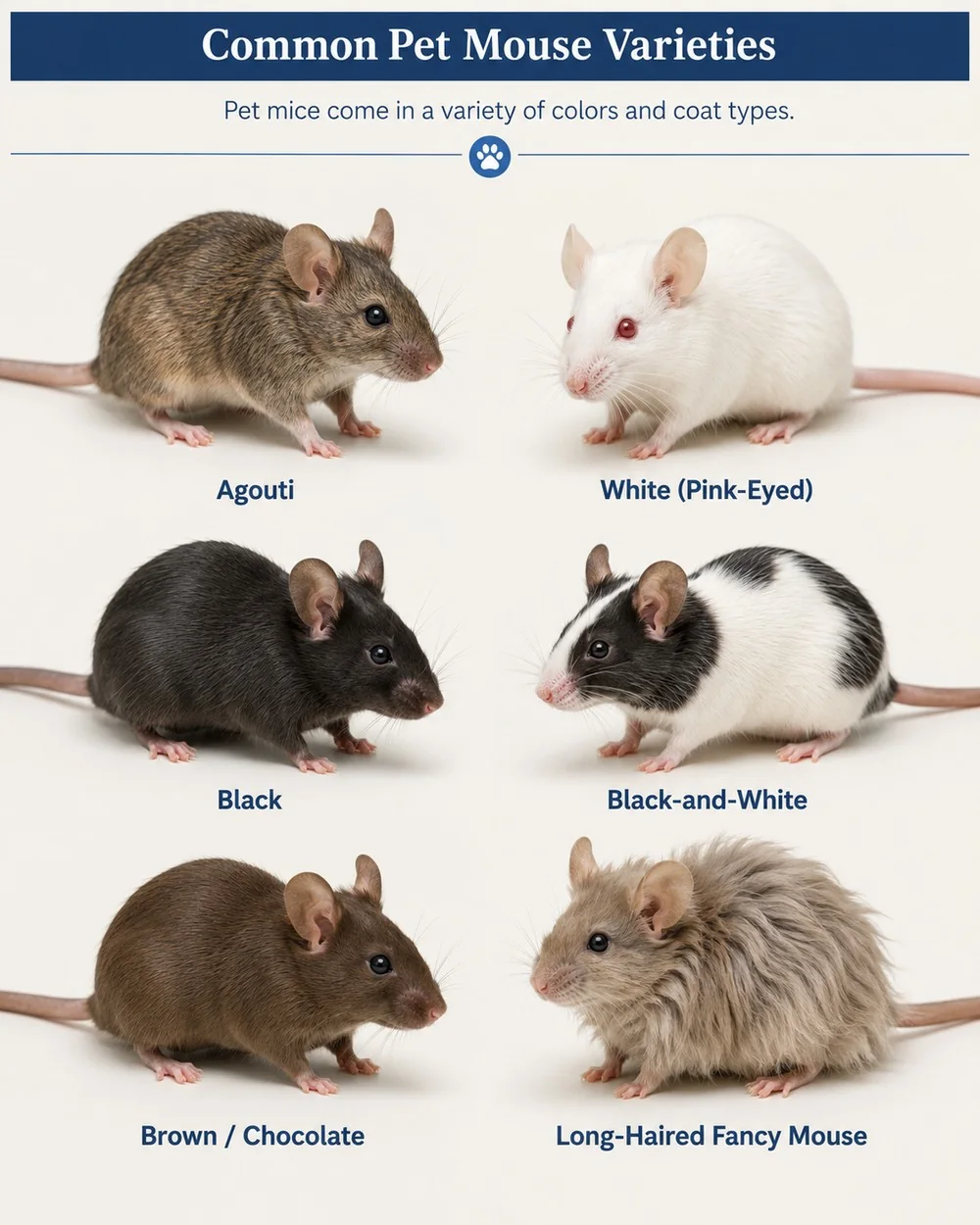
INTRODUCTION & OVERVIEW
Welcome to Life With Pet Mice
Domestic pet mice are forms of the house mouse, Mus musculus. They are small, intelligent, active, social rodents with excellent senses of smell, hearing, and touch. Mice climb, dig, build nests, forage, gnaw, investigate new objects, establish social relationships, and are primarily active during the evening and night.
Because a mouse is small and has a short life span, disease can progress rapidly and subtle changes matter. A healthy-looking mouse may conceal illness until appetite, posture, breathing, coat condition, activity, or body weight changes noticeably. Most pet mice live approximately 18-24 months, although some live longer.
This guide covers:
- Escape-proof housing, ventilation, bedding, nesting, temperature, and sanitation
- Social housing, male aggression, handling, enrichment, wheels, climbing, and foraging
- Balanced pelleted diets, treats, water, obesity prevention, and food monitoring
- Normal physiology, incisors, grooming, coat and skin care, and weekly weight tracking
- Preventive veterinary care, reproduction, aging, tumors, respiratory disease, parasites, and gastrointestinal disease
- Medication precautions, zoonotic disease prevention, and emergency warning signs
Quick Care Snapshot
| Care Need | Recommended Routine | Why It Matters |
|---|---|---|
| Social life | Compatible same-sex companionship is preferred; female groups are usually easiest to maintain. | Mice are social, but adult males can fight severely. |
| Enclosure | Large, secure, escape-proof, well-ventilated habitat with solid footing. | Prevents escape, foot injury, and ammonia accumulation while supporting activity. |
| Bedding & nesting | Deep, dry, low-dust bedding plus abundant safe nesting material. | Supports digging, nest building, temperature regulation, and normal behavior. |
| Diet | Complete mouse/rodent pellet or laboratory-style block as the nutritional foundation. | Reduces selective eating, obesity, and nutrient imbalance. |
| Water | Fresh water available continuously; verify bottle function every day. | Mice can dehydrate rapidly. |
| Exercise | Smooth solid-surface wheel plus climbing, tunneling, gnawing, and foraging opportunities. | Supports normal activity and reduces boredom. |
| Weight | Weigh weekly in grams; more often when ill, elderly, or recovering. | A downward trend may be the first objective sign of disease. |
| Veterinary care | Initial examination after acquisition and at least annual wellness care. | Establishes a baseline and permits early detection of dental, respiratory, skin, and tumor problems. |
KNOW YOUR MOUSE: NORMAL FEATURES & PHYSIOLOGY
1. Size and Life Span
Many adult pet mice weigh approximately 20-40 g, although size varies with sex, genetics, age, body condition, and fancy variety. A stable individual weight trend is usually more useful than comparison with a single “ideal” number.
Typical pet-mouse life span is about 1.5-2.5 years. Age-related disease can therefore appear relatively early compared with dogs and cats.
2. Approximate Normal Physiologic Values
| Parameter | Approximate Reference | Notes |
|---|---|---|
| Body temperature | 98-101°F (36-38°C) | Stress, handling, ambient temperature, and measurement method affect the result. |
| Heart rate | Approximately 450-750 beats/minute | Extremely rapid and strongly influenced by handling and stress. |
| Respiration | Very rapid; often roughly 90-220 breaths/minute in reference data | In a pet mouse, breathing effort and abnormal sounds are usually more useful clinically than attempting an exact count. |
Normal values vary by strain, age, activity, ambient conditions, and handling. Observe breathing before picking the mouse up whenever respiratory disease is a concern.
3. Incisors
Like other rodents, mice have continuously growing incisors. Normal adult incisors are yellow to orange rather than white. The upper and lower incisors should meet appropriately so that normal gnawing and eating maintain their length. Broken teeth, jaw injury, genetic malocclusion, or other disease can lead to overgrowth.
Chew toys help satisfy normal gnawing behavior, but they cannot correct true malocclusion. Never clip overgrown incisors with household nail clippers; veterinary dental equipment is safer and reduces the risk of tooth fracture.
4. Cecotrophy / Coprophagy
It is normal for mice to ingest some of their own fecal material. This contributes to recovery of nutrients produced by intestinal microorganisms and should not be prevented.
5. Activity Pattern
Mice are crepuscular to nocturnal and are usually most active around dusk, during the night, and around dawn. Daytime sleep should be respected. A mouse that is unusually inactive during its normal evening activity period may be showing an early sign of illness.
HOME SETUP & HUSBANDRY
1. Enclosure Size and Design
Choose the largest practical habitat that is secure, well ventilated, and easy to clean. Mice need floor area for running and digging as well as height for safe climbing. Small “starter” cages often provide too little usable space and enrichment.
- Use a solid floor. Wire or grid flooring can injure the feet and legs.
- Wire-sided cages provide excellent ventilation but require very close bar spacing. Merck recommends mesh openings of 1 cm or less; juveniles and very small mice may require still smaller spacing.
- A well-ventilated glass or plastic-based enclosure can be used only if the top provides excellent airflow. Poorly ventilated solid-sided habitats allow humidity and ammonia to accumulate.
- Avoid unfinished wooden cages because urine soaks into wood, making sanitation difficult, increasing odor/ammonia, and encouraging escape by chewing.
- Provide multiple hides, tunnels, climbing structures, and nesting locations, especially for groups.
- Arrange climbing structures so a missed jump does not result in a long fall.
- Protect the cage from cats, dogs, ferrets, snakes, and other predators even when those pets appear calm.
2. Bedding, Digging, and Nesting
Mice are enthusiastic diggers and nest builders. Use a generous depth of absorbent substrate and provide separate soft nesting material.
- Low-dust, unscented paper or cellulose bedding is a conservative first choice.
- Clean aspen may be acceptable when low-dust, but avoid aromatic cedar and strongly scented wood products.
- Plain shredded paper, unscented tissue, and paper strips are useful nesting materials.
- Hay can be offered as additional nesting/foraging material but should be clean and mold-free.
- Avoid fluffy cotton-wool or fibrous nesting products that can entangle toes or limbs or be swallowed.
- Discard damp, moldy, strongly scented, or dusty bedding.
3. Temperature, Humidity, Light, and Location
A stable indoor range of approximately 64-79°F (18-26°C) and relative humidity around 30-70% is appropriate for pet mice. Temperatures above about 86°F (30°C) can cause heat stroke, particularly in crowded or poorly ventilated housing. Very young, elderly, ill, and hairless mice may be more sensitive to temperature extremes.
- Keep the cage out of direct sunlight.
- Avoid heating vents, radiators, strong drafts, garages, sheds, and rooms with large temperature swings.
- Provide a predictable light/dark cycle and dark sheltered sleeping areas.
- Use nesting material so mice can regulate their local sleeping environment.
4. Ventilation, Urine Odor, and Ammonia Control
Mouse urine has a strong odor, particularly in males. Odor should be managed by enclosure size, ventilation, absorbent substrate, and sanitation rather than perfumes. High ammonia concentrations and poor bedding quality can increase susceptibility to respiratory disease.
- Remove wet bedding and spoiled fresh food daily.
- Clean heavily urine-marked solid surfaces as needed.
- Perform a deeper cleaning on a schedule that keeps the enclosure dry and low-odor—often about weekly, depending on cage size and group size.
- When the group is healthy and socially stable, retaining a small amount of clean, dry familiar nesting material can reduce disruption of the group scent.
- Do not preserve contaminated material during treatment for infectious disease, parasites, or when your veterinarian recommends full disinfection.
5. New-Mouse Quarantine
New mice may carry respiratory organisms, mites, pinworms, dermatophytes, or other infectious agents before obvious signs appear. A separate observation period in another room is prudent when the source or health history is uncertain. Do not introduce a mouse with sneezing, chattering, eye/nose discharge, diarrhea, intense scratching, scabs, unexplained hair loss, bite wounds, or weight loss to resident mice before veterinary evaluation.
Prevent contact between pet mice and wild mice. Wild mice can introduce parasites, bacteria, and lymphocytic choriomeningitis virus (LCMV) into the household.
SOCIAL HOUSING, HANDLING & NATURAL BEHAVIOR
1. Mice Are Social—But Sex Matters
Pet mice are social animals and usually benefit from compatible mouse companionship. Social structure must be planned carefully because reproductive behavior and male-male aggression can create serious problems.
- Females: compatible females usually do well in pairs or small groups, including unrelated females introduced appropriately.
- Males: males are much more likely to fight. Littermate males raised together without exposure to females may sometimes remain compatible, but stability cannot be assumed and injuries can be severe.
- Do not casually introduce unfamiliar adult males.
- Do not keep intact males and females together unless intentional breeding is being managed; mice reproduce rapidly.
- Provide multiple hides, food locations, and access points so one mouse cannot trap or exclude another.
- Watch daily for bite wounds, missing fur, persistent chasing, guarding, weight loss, or a mouse that remains isolated from the group.
Changes to an established group can provoke conflict. Add or remove members only with a plan and close observation.
2. Handling and Taming
Mice are fast, light, and capable of sudden jumps. Gentle, predictable handling reduces fear and defensive biting.
- Allow a newly acquired mouse time to settle into its enclosure.
- Offer your hand near floor level and allow the mouse to investigate.
- Scoop the mouse into cupped hands or allow it to enter a small tube or container for transfer.
- Support the body at all times and handle over a table, bed, lap, or other protected surface.
- Children should sit while handling mice and should always be supervised.
Do not routinely lift a pet mouse by the tail. Veterinary personnel may use the base of the tail briefly for specific restraint techniques while supporting the body, but tail lifting is unnecessary for normal owner handling and can cause fear or injury.
3. Enrichment
A good mouse habitat should allow several normal behaviors at the same time rather than relying on one toy.
- Deep substrate for digging and burrowing
- Abundant nesting material
- Cardboard tubes, boxes, multi-exit hides, and tunnels
- Ropes, ladders, branches, suspended objects, and safe climbing structures
- Plain cardboard and safe wood items for gnawing
- Scatter feeding and food hidden in paper packets or forage areas
- Occasional rearrangement of safe enrichment while retaining familiar sleeping resources
- Supervised exploration in an escape-proof play enclosure when appropriate
4. Exercise Wheels
Mice often use running wheels extensively. Choose a wheel with a smooth, solid running surface that cannot trap toes or tails. It should be large enough that the mouse can run comfortably without the back being forced into a sharp curve. Mesh, wire-rung, or scissor-style wheels can cause injury and should be avoided.
5. Barbering and Social Grooming
Barbering occurs when a mouse chews its own hair or the hair/whiskers of a cage mate very close to the skin. The underlying skin is often normal. Barbering may be related to dominance, stress, boredom, genetics, or other behavioral factors and can be mistaken for parasites or fungal disease. Hair loss accompanied by crusts, redness, wounds, or intense itching is less typical of simple barbering and needs veterinary evaluation.
NUTRITION - THE FOUNDATION OF HEALTH
1. Complete Pelleted Diet or Rodent Block
The dietary foundation should be a nutritionally complete commercial food formulated for mice or appropriate laboratory-style rodent blocks. Uniform pellets or blocks prevent the selective eating that occurs with seed-heavy mixtures.
A typical adult mouse eats only a few grams of food each day. Merck cites approximately 3-5 g/day for many adults, but actual intake varies with body size, age, pregnancy, temperature, activity, and diet formulation.
- Choose a product intended as a complete diet rather than a treat mix.
- Seed-heavy diets can promote selective feeding and obesity.
- Store food sealed, cool, dry, and protected from insects and wild rodents.
- Replace stale, damp, contaminated, or moldy food.
2. Vegetables and Treats
Small amounts of fresh vegetables can add variety and enrichment. Treats should remain a small portion of the total diet so that they do not displace the balanced staple food.
| Useful Small Extras | Limit | Avoid |
|---|---|---|
| Small pieces of leafy greens, broccoli, bell pepper, carrot, cucumber, or other familiar mouse-safe vegetables | Fruit, sunflower seeds, cereal pieces, and other calorie-dense treats | Chocolate, caffeine, alcohol, moldy food, highly salted/sugary human snacks, unknown plants |
| Food scattered or hidden for foraging | Fatty seeds and nuts | Onion, garlic, rhubarb, raw dry beans, green potato material, and fruit pits/seeds that may be hazardous |
Introduce new foods gradually. Remove uneaten fresh food before it spoils, including food hidden in nests or food caches.
3. Water
Fresh water must be available continuously. Many adult mice drink approximately 3-5 mL/day, although intake varies substantially with diet, environment, body weight, pregnancy, and health.
- Check sipper bottles every day for blockage, leakage, or a stuck ball valve.
- Clean and refill water equipment regularly.
- In groups, consider more than one water source so equipment failure or social guarding does not leave a mouse without water.
- Heavy shallow bowls can be used in selected situations but become contaminated with bedding easily.
4. Obesity Prevention
Obesity is common in pet rodents and is encouraged by calorie-dense treats, seed mixtures, and insufficient activity. Focus on a complete staple diet, small treats, regular enrichment, and weekly weight trends. Some mouse strains are genetically prone to obesity, so body condition matters as much as the number on the scale.
WEIGHT, BODY CONDITION & DAILY MONITORING
1. Weekly Weighing
Use a digital gram scale. Place the mouse in a small container that has been tared to zero and record the weight at approximately the same time of day each week. In a sick or elderly mouse, your veterinarian may recommend daily weights.
| Finding | What It Means | Action |
|---|---|---|
| Stable trend | Consistent with stable intake and body condition | Continue weekly monitoring. |
| Gradual decline | May precede obvious respiratory, dental, tumor, or gastrointestinal signs | Arrange veterinary evaluation. |
| Rapid loss plus anorexia, diarrhea, or breathing change | Potentially significant acute disease | Seek prompt or same-day care. |
| Progressive gain | Possible overfeeding or reduced activity | Review body condition, diet, treats, and exercise. |
2. Daily Observation
- Normal interest in staple food and favorite treats
- Normal fecal amount and consistency
- Quiet breathing without chattering, sniffling, or discharge
- Bright eyes and normal posture
- Normal coat grooming without excessive scratching
- Normal movement, climbing, and nighttime activity
- No new lumps, bite wounds, swelling, or bleeding
3. Urine and Feces
Changes in urine volume, color, odor, or frequency and changes in fecal quantity or consistency can be important. Diarrhea, marked reduction in fecal production, blood, persistent staining around the rear end, or straining deserves veterinary attention.
GROOMING, SKIN, FEET & DENTAL CARE
1. Grooming
Mice groom themselves and one another frequently and ordinarily do not require bathing. If a mouse becomes soiled, use localized cleaning with a slightly damp cloth rather than immersing the animal. Dry the mouse promptly and keep it warm.
2. Skin and Coat Checks
During routine observation, look for hair loss, scabs, crusts, redness, swelling, wounds, flakes, or excessive scratching. Common possibilities include fur mites, bacterial dermatitis, ringworm, bite wounds, and barbering.
3. Feet and Nails
Inspect the feet for swelling, sores, crusts, or injury. Most mice wear their nails adequately through normal activity. Nails that curl, snag, or contribute to self-trauma may require trimming by someone experienced with very small rodents.
4. Dental Warning Signs
- Drooling or a wet chin
- Dropping food or difficulty holding food
- Weight loss despite interest in food
- Overgrown, broken, displaced, or uneven incisors
- Swelling, bad odor, bleeding, or pus around the mouth
Dental disease requires veterinary evaluation. Oral infections and inability to eat can become serious quickly in such a small patient.
PREVENTIVE VETERINARY CARE
1. Establish Care Early
Locate a veterinarian experienced with mice or exotic companion mammals before an emergency occurs. An examination soon after acquisition can confirm sex, assess the teeth, skin, coat, feet, respiratory tract, body condition, and housing, and establish a baseline weight.
2. Wellness Schedule
| Life Stage | Suggested Veterinary Monitoring |
|---|---|
| Newly acquired | Initial health examination, sex confirmation, husbandry review, and parasite/respiratory assessment. |
| Healthy adult | At least annual examination; earlier evaluation whenever weight or behavior changes. |
| Senior / older adult | Consider examinations about every 6 months because tumors, arthritis, eye disease, and chronic respiratory problems become more common with age. |
| Chronic disease | Recheck interval individualized according to diagnosis, medications, and weight trend. |
3. Vaccines and Parasite Prevention
There are no routine companion-animal vaccines recommended for pet mice. Routine monthly flea, tick, or heartworm prevention is not standard. Parasite treatment should be based on examination or diagnosis. Do not apply dog, cat, or livestock parasite products unless a veterinarian has confirmed the exact product and dose are appropriate for a mouse.
4. Diagnostic Testing
Depending on the problem, an exotics veterinarian may use skin scrapings, tape preparations, hair examination, fecal testing, cytology, bacterial culture, radiographs, ultrasound, or laboratory testing. Because mice are so small, blood sampling and anesthesia require specialized technique and careful attention to patient size.
5. Anesthesia and Surgery
Mice can undergo anesthesia and surgery, but their very small body size creates important challenges: rapid heat loss, limited blood volume, high metabolic rate, and small airways. Experienced monitoring, active warming, appropriate analgesia, and careful recovery support are important.
Mice generally should not undergo routine prolonged fasting before anesthesia. They cannot vomit, and unnecessary fasting can contribute to hypoglycemia and loss of body reserves. Follow the treating veterinarian's specific instructions for the individual procedure.
REPRODUCTIVE HEALTH & LIFE STAGES
1. Sexual Maturity and Sex Separation
Both male and female mice generally reach sexual maturity at approximately 6-8 weeks. Young mice should be accurately sexed well before an unintended mating can occur. Separate intact males and females unless breeding is intentional.
2. Pregnancy and Rapid Reproduction
Gestation is approximately 19-21 days, and litter size commonly ranges from about 5-12 pups. Female mice may return to estrus within about 24 hours after giving birth, so an intact male left with a nursing female can produce another pregnancy almost immediately.
Pups are born hairless, deaf, blind, and dependent on the mother. They begin developing rapidly and are generally weaned at about 3 weeks. A nursing family should have adequate food, water, nesting material, low stress, and protection from unnecessary disturbance.
3. Breeding Risks
Pregnancy and lactation place major metabolic demands on such a small animal. Maternal stress, malnutrition, overcrowding, insufficient water, excessive disturbance, disease, or poor nesting conditions can contribute to pregnancy loss, abandonment, or cannibalism of pups. Casual breeding is not recommended simply because mice reproduce easily.
4. Spaying and Neutering
Elective sterilization is technically possible but less routine in mice than in dogs and cats because of patient size and anesthetic/surgical considerations. Neutering may occasionally be considered for social management or medical reasons, and reproductive surgery may be necessary for disease. Discuss benefits and risks with an exotics veterinarian experienced with mouse anesthesia.
5. Life-Stage Priorities
| Stage | Priorities |
|---|---|
| Juveniles | Accurate sexing, stable social groups, secure bar spacing, complete nutrition, gentle handling, and respiratory/diarrhea monitoring. |
| Healthy adults | Social stability, enrichment, complete diet, weight tracking, ammonia control, and annual exams. |
| Older mice | More frequent weight and mass checks; monitor mobility, eyes, teeth, breathing, and body condition. |
| Pregnant/lactating | Quiet housing, continuous food/water, nesting material, minimal disturbance, and monitoring for weakness, bleeding, or failure to care for pups. |
COMMON HEALTH CONCERNS
1. Respiratory Disease and Mycoplasmosis
Respiratory disorders are among the most important diseases of pet mice. Mycoplasma pulmonis can produce chronic rhinitis, middle-ear disease, and pneumonia. Other bacterial and viral infections can cause similar signs, and mixed infections occur.
- Sneezing or sniffling
- Audible “chattering” or clicking
- Nasal or eye discharge
- Rough coat, hunched posture, or reduced activity
- Weight loss or reduced appetite
- Increased abdominal effort when breathing
- Head tilt when middle-ear involvement occurs
Mycoplasmal infection may be suppressed but not necessarily eliminated. Early veterinary treatment and excellent environmental hygiene are important. Ammonia, crowding, stress, and concurrent infection can worsen respiratory disease.
2. Skin Disease, Mites, and Barbering
Skin and coat disease is common in pet mice. Fur mites may cause intense itching and scabs over the shoulders, neck, and face, especially when infestation becomes heavy or an animal is stressed or ill. Ringworm can cause hair loss, redness, or scaling and can spread to people. Barbering causes neatly clipped hair or missing whiskers but often leaves normal-looking skin.
Do not assume all hair loss is mites. Accurate diagnosis helps distinguish parasites, fungal disease, bacterial infection, bite wounds, and behavioral barbering.
3. Fight Wounds and Abscesses
Male mice are especially prone to fighting. Bite wounds may occur around the face, back, tail, and genital region and can become infected or form abscesses. Tail injuries can impair circulation. Persistent fighting requires separation and reassessment of housing rather than repeated treatment of injuries without correcting the social problem.
4. Diarrhea, Gastrointestinal Disease, and Parasites
True diarrhea in a mouse is abnormal. Young or stressed mice are more susceptible to gastrointestinal infections. Protozoal organisms such as Giardia muris and Spironucleus muris and intestinal pinworms may be present; heavy infections or disease can produce diarrhea, weight loss, lethargy, poor growth, or a rough coat.
Many laboratory-colony pathogens described in mouse disease references are uncommon in individual pet mice. In a pet, the useful approach is to evaluate the patient, diet, source, feces, sanitation, and exposure history rather than assume a specific organism from symptoms alone.
5. Mammary Tumors and Other Masses
Mammary tumors are common in mice and may appear almost anywhere along the underside or sides of the body because mammary tissue is widely distributed. Unlike the common benign mammary fibroadenomas of pet rats, mammary tumors in mice are frequently malignant and may spread to the lungs.
Any new lump should be examined while it is still small. Other masses include abscesses, cysts, skin tumors, and additional neoplasms. Early evaluation offers the best opportunity to determine whether surgery or other care is appropriate.
6. Head Tilt, Circling, and Neurologic Signs
Head tilt may occur with middle- or inner-ear disease, including respiratory-associated otitis, but trauma, neoplasia, and other neurologic disorders are also possible. Circling, inability to balance, seizures, sudden weakness, or paralysis requires prompt examination.
7. Eye Problems
Eye discharge, squinting, cloudiness, swelling, or persistent protrusion can result from trauma, infection, irritation, dental/orbital disease, or other disorders. Retinal degeneration and cataracts may occur in older mice or some genetic lines. Many blind mice adapt well when their enclosure remains familiar and hazards are minimized.
8. Aging and Arthritis
Older mice may develop osteoarthritis, reduced mobility, eye disease, chronic respiratory problems, and tumors. Lower shelves, easy access to food and water, soft dry bedding, stable cage layout, and closer weight monitoring can help maintain quality of life.
9. Ringtail
Ringtail is an uncommon condition in which constricting rings develop around the tail, toes, or feet, particularly in young mice exposed to low humidity, high temperature, or drafts. Severe cases can impair circulation and cause tissue loss. Maintain appropriate temperature and humidity and seek veterinary care for tail swelling, discoloration, constrictions, or tissue injury.
MEDICATION SAFETY
A mouse's small size makes medication errors easy. A tiny volume difference may represent a major dosing error, and medications safe for another rodent species are not automatically appropriate for mice.
- Use only medications specifically prescribed or approved for the individual mouse.
- Confirm the drug concentration and measured volume every time.
- Never estimate a dog, cat, rabbit, hamster, or guinea-pig dose by scaling it down yourself.
- Do not use over-the-counter flea, mite, or lice products without veterinary guidance.
- Report reduced appetite, diarrhea, weakness, swelling, breathing changes, or other unexpected signs after starting a medication.
- Do not stop prescribed antibiotics early unless your veterinarian instructs you to do so.
Respiratory disease in mice can involve organisms that are not eliminated by a single course of medication. Drug selection should be based on the clinical situation rather than treating every sneeze with leftover antibiotics.
Supportive Feeding
A veterinarian may recommend assisted feeding with an appropriate recovery diet when a mouse is not eating adequately. Because mice can become hypoglycemic or dehydrated rapidly, nutritional support may be important, but force-feeding is not a substitute for identifying the cause of anorexia. Obtain veterinary guidance if the mouse is severely weak, unable to swallow normally, or has marked abdominal distension.
ZOONOTIC & HOUSEHOLD SAFETY
1. Basic Hygiene
Pet mice and their cages can occasionally carry organisms capable of causing human illness even when the animals appear healthy. Wash hands with soap and water after handling mice, bedding, feces, urine, food dishes, or cage equipment.
- Keep cages and mouse supplies out of kitchens and food-preparation areas.
- Do not kiss mice or hold them close to the mouth or face.
- Supervise children and assist with handwashing.
- Prevent contact between pet mice and wild rodents or wild-rodent droppings.
- Seek medical advice after a significant bite or scratch if redness, swelling, fever, rash, or illness develops.
2. Lymphocytic Choriomeningitis Virus (LCMV)
The common house mouse is the natural reservoir for LCMV. Pet mice can become infected through breeding-colony, pet-store, or household exposure to infected wild mice. People may be exposed through fresh urine, droppings, saliva, blood, or contaminated nesting material.
3. Ringworm, Salmonella, and Other Infections
Dermatophytes (ringworm) can spread from mice to people. Salmonella infection associated with pet rodents is uncommon but documented. Rodent-associated bacteria can also infect people after bites or scratches. Good hand hygiene, preventing wild-rodent exposure, obtaining animals from reputable sources, and veterinary evaluation of sick mice reduce risk.
WHEN TO CALL THE VETERINARIAN
Medical Emergencies - Seek Care Immediately
- Open-mouth breathing, severe respiratory distress, or blue/gray mucous membranes
- Collapse, inability to stand, profound weakness, or unresponsiveness
- Seizure, severe head tilt with inability to remain upright, or sudden paralysis
- Severe bleeding, major bite wounds, or significant trauma
- Marked abdominal distension with pain or inability to eat
- Heat-stroke signs: severe weakness, loss of coordination, open-mouth breathing, or collapse
- Straining without passing urine or evidence of urinary obstruction
- Pregnant female with heavy bleeding, prolonged straining, collapse, or severe weakness
Prompt Visit - Do Not Delay
- Persistent sneezing, chattering, nasal discharge, eye discharge, or increased breathing effort
- Reduced appetite or refusal of favorite food
- Any sustained downward weight trend
- Diarrhea, persistent soft stool, dehydration, or a dirty rear end
- New lump, swelling, abscess, or rapidly enlarging mass
- Hair loss with scabs, redness, wounds, or intense itching
- Drooling, overgrown incisors, dropping food, or difficulty chewing
- Limping, foot sores, tail injury, or reduced mobility
- Head tilt, circling, repeated falling, or unusual neurologic behavior
- Marked change in normal nighttime activity or persistent hunched posture
TRAVEL, BOARDING & EMERGENCY PREPAREDNESS
1. Transport Carrier
- Use a secure, chew-resistant, well-ventilated small-animal carrier with openings too small for escape.
- Provide familiar clean bedding and nesting material.
- For longer trips, provide appropriate food and a safe water strategy.
- Protect from direct sun, drafts, and temperature extremes.
- Avoid cardboard-only carriers because mice can chew through them rapidly.
2. Boarding or Pet-Sitter Instructions
Leave written instructions covering food, water checks, cage cleaning, each mouse's normal weight, social group, medications, veterinary contact information, and signs that require prompt care. The caregiver should verify that every individual in a group is active and eating rather than assuming that food disappearance means all mice are well.
3. Emergency Kit
- Secure small-animal carrier
- Digital gram scale
- Clean familiar bedding and nesting material
- Small supply of usual complete diet
- Medication list and recent medical history
- Veterinary and emergency contact numbers
- Veterinarian-recommended recovery food and small feeding syringes if you have been instructed in their use
OWNER CHECKLIST
Daily
- Fresh water available and dispenser functioning
- Complete staple food available
- Remove spoiled fresh food and wet bedding
- Observe breathing, eyes, coat, posture, movement, and feces
- Confirm every mouse in a group is eating and behaving normally
- Check social interactions for aggression or injuries
Weekly
- Weigh each mouse in grams and record the result
- Inspect skin, coat, feet, teeth, tail, and body condition
- Inspect wheel, hides, ropes, and enrichment for damage
- Perform deeper cage cleaning as needed while controlling odor and ammonia
- Check food caches for spoiled fresh food
Periodically
- Review cage security and bar/mesh condition
- Replace worn or unsafe enrichment
- Review food freshness and storage
- Reassess group compatibility and resource distribution
- Review emergency veterinary contact information
At Least Annually
- Wellness examination with a mouse-experienced veterinarian
- Weight, body-condition, respiratory, dental, skin, and mass assessment
- Review diet, housing, social group, enrichment, and age-related concerns
SELECTED REFERENCES & TRUSTED RESOURCES
- Merck Veterinary Manual - Mice and Rats as Pets (professional reference; revised May 2026)
- Merck Veterinary Manual - Providing a Home for Mice
- Merck Veterinary Manual - Routine Health Care of Mice
- Merck Veterinary Manual - Diseases and Disorders of Mice
- Merck Veterinary Manual - Breeding and Reproduction of Mice
- Merck Veterinary Manual - Biological Data of Pet Rodents
- RSPCA - Creating a Good Home for Mice
- RSPCA - Keeping Mice Together
- RSPCA - Mouse Behaviour and Enrichment
- CDC - Small Mammals: Healthy Pets, Healthy People
- CDC - Lymphocytic Choriomeningitis (LCMV)
- Quesenberry KE, Orcutt CJ, Mans C, Carpenter JW, editors. Ferrets, Rabbits, and Rodents: Clinical Medicine and Surgery. 4th ed. Elsevier; 2021.
Questions or concerns?
Advanced Veterinary Medical Center
3550 San Pablo Dam Road, Suite E - Sobrante Plaza
El Sobrante, CA 94803
(510) 222-7387
AVMCVET2021@gmail.com