Small Mammal Care Guide
Chinchilla Care Guide
Robert L. Linville, DVM
Practical owner guidance for housing, nutrition, dust bathing, dental health, handling, preventive care, and recognizing illness in pet chinchillas.
INTRODUCTION & OVERVIEW
Welcome to Life With a Chinchilla
Chinchillas are intelligent, active rodents adapted to a cool, dry environment and a naturally high-fiber diet. Their exceptionally dense fur, continuously growing teeth, sensitive gastrointestinal tract, and tendency to hide illness create several species-specific care needs. With appropriate husbandry and veterinary care, pet chinchillas commonly live 10-15 years, and some live longer.
This guide is designed as an owner-friendly reference for juvenile, adult, senior, breeding, and medically managed chinchillas. Individual recommendations may differ according to age, body condition, housing, behavior, reproductive status, and medical findings.
Inside, you will find practical guidance on:
- Cool-temperature housing, cage design, bedding, and cleaning
- Handling, companionship, exercise, enrichment, and fur-slip prevention
- Unlimited grass hay, measured pellets, treats, greens, and fresh water
- Dust bathing, coat care, nail care, foot care, and male fur-ring monitoring
- Dental health and prevention of tooth overgrowth
- Preventive veterinary care and age-related monitoring
- Common illnesses, medication cautions, and emergency warning signs
Quick Care Snapshot
| Care Need | Recommended Routine | Why It Matters |
|---|---|---|
| Grass hay | Unlimited, 24 hours/day | Supports gut motility and the prolonged chewing needed for dental wear. |
| Chinchilla pellets | Small measured daily portion, commonly about 1-2 tablespoons for many adults | Provides balanced micronutrients without replacing hay. |
| Fresh water | Available at all times; check and refresh daily | Dehydration worsens gastrointestinal and urinary disease. |
| Dust bath | Brief, supervised access several times weekly to daily depending on humidity and coat condition | Maintains the dense coat and removes excess skin oils. |
| Temperature | Keep the room cool and dry; approximately 55-70 F (13-21 C) is a practical household target | Chinchillas are highly susceptible to heat stress and heat stroke. |
| Weight | Weigh at least weekly; more often when ill or senior | Weight loss may precede obvious signs of dental or systemic disease. |
| Chewing material | Safe untreated wood and other chinchilla-safe chew items available routinely | Supports normal behavior and complements the dental benefit of hay. |
| Veterinary examination | At least annually; often every 6 months for seniors or chronic disease | Dental, weight, foot, reproductive, and systemic problems may be subtle early. |
HOME SETUP & HUSBANDRY
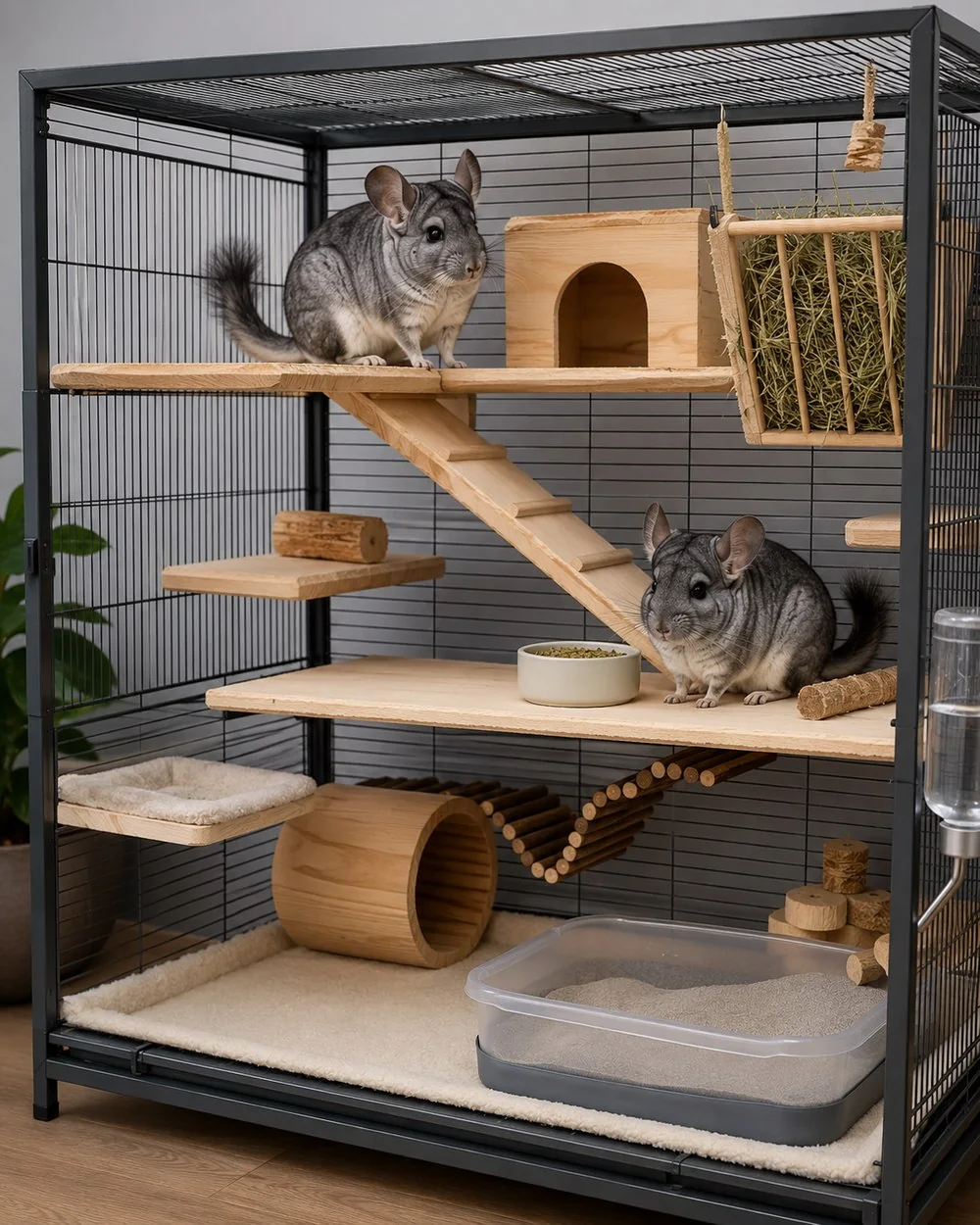
A chinchilla enclosure should provide vertical space, secure footing, multiple resting levels, good ventilation, protection from heat, and safe opportunities to jump and chew.
1. Enclosure Size and Layout
- Choose the largest practical enclosure with multiple levels or ledges. Chinchillas are active jumpers and benefit from vertical space.
- Provide solid resting surfaces even when part of the cage is constructed from wire mesh.
- If wire flooring is used, mesh openings must be small enough that feet and legs cannot become trapped. Wide mesh can cause serious limb injuries.
- Provide sturdy shelves, hides, tunnels, and safe resting boxes. Arrange high areas so a missed jump does not result in a long fall.
- Avoid plastic-coated wire, plastic shelves, plastic huts, and other easily chewed plastic items that can be swallowed.
- Avoid glass aquariums and poorly ventilated solid-sided containers.
- Keep electrical cords, houseplants, foam, carpet fibers, painted wood, and other chew hazards out of reach.
2. Bedding and Cleaning
| Bedding Type | Use | Notes |
|---|---|---|
| Paper-based bedding | Good general option | Choose unscented, low-dust material and replace wet areas promptly. |
| Kiln-dried aspen or suitable kiln-dried wood bedding | Acceptable when low-dust | Avoid aromatic cedar and dusty sawdust. |
| Fleece over absorbent layers | Reusable option | Requires frequent laundering and spot-cleaning so the surface remains dry. |
| Avoid | Clumping litter, scented bedding, dusty litter, moldy material | These may irritate the respiratory tract or cause ingestion and skin problems. |
Remove soiled bedding and uneaten fresh foods daily. Wash food bowls and water equipment regularly. Perform a more complete enclosure cleaning often enough to prevent urine odor, moisture, and accumulation of dust or fecal material.
3. Temperature, Humidity, and Ventilation
Chinchillas originated in the cool, dry Andes and are exceptionally heat-sensitive. A practical household target is roughly 55-70 F (13-21 C) with low to moderate humidity. Temperatures approaching 80 F (27 C), particularly with high humidity, can be dangerous. Direct sunlight, unventilated rooms, hot vehicles, and failed air conditioning can rapidly become life-threatening.
- Use air conditioning when weather conditions could raise the room temperature into an unsafe range.
- Keep the cage away from direct sun, fireplaces, radiators, heat vents, and hot appliances.
- Provide ventilation without placing the cage in a strong cold draft.
- Do not rely on a fan alone to make a hot room safe; fans move air but do not reliably reduce dangerous ambient temperature.
4. New-Pet Quarantine
When adding a new chinchilla to a household, a separate-room quarantine of approximately 2-3 weeks is a reasonable precaution, particularly when the animal comes from a pet store, breeder, rescue, or unknown medical background. Wash hands between groups and obtain veterinary evaluation for diarrhea, weight loss, eye or nasal discharge, sneezing, hair loss, skin lesions, or reduced appetite.
COMPANIONSHIP, HANDLING & ENRICHMENT
1. Social Needs
Chinchillas are social animals, but compatibility varies. Many live successfully in same-sex pairs or carefully managed groups, while some adults prefer living alone with consistent human interaction. Bonding should be gradual and supervised.
- Do not house intact males and females together unless breeding is intentional.
- Provide more than one food location, water source, hide, and favored resting area when competition occurs.
- Watch for persistent chasing, fur pulling, bite wounds, guarding of resources, or one animal being prevented from eating.
- Separate for serious fighting. Use a towel or barrier rather than placing bare hands between fighting chinchillas.
2. Handling and Fur Slip
Approach calmly and avoid chasing. Chinchillas may release a patch of fur when frightened or grabbed roughly. This defensive response, called fur slip, can leave a temporary bald patch and may take months to regrow.
- Allow the chinchilla to approach your hands when possible.
- Support the chest and body with both hands.
- Hold the chinchilla close to your body while supporting the hindquarters.
- An experienced handler may steady a chinchilla at the base of the tail while fully supporting the body; never lift by the tail tip or fur.
- Children should handle chinchillas while seated on the floor and with adult supervision.
3. Enrichment and Exercise
- Provide supervised exercise in a chinchilla-proofed room or secure play enclosure.
- Offer untreated wood chews, safe branches from confirmed non-toxic species, cardboard tubes, tunnels, and hiding boxes.
- Rotate enrichment while keeping familiar resting areas available.
- Provide shelves and jumping opportunities with safe landing surfaces.
- If a wheel is used, choose a very large, solid-surface wheel specifically designed for chinchillas; small rodent wheels can force an unnatural spinal posture.
- Do not use exercise balls. They can overheat the animal, limit ventilation, and create injury risk.
4. Activity Pattern and Normal Behavior
| Behavior | What It Often Means |
|---|---|
| Evening/night activity | Normal crepuscular-to-nocturnal activity pattern; many chinchillas sleep for long periods during the day. |
| Wall surfing / rapid jumping | Excitement and exercise when performed safely in a familiar area. |
| Barking or alarm calls | Startle, concern, communication, or response to an unfamiliar sound. |
| Teeth chattering | May signal irritation, warning, or social tension. |
| Fur chewing | Can reflect stress, social conflict, boredom, or medical problems and deserves investigation if persistent. |
NUTRITION - THE FOUNDATION OF HEALTH
Chinchillas are hindgut-fermenting herbivores with a high requirement for dietary fiber. Their gastrointestinal tract and continuously growing teeth are adapted to prolonged chewing of fibrous plant material. The safest long-term diet is simple and hay-centered.
1. Grass Hay: Unlimited, Every Day
Offer unlimited fresh grass hay at all times. Timothy, orchard grass, meadow hay, and other high-quality grass hays are suitable for most adults. Hay should be fragrant, dry, and free of mold and excessive dust.
Alfalfa is richer in protein and calcium and is generally not needed as the main hay for a typical healthy adult. It may be appropriate for selected growing, pregnant, lactating, or underweight chinchillas under veterinary guidance.
2. Chinchilla Pellets
- Choose a plain, uniform pellet specifically formulated for chinchillas.
- Avoid colorful mixes containing seeds, nuts, corn, dried fruit, or sweetened pieces.
- For many healthy adults, about 1-2 tablespoons per day is a reasonable starting point, adjusted for body condition, product formulation, age, and veterinary recommendations.
- Pellets are a supplement to hay, not the main source of calories or chewing activity.
- Store pellets sealed, cool, and dry, and discard food that smells stale, damp, or moldy.
3. Greens, Vegetables, and Treats
Chinchillas are more sensitive to rich foods and sudden diet changes than many other small herbivores. Fresh greens are optional rather than essential when a balanced hay-and-pellet diet is used. If offered, introduce one item at a time in very small amounts and monitor stool quality.
| Generally Safer Choices in Small Amounts | Limit | Avoid |
|---|---|---|
| Small portions of romaine, green leaf lettuce, selected herb leaves, or other veterinarian-approved greens | Fresh fruit, carrot, and other sugary foods should be rare treats | Dried fruit, raisins, nuts, seeds, corn, cereal, granola, yogurt drops, chocolate, dairy, meat, high-sugar treats |
| Small pieces of plain dried herbs or hay-based treats | Any new food—introduce slowly and one at a time | Onion, garlic, avocado, rhubarb, unknown plants, moldy foods, and chemically treated yard plants |
If a new food causes soft stool, gas, reduced appetite, or fewer fecal pellets, discontinue it and contact a veterinarian if signs persist.
4. Water
Fresh water must be available at all times. A sipper bottle is commonly used because it stays cleaner than an open bowl, but the bottle must be checked every day for leaks, blockage, or a stuck valve. Some chinchillas with dental disease may drink more comfortably from a heavy bowl. In pairs or groups, more than one water source may reduce competition.
5. Foods and Supplements to Avoid
- Seed-and-nut mixes, dried fruit mixes, and sugary commercial treats
- Large quantities of fruit or starchy vegetables
- Human snack foods and bread/cereal products
- Routine vitamin or mineral supplementation unless specifically recommended
- Sudden major diet changes
- Unverified herbal remedies, essential oils, or supplements
WEIGHT, BODY CONDITION & DAILY MONITORING
Chinchillas can remain active and continue eating despite significant dental or systemic disease. Objective weight monitoring is therefore particularly valuable.
1. Weekly Weighing
Use a digital gram scale and weigh at approximately the same time of day each week. Record the result. During illness, recovery, or advanced age, daily or several-times-weekly weights may be recommended.
| Finding | What to Do |
|---|---|
| Stable weight and normal appetite/activity | Continue routine monitoring. |
| Gradual downward trend | Schedule a veterinary examination, with special attention to the teeth and gastrointestinal tract. |
| Rapid loss plus reduced appetite or fecal output | Seek prompt veterinary care. |
| Weight gain with reduced activity | Review pellet and treat intake, exercise, and body condition with your veterinarian. |
2. Daily Six-Point Check
- Eating hay normally
- Producing normal number and size of fecal pellets
- Bright, responsive behavior during usual active periods
- Quiet breathing with no nasal or eye discharge
- Dry chin and chest without drooling
- Normal urine production and no straining
3. Cecotrophy
Chinchillas produce nutrient-rich cecal material that is normally consumed directly from the anus. This is normal and essential. Persistent soft feces, diarrhea, a marked decrease in fecal output, or fecal material stuck around the rear end is abnormal.
GROOMING, DUST BATHING & HYGIENE
1. Dust Baths
Dust bathing is a normal, important grooming behavior. Use only a commercially prepared fine dust intended for chinchillas. Place the dust in a stable container that allows rolling, and remove the bath after use so it does not become a litter box.
- Offer a brief bath—commonly about 5-15 minutes—several times per week; some chinchillas benefit from daily access in humid conditions.
- Replace dust when it becomes soiled, damp, or contaminated.
- Excessive dust bathing can dry or irritate the skin; very humid conditions may require more frequent bathing.
- Do not leave the bath in the enclosure continuously.
2. Water Bathing
Routine water bathing is not appropriate. Chinchilla fur is extremely dense and dries slowly, increasing the risk of chilling, matting, and skin problems. If the coat becomes contaminated with a substance that cannot be removed safely by dust bathing or brushing, contact a veterinarian for guidance.
3. Coat and Skin Care
Check the coat regularly for mats, broken hair, bald patches, crusts, redness, wounds, or circular areas of hair loss. Ringworm is one of the more common infectious skin diseases reported in pet chinchillas and can be contagious to people.
Sudden clean-edged patches of missing fur after restraint or a fright are often due to fur slip. Avoid pulling loose fur aggressively; the coat generally regrows over several months.
4. Nail and Foot Care
Chinchilla nails are usually kept relatively short by normal activity but should still be inspected. Check the soles of the feet for redness, swelling, sores, or thickened calluses. Persistently damp bedding, abrasive wire, obesity, and reduced mobility can contribute to foot disease.
5. Male Fur Rings
Male chinchillas can develop a fur ring, in which hair wraps around the penis beneath the prepuce. This can cause swelling, paraphimosis, pain, and—if severe—urinary obstruction. Breeding males are at greatest risk, but the condition can occur in non-breeding males.
- Have the genital area examined at routine veterinary visits.
- For pet males, periodic home inspection—about every few months—is reasonable once a veterinarian has demonstrated the technique.
- Seek prompt veterinary care for a protruding penis that will not retract, persistent licking, swelling, discoloration, straining, or reduced urine production.
- Do not force the penis out or attempt aggressive removal of a tight ring without proper instruction.
DENTAL HEALTH
Chinchillas have continuously growing incisors and cheek teeth. Dental disease is one of the most important chronic health problems in the species. Abnormal crown wear and elongation of the tooth roots can cause severe pain even when the visible incisors appear normal.
1. Signs of Dental Disease
- Drooling or wet fur under the mouth and on the chest
- Eating pellets or treats but avoiding hay
- Dropping food or chewing slowly
- Weight loss despite apparent interest in food
- Smaller or fewer fecal pellets
- Eye discharge caused by elongated tooth roots affecting the tear duct
- Jaw swelling or a firm facial lump
- Pawing at the mouth or difficulty closing the mouth
A complete oral examination often requires sedation or anesthesia because the cheek teeth cannot be fully evaluated in an awake chinchilla. Skull radiographs or CT may be recommended when tooth-root disease, abscessation, or chronic dental disease is suspected.
2. Prevention
- Unlimited long-strand grass hay as the foundation of the diet
- Measured pellets rather than a pellet-dominant diet
- Safe chew items for normal gnawing behavior
- Weekly weight monitoring
- Prompt evaluation of drooling, selective eating, eye discharge, or weight loss
Do not clip overgrown teeth with nail clippers. Dental correction should be performed by an experienced veterinarian using appropriate dental equipment.
PREVENTIVE VETERINARY CARE
1. Choosing a Veterinarian
Establish care with a veterinarian who routinely treats chinchillas or other exotic companion mammals before an emergency develops. A baseline examination helps confirm sex, body condition, dental status, foot health, and appropriate husbandry.
2. Wellness Schedule
| Life Stage | Suggested Veterinary Monitoring |
|---|---|
| Newly acquired | Initial examination; confirm sex; review diet, cage, coat, skin, teeth, feet, weight, and fecal/parasite history. |
| Healthy adult | At least annual examination with weight and dental assessment. |
| Senior (often 8+ years) | Consider examinations every 6 months, especially when weight, dental status, mobility, kidney function, or appetite begins to change. |
| Chronic dental or systemic disease | Recheck interval individualized by the veterinarian; frequent home weights are often valuable. |
3. Vaccines and Parasite Prevention
Pet chinchillas do not require routine vaccinations. Routine monthly flea, tick, or heartworm prevention is not standard. Parasite treatment should be based on examination, exposure history, and veterinary diagnosis. Never apply dog or cat parasite products unless a veterinarian has confirmed the exact product and dose are appropriate for chinchillas.
4. Diagnostic Screening
Depending on age and findings, diagnostics may include fecal examination, blood work, urinalysis, radiographs, dental imaging, ultrasound, or CT. Imaging is particularly useful for chronic dental disease, suspected urinary stones, respiratory disease, gastrointestinal disease, trauma, and reproductive problems.
5. Anesthesia and Surgery
Chinchillas can undergo anesthesia safely when managed by an experienced team using appropriate monitoring, warming, pain control, and recovery support. Chinchillas cannot vomit and generally should not undergo prolonged fasting before routine anesthesia. Follow the treating veterinarian's specific feeding instructions.
REPRODUCTIVE HEALTH & LIFE STAGES
1. Sexing and Reproductive Maturity
Male and female chinchillas should be accurately sexed before pairing. Chinchillas reach reproductive maturity later than guinea pigs; commonly cited values are approximately 7-9 months for males and 4-6 months for females, although individual variation occurs. Unintended opposite-sex housing should still be avoided.
2. Pregnancy and Kits
Chinchilla gestation is long—about 111 days. Litters are usually small, often around two kits. Kits are precocial: they are born fully furred, with open eyes, and begin sampling solid food early while continuing to nurse.
- Pregnant females require a stable, cool, low-stress environment.
- Provide a solid floor or safe solid nesting/resting area around delivery.
- Do not handle a heavily pregnant female unnecessarily.
- Separate breeding animals appropriately to prevent immediate remating when that is not intended.
3. Spaying and Neutering
Routine elective sterilization is less common in chinchillas than in dogs and cats. Neutering may be considered for compatible opposite-sex housing or for a medical indication. Spaying is more invasive and is generally reserved for specific reproductive disease or selected circumstances. Discuss risks, benefits, surgeon experience, and postoperative care with an exotics veterinarian.
4. Age-Pertinent Care
| Stage | Priorities |
|---|---|
| Juvenile | Correct sexing, safe socialization, growth-appropriate nutrition, secure cage spacing, gentle handling, and prevention of falls. |
| Healthy adult | Unlimited hay, measured pellets, cool housing, dust bathing, exercise, weekly weights, and annual exams. |
| Senior | Closer weight monitoring, dental evaluation, mobility assessment, foot care, kidney/urinary monitoring, and more frequent examinations. |
| Pregnant/lactating | Stable nutrition, minimal stress, safe flooring, close appetite and weight monitoring, and rapid response to labor problems. |
COMMON HEALTH CONCERNS
1. Reduced Appetite and Gastrointestinal Stasis
A chinchilla that stops eating is not a “wait and see” patient. Dental pain, inappropriate diet, stress, infection, urinary disease, medication reactions, obstruction, or other illness can reduce food intake. As fiber intake falls, gastrointestinal motility slows and the condition can become progressively more dangerous.
2. Dental Disease
Dental disease is common and may involve both cheek-tooth crowns and tooth roots. Drooling, selective eating, eye discharge, jaw swelling, smaller feces, or weight loss are important warning signs. See Dental Health for signs, prevention, oral examination, and imaging considerations.
3. Heat Stress and Heat Stroke
Heat-related illness is one of the most preventable chinchilla emergencies. Warm, humid conditions can cause rapid deterioration. See Temperature, Humidity, and Ventilation for prevention and immediate response, and When to Call the Veterinarian for emergency signs.
4. Respiratory Disease
Persistent sneezing, nasal or eye discharge, noisy breathing, increased respiratory effort, or reduced appetite can indicate respiratory disease. Dusty bedding, poor ventilation, dental root disease, or infection may contribute. Open-mouth breathing is an emergency.
5. Skin and Fur Problems
Ringworm, fur chewing, barbering, traumatic fur slip, and other skin disorders can cause hair loss or coat changes. Circular hair loss, crusting, redness, wounds, or persistent itching warrant veterinary evaluation; ringworm is potentially zoonotic. Routine coat and dust-bath care is covered under Grooming, Dust Bathing & Hygiene.
6. Foot and Limb Problems
Chinchillas can develop foot sores or traumatic limb injuries from inappropriate flooring, trapped feet, poor landings, or falls. Limping, swelling, reluctance to jump, an abnormal limb position, or painful/red footpads warrants prompt examination.
7. Urinary Disease
Bladder stones and other urinary disorders occur occasionally. Signs include straining, frequent small urinations, blood in the urine, a wet rear end, pain, or decreased appetite. Inability to urinate is an emergency.
8. Male Fur Ring / Paraphimosis
A constricting fur ring can cause penile swelling, paraphimosis, pain, impaired circulation, and urinary difficulty. Routine inspection and safe handling are described under Male Fur Rings; a protruding, swollen, discolored, or painful penis, especially with reduced urination, requires prompt veterinary care.
9. Diarrhea and Giardia
True watery diarrhea is abnormal and potentially serious. Diet changes, bacterial dysbiosis, and parasites—including Giardia—may be involved. Giardia has potential zoonotic significance, so good hand hygiene is important when diarrhea is present.
MEDICATION SAFETY
Chinchillas have a sensitive gastrointestinal microbial population. Medications that are routinely used in dogs, cats, or people may be unsafe for chinchillas.
1. Antibiotics Require Veterinary Selection
Never administer leftover antibiotics or over-the-counter antibiotics without veterinary direction. Penicillins, amoxicillin, erythromycin, clindamycin, and several related drugs can cause severe or fatal gastrointestinal dysbiosis in chinchillas.
- Give only the exact drug, concentration, dose, route, and duration prescribed.
- Report reduced appetite, diarrhea, bloating, lethargy, or reduced fecal output after starting any medication.
- Do not assume that a medication safe for a dog, cat, rabbit, or guinea pig is automatically safe for a chinchilla.
- Avoid human pain relievers unless specifically prescribed and dosed by a veterinarian.
2. Supportive Feeding
A veterinarian may recommend syringe feeding of a high-fiber herbivore recovery formula when a chinchilla is not eating enough. Assisted feeding supports the patient but does not replace diagnosis of the underlying problem. If the abdomen is markedly distended, swallowing is impaired, or obstruction is suspected, obtain veterinary guidance before force-feeding.
WHEN TO CALL THE VETERINARIAN
Medical Emergencies - Seek Care Immediately
- Open-mouth breathing, severe respiratory distress, or collapse
- Heat-stroke signs: panting, drooling, weakness, staggering, seizure, or collapse
- Inability to urinate or severe repeated straining
- Severe abdominal distension with anorexia or pain
- Choking, severe retching-like movements, or sudden inability to breathe
- Major trauma, uncontrolled bleeding, or suspected limb/spinal fracture
- Seizure, profound weakness, or unresponsiveness
- Protruding/swollen penis with suspected constricting fur ring and inability to urinate
- Pregnant female with prolonged straining, heavy bleeding, collapse, or stalled labor
Prompt Visit - Do Not Delay
- Reduced appetite or reduced hay intake
- Fewer or smaller fecal pellets
- Any consistent downward weight trend
- Drooling, wet chin, selective eating, or jaw swelling
- Persistent eye or nasal discharge
- Persistent sneezing or noisy breathing
- Hair loss, crusting, skin lesions, or persistent fur chewing
- Limping, swollen feet, or reduced willingness to jump
- Blood in urine, urinary discomfort, or repeated small urinations
- Persistent soft stool or diarrhea
TRAVEL, BOARDING & EMERGENCY PREPAREDNESS
1. Transport Carrier
- Use a secure, chew-resistant, well-ventilated carrier with solid footing.
- Provide hay for longer trips and maintain access to water as appropriate.
- Keep the carrier out of direct sun and never leave a chinchilla in a parked vehicle.
- Climate control during transport is essential; vehicle overheating can become fatal quickly.
2. Boarding or Pet-Sitter Instructions
Chinchillas often do better with an experienced pet sitter than with unnecessary travel. Leave written instructions covering hay, pellet amount, water checks, dust bathing, cage cleaning, normal weight, room-temperature limits, medications, veterinary contact information, and emergency signs.
3. Emergency Kit
- Secure carrier and clean towels/fleece
- Digital gram scale
- Room thermometer and, ideally, humidity monitor
- Veterinary contact numbers and nearest emergency facility that treats exotics
- Current medication list and medical history
- Small supply of usual hay and pellets
- Veterinarian-recommended recovery food and feeding syringes if you have been shown how to use them
OWNER CHECKLIST
Daily
- Confirm room temperature is safely cool
- Unlimited fresh grass hay available
- Fresh water functioning and clean
- Measured pellets offered
- Confirm normal appetite and fecal output
- Spot-clean wet or soiled bedding
- Observe breathing, posture, eyes, nose, urine, and activity
Several Times Weekly
- Offer supervised dust bath
- Inspect coat and skin
- Provide supervised exercise and refresh enrichment
- Check chew items for damage or unsafe fragments
Weekly
- Weigh in grams and record the result
- Check feet, limbs, and nails
- Deep-clean or launder enclosure components as needed
- Sanitize bowls and water equipment
- Inspect shelves and cage hardware for chewing damage or loose parts
Periodically
- Male chinchillas: inspect for fur ring after veterinary instruction
- Review pellet freshness and hay quality
- Reassess body condition and mobility
- Review emergency contacts and medication expiration dates
At Least Annually
- Wellness examination with a chinchilla-experienced veterinarian
- Dental, weight, body-condition, and foot assessment
- Review any changes in diet, housing, temperature control, behavior, mobility, or chronic health concerns
SELECTED REFERENCES & TRUSTED RESOURCES
| Resource | Website | Use |
|---|---|---|
| Merck Veterinary Manual - Chinchillas | merckvetmanual.com | Veterinary-reviewed pet-owner and professional information on chinchilla husbandry, nutrition, dental disease, gastrointestinal disease, reproduction, and medical care. |
| Merck Veterinary Manual - Chinchillas, Professional Version | merckvetmanual.com | Detailed professional review of biology, husbandry, dental disease, gastrointestinal disease, trauma, reproductive disorders, and zoonotic considerations. |
| VCA Animal Hospitals - Chinchillas | vcahospitals.com | Owner education on dental disease, heat stroke, dust bathing, fur slip, skin disease, and medication sensitivity. |
| Oxbow Animal Health - Chinchilla Care | oxbowanimalhealth.com | Species-specific husbandry and nutrition guidance, including hay, fortified pellets, enrichment, and dust bathing. |
Questions or concerns?
Advanced Veterinary Medical Center
3550 San Pablo Dam Road, Suite E - Sobrante Plaza
El Sobrante, CA 94803
(510) 222-7387
AVMCVET2021@gmail.com