HAMSTER CARE GUIDE
A Complete Guide to Health, Nutrition, Housing & Lifelong Wellness
INTRODUCTION & OVERVIEW
Welcome to Life With a Hamster
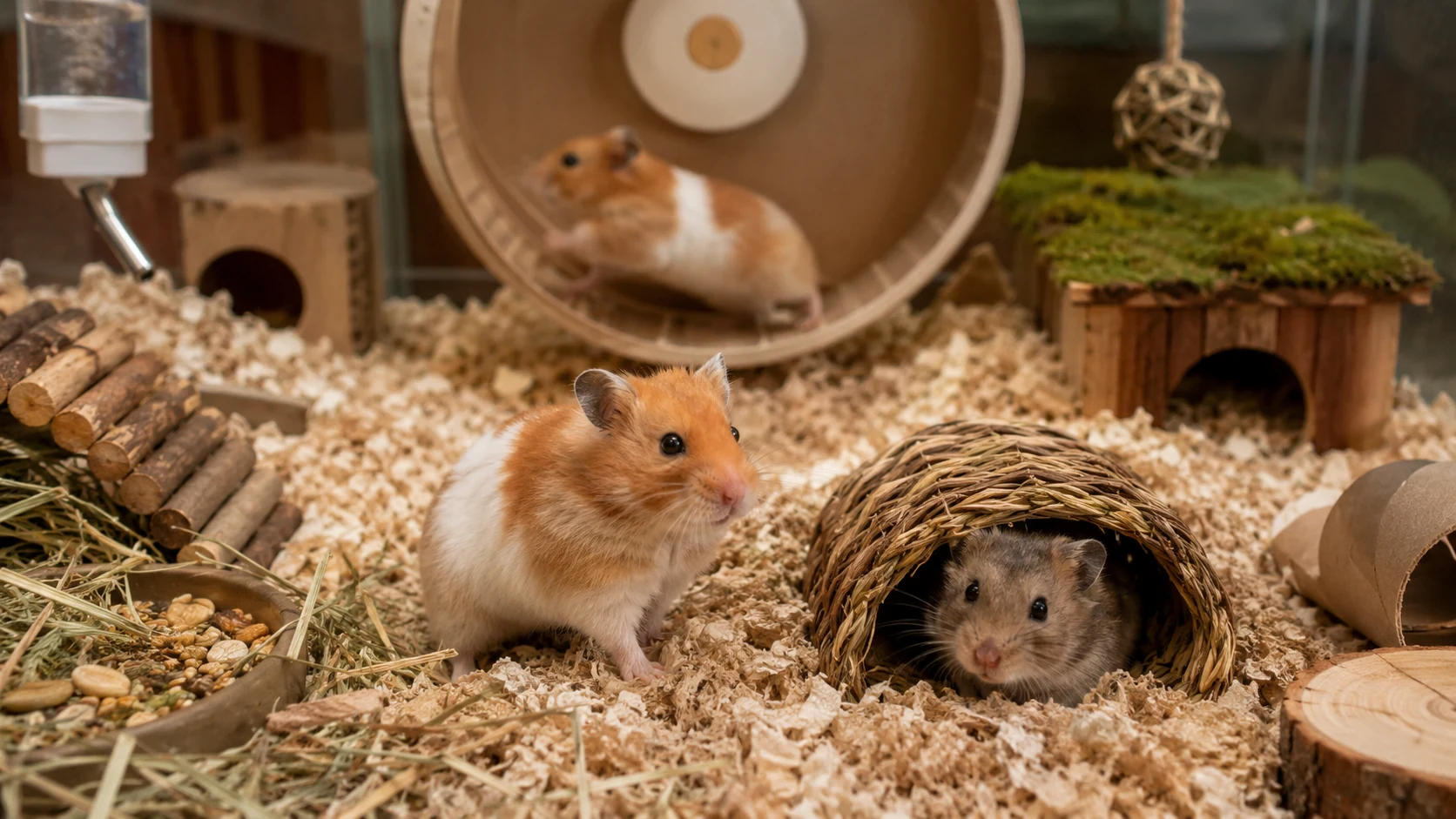
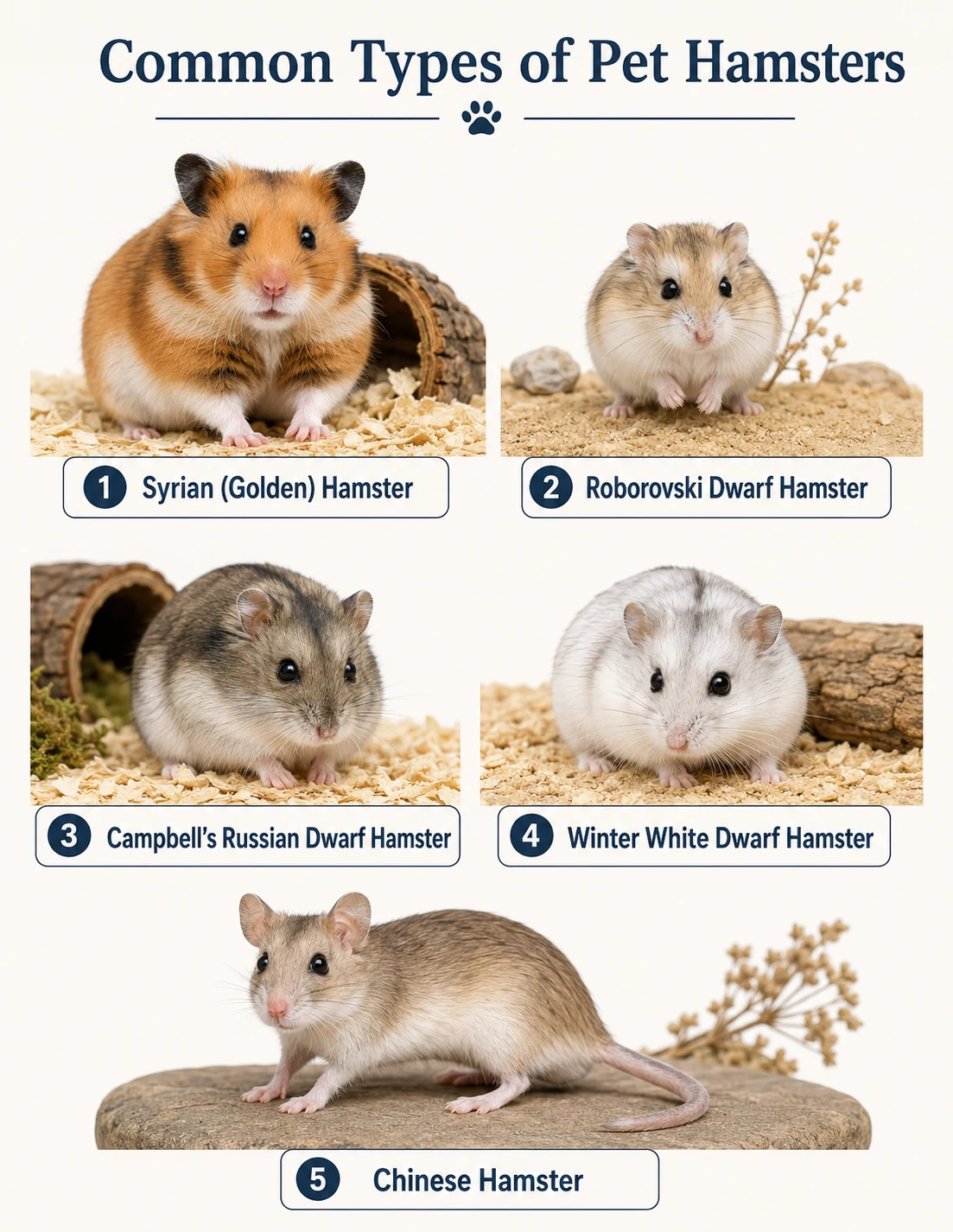
Hamsters are curious, active small rodents with specialized behavioral, nutritional, environmental, and medical needs. Most pet hamsters are Syrian (golden), Chinese, Campbell’s Russian dwarf, winter white dwarf, or Roborovski dwarf hamsters. Lifespan varies by species and individual, but many pet hamsters live approximately 2–3 years.
This guide is designed as an owner-friendly reference for new and experienced hamster owners. Recommendations may differ based on species, age, temperament, body condition, medical history, and housing.
Inside, you will find practical guidance on:
- Housing, bedding, temperature, and daily husbandry
- Handling, taming, enrichment, sleep cycles, and natural behavior
- Nutrition, food storage, treats, water, and weight monitoring
- Grooming, nails, teeth, and skin health
- Preventive veterinary care and species-specific considerations
- Reproductive health, sex separation, and pregnancy precautions
- Common illnesses, medication cautions, and emergency warning signs
Quick Care Snapshot
| Care Need | Recommended Routine | Why It Matters |
|---|---|---|
| Enclosure | Large, secure, well-ventilated habitat with generous uninterrupted floor space | Supports exercise, exploration, foraging, and stress reduction. |
| Bedding | Deep, dry, low-dust substrate with a deep-burrowing zone | Allows natural digging, nesting, and burrow construction. |
| Wheel | Solid-surface, axle-safe wheel large enough for a level back | Provides high-value voluntary exercise. |
| Fresh water | Available at all times; check daily | Small mammals can dehydrate quickly. |
| Diet | Complete balanced hamster pellet/block as the nutritional foundation | Reduces selective feeding and nutrient imbalance. |
| Weight | Weigh weekly; more often if ill or elderly | Weight loss may be an early sign of disease. |
| Veterinary exam | Initial exam after acquisition and regular wellness care thereafter | Establishes baseline health and identifies hidden disease. |
KNOW YOUR HAMSTER: NORMAL FEATURES & SPECIES DIFFERENCES
1. Common Pet Hamsters
The most commonly kept pet hamsters include the Syrian or golden hamster (Mesocricetus auratus), Chinese hamster, Campbell's Russian dwarf hamster, winter white dwarf hamster, and Roborovski dwarf hamster. They are different species rather than simply different “breeds,” and their adult size, temperament, social behavior, and some husbandry needs differ.
Syrian hamsters are the largest common pet species and often weigh roughly 110–140 g as adults. Many pet hamsters live about 18 months to 3 years, although individual lifespan varies by species, genetics, and health.
2. Cheek Pouches
Hamsters have large cheek pouches that extend from the mouth along the sides of the head and neck toward the shoulders. They use these pouches to transport food and nesting material. A pouch full of food can make one side of the face look dramatically enlarged and can be mistaken for a tumor.
The swelling should decrease after the hamster empties the pouch. Persistent one-sided swelling, drooling, bad odor, pawing at the mouth, reduced eating, or inability to empty the pouch may indicate impaction, injury, infection, or another problem and requires veterinary examination.
3. Flank Scent Glands
Syrian hamsters have paired scent glands on the flanks that may appear as dark or sparsely haired spots. They are usually more prominent in males and are used for territorial marking. Owners sometimes mistake these normal glands for skin disease.
A gland that becomes swollen, ulcerated, bleeding, crusted, rapidly enlarged, or painful should be examined because tumors and other disorders can occur in this area.
4. Incisors and Normal Chewing
The front teeth grow continuously throughout life and normally become yellow to orange as the enamel matures. The teeth should meet normally and permit the hamster to eat and groom. Overgrown, broken, displaced, or uneven incisors can interfere with eating and require veterinary care.
5. Torpor and Cold Exposure
Syrian hamsters can enter a hibernation-like torpor when exposed to very cold temperatures, particularly with short daylight periods or limited food. Merck notes that hibernation may occur at temperatures below about 41°F (5°C). A hamster in torpor may be very still and cool but can remain responsive to stimulation.
Prevent torpor by maintaining a stable indoor environment, adequate food, predictable light cycles, and protection from drafts and temperature extremes. If a hamster is unusually cold, unresponsive, or difficult to awaken, warm the environment gradually and contact a veterinarian rather than assuming the hamster is simply sleeping.
HOME SETUP & HUSBANDRY
1. Enclosure Size and Design
Hamsters are extremely active despite their small body size. Choose the largest practical enclosure with a solid floor, secure top, good ventilation, and enough depth to hold substantial bedding. Long, uninterrupted floor space is generally more useful than a tall multi-level cage.
- Avoid wire-mesh floors, which can injure the feet.
- Avoid tall cages with unprotected ledges or long fall distances.
- Provide a dark nesting chamber or hide where the hamster can sleep undisturbed.
- Use secure lids and appropriately narrow bar spacing; hamsters are skilled escape artists.
- Glass or acrylic enclosures can work well if adequately ventilated and securely covered.
2. Bedding and Burrowing
Burrowing is a major natural behavior. A thin decorative layer of bedding does not allow normal tunnel construction. Research in Syrian hamsters has found improved welfare-related behavior with deeper bedding, and current Merck guidance recommends deep substrate suitable for burrowing.
- Use low-dust paper-based bedding or another hamster-safe substrate that can hold tunnels.
- Aspen may be used when it is low-dust and clean.
- Avoid aromatic cedar and strongly scented bedding.
- Provide plain unscented paper tissue or other safe nesting material.
- Avoid fluffy cotton-like nesting material that can entangle limbs or be ingested.
- Provide a deep section of bedding rather than relying on a shallow layer throughout the enclosure.
3. Temperature, Ventilation, and Location
Keep hamsters in a stable, moderate indoor environment and avoid temperature extremes. Published husbandry ranges vary among sources; UC Davis advises approximately 75–85°F with 40–60% humidity, while cold exposure can trigger torpor in Syrian hamsters when temperatures fall very low. In practice, the enclosure should remain comfortably warm, well ventilated, and protected from direct sun, heaters, air-conditioning vents, drafts, and prolonged high humidity.
4. Cleaning Without Destroying the Scent Map
Hamsters rely heavily on scent. Remove wet bedding, spoiled fresh food, and visibly soiled material regularly, but avoid unnecessarily stripping the entire enclosure of all familiar scent at every cleaning.
- Spot-clean toilet areas and wet bedding as needed.
- Remove hidden fresh food before it spoils.
- During a major clean, retain a small amount of clean, familiar nesting material or bedding.
- Clean while the hamster is awake rather than waking it during the daytime.
5. Daily Care Essentials
| Task | Frequency | Notes |
|---|---|---|
| Food check | Daily | Confirm access to staple food and remove spoiled fresh foods. |
| Water | Daily | Refresh and verify bottle valve or bowl function. |
| Health observation | Daily | Check behavior, coat, eyes, breathing, rear end, and mobility. |
| Spot-clean | Every few days/as needed | Remove wet bedding and spoiled hoarded food. |
| Enrichment | Daily | Wheel, digging, foraging, tunnels, chews, and hides. |
| Weight | Weekly | Use a gram scale and record trends. |
COMPANIONSHIP, HANDLING & NATURAL BEHAVIOR
1. Social Housing
Hamster social needs differ by species. Syrian and Chinese hamsters should be housed alone. Some dwarf hamsters may sometimes tolerate compatible same-species companions when raised together, but even dwarf hamsters do not require a companion to be healthy and may fight suddenly.
- Never mix hamster species.
- Do not house intact males and females together unless intentional breeding is being managed by an experienced breeder and veterinarian.
- Separate immediately if there is biting, injury, relentless chasing, blocking of food/water, or a serious fight.
2. Sleep Cycle
Hamsters are primarily active during the evening, night, dawn, and dusk. Respect the hamster’s daytime sleep. Repeatedly waking a sleeping hamster can cause stress and increase the chance of defensive biting.
3. Handling and Taming
- Allow a newly acquired hamster time to settle before extensive handling.
- Approach when the hamster is awake and alert.
- Let the hamster investigate your hand before lifting.
- Cup the hamster gently with both hands or allow it to walk into a small container for transfer.
- Handle close to the floor or over a soft surface because falls can cause serious injury.
Never grab a hamster suddenly from above or wake it specifically to handle it.
4. Exercise Wheel
A running wheel is an important enrichment tool but should not be the only form of exercise. Use a stable wheel with a continuous running surface and no dangerous axle or open rungs. The wheel must be large enough that the hamster can run without pronounced arching of the back. Syrian hamsters have shown a preference for larger wheels in controlled choice testing.
5. Enrichment and Foraging
- Scatter part of the daily ration through bedding to encourage foraging.
- Provide cardboard tunnels, cork tunnels, safe wooden chews, hideouts, and multi-chamber nesting areas.
- Offer a container of hamster-safe sand for digging and coat care; use sand rather than fine dust.
- Rotate selected enrichment items without constantly removing all familiar objects.
- Supervise out-of-enclosure exercise in a secure hamster-proof area.
- Avoid uncontrolled roaming and keep dogs, cats, and other pets away.
NUTRITION – THE FOUNDATION OF HEALTH
1. Complete Hamster Diet
Hamsters are omnivorous, but the most reliable nutritional foundation in captivity is a complete, balanced pelleted or laboratory-block type diet formulated for hamsters. Generic seed mixes should not be the sole diet because many hamsters selectively eat preferred high-fat seeds and leave nutritionally important components behind.
2. Supplemental Fresh Foods
Small amounts of fresh vegetables can provide variety and enrichment. Introduce new foods gradually and remove uneaten fresh food before it spoils in the nest or food cache.
| Food Type | Use | Examples / Notes |
|---|---|---|
| Complete pellets/blocks | Primary diet | Species-appropriate, nutritionally complete hamster formulation. |
| Vegetables | Small supplemental amounts | Examples include cucumber, squash, broccoli, cauliflower, carrot, and leafy greens. |
| Seeds/grains | Limited enrichment/treat component | High-fat seeds should not replace the complete diet. |
| Animal protein | Occasional small amount if appropriate | Hamsters are omnivores; a balanced complete diet usually supplies needed protein. |
| Fruit | Very limited or avoided in sugar-sensitive individuals | UC Davis cautions that hamsters have sensitive digestive tracts and should not receive high-sugar foods. |
3. Food Hoarding
Hoarding is normal hamster behavior. Check food stores periodically for spoiled vegetables or damp food, but do not remove clean dry stored food unnecessarily.
4. Water
Fresh water should be available at all times. Bottles are commonly used; check the ball valve daily because a blocked bottle can leave a hamster without water. A stable heavy bowl may be an alternative for some hamsters if it remains clean and dry.
5. Foods to Avoid
- Chocolate and caffeine
- Alcohol
- Onion and garlic
- Rhubarb
- Highly sugary, salty, or fatty human foods
- Moldy or spoiled foods
- Large sudden amounts of unfamiliar fresh food
- Unknown plants or foods treated with pesticides
WEIGHT, BODY CONDITION & DAILY MONITORING
1. Weekly Weighing
Use a digital kitchen scale that reads in grams. Weigh at approximately the same time of day and keep a written or electronic record. A downward trend may be more informative than a single number.
2. Daily Health Check
- Eating and drinking normally
- Normal evening/night activity
- Eyes open and clear, without discharge
- Quiet breathing without clicking or obvious effort
- Clean, dry rear end and normal stool
- Normal posture and movement
- No new swelling, wounds, hair loss, or lumps
GROOMING, NAILS & DENTAL HEALTH
1. Coat Care
Most hamsters groom themselves effectively. Long-haired Syrian hamsters may need gentle combing to remove bedding and prevent mats. Do not routinely bathe hamsters in water unless a veterinarian specifically recommends it.
2. Sand Bath
A container of clean hamster-safe sand can support natural grooming and digging behavior. Avoid very fine dust products that may irritate the respiratory tract.
3. Nail Care
Nails often wear naturally with normal activity, but seniors and less active animals may develop overgrown nails. Ask a veterinarian to demonstrate trimming if needed.
4. Dental Health
Hamster incisors grow continuously. Safe gnawing materials and normal chewing help maintain the teeth. Dental problems can still occur.
Seek veterinary care for drooling, a wet chin, reduced appetite, difficulty chewing, weight loss, visible broken or overgrown teeth, facial swelling, or inability to close the mouth normally.
PREVENTIVE VETERINARY CARE
1. Establish Veterinary Care Early
Arrange an initial examination with a veterinarian comfortable treating hamsters soon after acquisition. This establishes a baseline weight and health record and allows review of sex, species, diet, enclosure, skin, teeth, and respiratory status.
2. Vaccines and Parasite Prevention
Routine companion-animal vaccination programs are not generally used for pet hamsters. Routine dog/cat flea, tick, or heartworm products should never be applied unless a veterinarian has confirmed that the exact drug and dose are appropriate.
3. Diagnostic Testing
Depending on the problem, veterinary evaluation may include fecal or skin testing, cytology, bacterial culture, radiographs, ultrasound, blood testing, or examination under sedation/anesthesia.
REPRODUCTIVE HEALTH & LIFE STAGES
1. Prevent Accidental Breeding
Hamsters mature rapidly. Syrian hamsters may reproduce by approximately 7–8 weeks of age. Accurately identify sex and separate opposite-sex animals before reproductive maturity.
2. Pregnancy and Newborns
Syrian hamster gestation is very short—approximately 16–19 days—and litters may be large. Breeding is best left to experienced breeders. Pregnant females need adequate nutrition, water, nesting material, warmth, and minimal stress. New mothers may become highly protective.
Excessive disturbance of a new mother and litter can contribute to abandonment or cannibalism. Veterinary advice is appropriate for a pregnant hamster that is weak, not eating, bleeding, having difficulty delivering, or otherwise ill.
3. Senior Hamsters
Older hamsters may lose weight, develop tumors, arthritis, dental problems, kidney disease, heart disease, or reduced grooming ability. Increase the frequency of weight checks and make food, water, nest areas, and the wheel easy to reach.
COMMON HEALTH CONCERNS
1. Diarrhea and “Wet Tail”
Diarrhea in a hamster can become life-threatening quickly because of dehydration and electrolyte loss. In young Syrian hamsters, proliferative ileitis caused by Lawsonia intracellularis is a particularly serious cause of “wet tail.” A hamster with diarrhea, a wet or soiled rear end, lethargy, poor appetite, dehydration, or abdominal discomfort needs prompt veterinary attention.
2. Respiratory Disease
Persistent sneezing, eye or nasal discharge, noisy breathing, increased respiratory effort, or reduced activity may indicate respiratory disease. Poor ventilation, dusty bedding, and stress can worsen respiratory irritation.
3. Skin Disease and Parasites
Mites, other parasites, ringworm, bacterial disease, wounds, and tumors can cause hair loss or skin changes. Persistent scratching, crusts, bald patches, sores, or painful skin should be examined.
4. Tumors and Lumps
Masses become more common with age. Any new, enlarging, ulcerated, painful, or bleeding lump should be evaluated by a veterinarian.
5. Cheek-Pouch Problems
Hamsters use cheek pouches to transport food and nesting material. Pouches can occasionally become impacted, injured, infected, or everted. Persistent facial swelling, drooling, pawing at the mouth, or inability to empty a pouch requires veterinary evaluation.
6. Eye Proptosis and Eye Emergencies
Because hamster eyes are relatively prominent, trauma, rough restraint, fighting, or pressure behind the eye can occasionally cause the eye to protrude abnormally from the socket (proptosis). A suddenly bulging, displaced, bleeding, cloudy, or severely swollen eye is an emergency and should be examined promptly. Do not attempt to push the eye back into place.
7. Endocrine Disease and Age-Related Tumors
Older hamsters develop tumors with some frequency. Syrian hamsters may develop adrenal-gland adenomas, lymphoma, skin tumors, and melanomas, including tumors involving the flank scent glands. Dwarf hamsters also develop a variety of skin and mammary tumors. Progressive hair loss, skin darkening, a new lump, abdominal enlargement, unexplained weight loss, or a changing flank gland deserves veterinary evaluation.
HYGIENE & ZOONOTIC DISEASE
Wash hands after handling hamsters, bedding, food dishes, or enclosure waste and before eating or preparing food. Keep hamster equipment out of kitchen food-preparation areas.
Hamsters can rarely be involved in transmission of lymphocytic choriomeningitis virus (LCMV). The overall risk to the general public is low, but the consequences can be serious for pregnant people and people with weakened immune systems. Wild mice are the principal reservoir, so prevent wild-rodent access to hamster food, bedding, and housing. People who are pregnant or significantly immunocompromised should discuss rodent exposure with their physician and veterinarian.
MEDICATION SAFETY
Do not give a hamster human medication, leftover veterinary medication, or medication prescribed to another pet unless a veterinarian has specifically directed you to do so.
Some antibiotics can disrupt normal intestinal bacteria and cause severe or fatal enterotoxemia in hamsters. Merck specifically notes that adult Syrian hamsters can develop Clostridioides difficile enterotoxemia after drugs such as penicillin, lincomycin, or bacitracin. Antibiotic selection therefore requires veterinary judgment.
WHEN TO CALL THE VETERINARIAN
Medical Emergencies – Seek Care Immediately
- Open-mouth breathing or severe respiratory distress
- Collapse, inability to stand, severe weakness, or unresponsiveness
- Severe or persistent diarrhea, especially with a wet/soiled rear end
- Major bleeding or traumatic injury
- Seizures or sudden severe neurologic signs
- Marked abdominal swelling or obvious severe pain
- Extreme heat or cold exposure with abnormal responsiveness
- Pregnant female with significant bleeding, collapse, or difficult labor
Prompt Visit – Do Not Delay
- Reduced appetite or measurable weight loss
- Eye or nasal discharge
- Persistent sneezing or noisy breathing
- Drooling, broken teeth, or chewing difficulty
- Hair loss, itching, crusts, or sores
- New lump or swelling
- Change in normal nighttime activity or prolonged hiding
- Persistent abnormal stool or urination
TRAVEL, BOARDING & EMERGENCY PREPAREDNESS
1. Transport Carrier
- Use a small secure carrier with solid footing and familiar bedding.
- Include a hide and appropriate food for longer journeys.
- Protect the carrier from direct sun, drafts, and temperature extremes.
- Never leave a hamster unattended in a parked vehicle.
2. Pet-Sitter Instructions
Leave written instructions covering normal diet, water checks, cleaning, the hamster’s usual waking/activity pattern, current weight, veterinary contact information, medication instructions, and emergency signs.
3. Emergency Kit
- Secure carrier
- Digital gram scale
- Usual staple food and bottled water for emergency travel
- Current medication list and veterinary records
- Contact information for a veterinarian who treats hamsters
OWNER CHECKLIST
Daily
- Fresh water available and dispenser functioning
- Complete hamster diet available in the planned amount
- Remove spoiled fresh food
- Observe activity, breathing, eyes, coat, and rear end
- Confirm access to wheel, hides, and deep bedding
Weekly
- Weigh in grams and record the result
- Inspect skin, feet, nails, teeth, and body condition
- Inspect wheel and enrichment for damage
- Check hidden food stores for spoilage
Periodically
- Perform partial/deeper enclosure cleaning as needed while preserving some familiar clean bedding
- Review diet freshness and storage
- Reassess wheel size, bedding depth, and enrichment
- Review emergency veterinary contact information
SELECTED REFERENCES & TRUSTED RESOURCES
- UC Davis School of Veterinary Medicine – Hamster Care
- RSPCA – Keeping Hamsters as Pets
- RSPCA – Hamster Behaviour
- RSPCA – Creating a Good Home for Hamsters
- RSPCA – What to Feed a Pet Hamster
- Merck Veterinary Manual – Hamsters
- Merck Veterinary Manual – Routine Health Care of Hamsters
- Merck Veterinary Manual – Description and Physical Characteristics of Hamsters
- Merck Veterinary Manual – Hamsters (professional reference)
- Reebs SG, St-Onge P. Running wheel choice by Syrian hamsters. Laboratory Animals. 2005;39(4):442–451.
- Fox A, et al. Investigating Syrian hamster welfare through owner surveys. 2024.
Source note: The requested Exotic Pet Vet hamster-care URL was not accessible during this review, so no specific recommendations were attributed to that page.
Publication Note
This veterinarian-authored guide provides general education and is not a substitute for an examination, diagnosis, or individualized treatment plan. Recommendations may change as new veterinary evidence becomes available.
Questions or concerns?
Advanced Veterinary Medical Center
3550 San Pablo Dam Road, Suite E – Sobrante Plaza
El Sobrante, CA 94803
(510) 222-7387
AVMCVET2021@gmail.com