Reptile Husbandry & Preventive Care
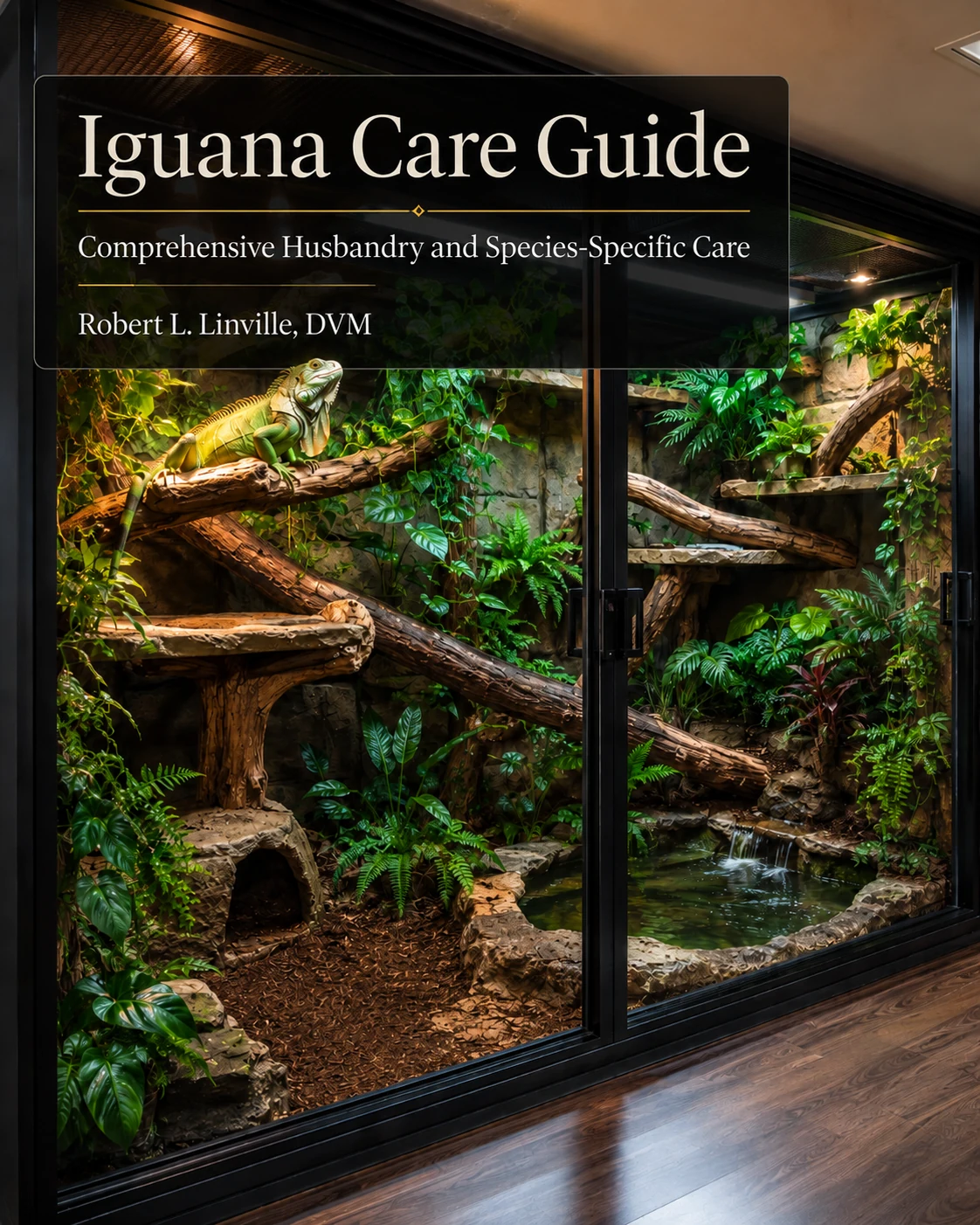
Iguana Care Guide
A comprehensive husbandry guide for the major iguanid groups maintained in captivity, with general care principles followed by species- and genus-specific guidance. Particular emphasis is placed on enclosure scale, thermal gradients, UVB and visible light, humidity and hydration, substrate, climbing and digging opportunities, behavior, safe handling, reproduction, seasonality, preventive care, and common health problems.
Quick Care Guide
There is no single set of environmental numbers that is correct for every iguana. A rainforest green iguana, a dry-forest rock iguana, a desert iguana, and a chuckwalla do not experience the same climate. The values below are a framework; use the species sections before setting up an enclosure.
| Parameter | Practical starting point | Important qualification |
|---|---|---|
| Adult space | Large iguanas require custom enclosures; adult green and rock iguanas commonly need walk-in or room-scale housing rather than an aquarium. | Body size, climbing style, territorial behavior, and activity pattern differ by genus. The enclosure must be large enough to create several genuinely different thermal and light zones. |
| Social housing | One iguana per enclosure is the safest default for companion animals. | Adult males of many large iguanid species are strongly territorial. Professional breeding groups require very large, divisible enclosures, visual barriers, and close behavioral monitoring. |
| Basking heat | Broad overhead radiant heat that warms most of the body at once. | Tropical arboreal species and sun-exposed desert/rock species require different intensities. A thermometer reading on the basking surface is not the same as air temperature or body temperature. |
| Daytime air | Create a species-appropriate preferred optimal temperature zone rather than one uniform cage temperature. | For example, Merck lists a green-iguana POTZ of about 84–91°F (29–33°C), while desert iguanas and chuckwallas use much hotter sun-exposed microhabitats. |
| Night | Visible lights off; allow a normal nighttime temperature decrease. | Tropical green iguanas do not hibernate. Desert iguanas and chuckwallas have meaningful seasonal dormancy and require a different annual cycle. |
| Humidity | Measure with a digital hygrometer and match the species and season. | Green iguanas generally require humid tropical conditions; desert iguanas and chuckwallas require a dry surface environment with access to cooler and sometimes slightly more humid retreats. |
| UVB | Provide a measured UV gradient with a bright basking zone and complete shade. | Green iguanas are often managed around UVI 3–4 at the basking site; open-sun rock/desert iguanids commonly require stronger exposure. Exact targets are discussed below. |
| Visible light | Very bright daytime illumination in addition to UVB. | Large diurnal iguanas evolved under sunlight. A UVB tube by itself does not reproduce the brightness of daytime outdoor conditions. |
| Water | Fresh potable water available at all times, with species-appropriate misting, bathing, or humid microclimates. | Do not assume an arid species never needs water or that a humid species is adequately hydrated merely because the cage humidity is high. |
| Diet | Use the separate Iguana Diet Guide. | Many true iguanas are strongly herbivorous, but juvenile Ctenosaura, specialized Galápagos species, and other groups should not be fed as if every iguana were a green iguana. |
Iguana Diversity and Taxonomy
The word iguana is used loosely in the pet trade, but this guide follows the modern iguanid framework used by the IUCN/SSC Iguana Specialist Group and by the companion Iguana Diet Guide. Current specialist-group taxonomy recognizes distinct lineages with very different body sizes, habitats, climates, feeding strategies, and conservation needs.
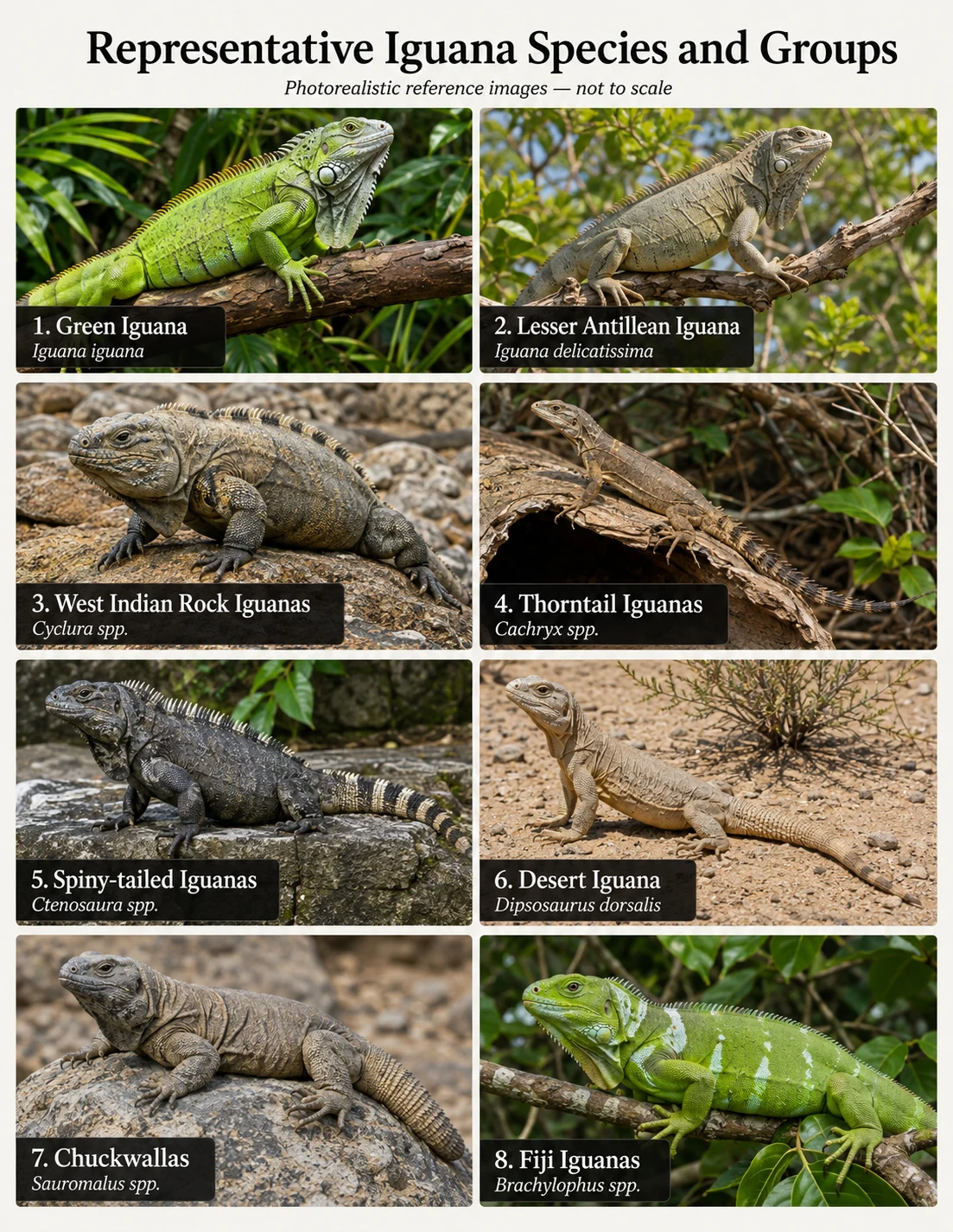
- Green and Lesser Antillean iguanas: Iguana iguana and Iguana delicatissima.
- West Indian rock iguanas: Cyclura species.
- Thorntail iguanas: Cachryx alfredschmidti and Cachryx defensor.
- Spiny-tailed iguanas: Ctenosaura species.
- Desert iguanas: Dipsosaurus, including the commonly referenced desert iguana D. dorsalis.
- Chuckwallas: Sauromalus.
- Fiji iguanas: Brachylophus.
- Galápagos iguanas: land iguanas Conolophus and the marine iguana Amblyrhynchus cristatus.
Natural History and Ecological Groups
Good captive husbandry begins by asking how the animal uses its environment in nature. The major iguanid groups differ more than their similar body shape suggests.
- Tropical arboreal iguanas: green and Fiji iguanas spend much of their time above ground and require strong climbing architecture, bright light, UVB, warm basking sites, and appropriately humid conditions.
- West Indian dry-forest iguanas: Cyclura are large, heavily built, sun-exposed lizards that use ground, rocks, burrows, logs, and climbing structures and require large secure space.
- Spiny-tailed and thorntail iguanas: ecology ranges from arboreal hollow-using dry-forest forms to large fast terrestrial and rock-using species. Exact species identification matters.
- Desert iguanas and chuckwallas: adapted to exceptionally bright, hot, arid environments, with burrows or rock crevices providing essential cooler refuges.
- Galápagos iguanas: marine and land iguanas have unique island ecologies that cannot be reproduced by simply adapting a green-iguana enclosure.
The enclosure should therefore allow the iguana to make choices: bask or shade, climb or descend, expose itself to UVB or enter near-zero UV shade, use a dry area or a more humid retreat, and remain visible or become fully concealed.
Before Your Iguana Arrives
Build and test the complete habitat before obtaining the animal. Large iguanas outgrow pet-store terrariums rapidly; planning only for a juvenile enclosure often creates an expensive welfare problem within a few years.
- Identify the animal to species or subspecies/locality when relevant.
- Know the expected adult length, body mass, lifespan, temperament, and seasonal pattern.
- Run heating, UVB, visible lighting, thermostats, timers, and humidity equipment long enough to document stable gradients.
- Measure the basking surface with an infrared thermometer, air temperatures with digital probes, humidity with a digital hygrometer, and UV exposure with a UV Index meter when available.
- Locate a veterinarian experienced with reptiles before the animal becomes ill.
- Schedule a new-animal examination and discuss fecal parasite evaluation and any additional tests appropriate to origin and species.
Captive-Bred Animals, Conservation, and Legal Trade
Many iguanas are conservation-sensitive wildlife. International trade, importation, interstate movement, and private possession can be regulated differently by species and jurisdiction. Several rock iguanas and Fiji iguanas are managed primarily within professional conservation programs rather than the ordinary companion-animal trade.
Prefer a healthy, legally documented captive-bred animal when a species is appropriate for private keeping. Retain acquisition and provenance records. Do not collect native wildlife, buy animals of uncertain origin, or release an unwanted iguana outdoors. Escaped or released green and spiny-tailed iguanas have established invasive populations in several warm regions.
Housing and Enclosure Design
Iguanas need usable volume, not just a published cage dimension. An enclosure should be large enough to let the animal turn without contacting walls, walk or run, fully extend on basking structures, retreat far from heat and UVB, and express the climbing, digging, hiding, or rock-crevice behavior characteristic of its species.
Large arboreal species
Adult green iguanas require custom, walk-in scale enclosures with substantial height and sturdy horizontal and diagonal climbing routes. A modern practical starting point for one adult is on the order of 10 ft long × 5 ft wide × 6 ft high, with larger space preferred. A safe dedicated room or indoor/outdoor habitat can be superior when it can still provide measured heat, UVB, humidity, drainage, and security.
Large rock and terrestrial species
West Indian rock iguanas and many large Ctenosaura need substantial floor area, strong barriers, basking platforms, hides, climbing logs, and deep diggable areas. The IUCN/SSC West Indian Iguana Husbandry Manual describes professional pair housing of at least approximately 10 × 6 × 6 ft, with much larger 12 × 12 × 10 ft facilities preferred. These are managed-care dimensions, not an argument for crowding a single large iguana into a small commercial terrarium.
Smaller high-heat species
Desert iguanas and chuckwallas are smaller than adult green or rock iguanas, but still require enough horizontal space for a strong heat and UV gradient, multiple retreats, and natural locomotion. A typical adult chuckwalla is best started in at least a 4 × 2 × 2 ft enclosure; larger is useful, particularly for very active individuals.
Enclosure Materials, Security, and Escape Prevention
Large iguanas are strong. Doors, locks, mesh, ledges, lights, and climbing structures must tolerate repeated climbing, pushing, tail strikes, digging, and adult body weight.
- Front-opening PVC, sealed wood, masonry, custom glass, and outdoor wire/solid-wall combinations can work when suited to the species and climate.
- Use smooth lower walls or visual barriers where neighboring iguanas repeatedly display or rub their noses.
- Choose mesh openings that do not trap toes or nails.
- Protect all hot lamps from direct contact.
- Anchor rocks, logs, shelves, and platforms to prevent crushing injuries.
- Use digging barriers beneath outdoor or deep-soil enclosures for burrowing species.
- Secure doors with animal-proof latches; large iguanas can learn to push or manipulate simple closures.
Do not rely on free-roaming access to a house as the animal's primary housing. Ordinary rooms rarely provide an adequate thermal/UV gradient, and free-roaming reptiles create risks from falls, electrical cords, household pets, ingestion of foreign material, escape, and Salmonella contamination.
Substrate, Floor Design, and Nesting Areas
The best substrate depends on the species and medical status. A healthy rock or desert iguana benefits from digging opportunities very different from those of an arboreal green iguana.
Healthy established animals
Naturalistic soil-based systems can support digging, humidity gradients, plant growth, and normal foot use. Tropical enclosures may use a well-drained soil/coco/coarse organic mix; arid enclosures often use a compactable sand-soil-clay mixture with drier upper layers and more protected moisture below. Large rock iguanas need deep soil or sandy soil if natural nesting and burrowing behavior are to be accommodated.
Quarantine or illness
Paper, paper towels, or another easily cleaned nonparticulate surface is preferable during initial quarantine and for many sick, postsurgical, debilitated, or gastrointestinally compromised animals because feces, urates, parasites, bleeding, and abnormal discharges are easier to observe.
Substrates and floor materials to avoid
- crushed walnut shell;
- calcium-based sand sold as an ingestible mineral source;
- corn cob;
- cat litter;
- cedar or strongly aromatic wood shavings;
- large bark or gravel that can be swallowed;
- frayed carpet, exposed loops, or rough mesh that catches claws.
Nesting substrate for mature females
Egg-laying females need a private, deep, diggable nesting area before reproductive behavior becomes an emergency. The substrate should be moist enough to hold a tunnel but not saturated. The appropriate dimensions depend on the species and female's size; large green and rock iguanas may require a substantial bin or deep ground area rather than a small box.
Temperature and Basking Heat
Iguanas are ectothermic and must move among microclimates to regulate body temperature. Digestion, activity, reproduction, immune function, calcium metabolism, and behavior are all temperature-dependent.
The basking system should imitate sunlight from above with a broad, whole-body radiant zone. Multiple halogen-style flood lamps are often safer and more biologically useful for a large iguana than one very intense narrow spot. The animal must be able to move completely away from radiant heat.
- Green iguana: warm tropical ambient conditions with a broad hotter basking surface and cooler lower/remote retreat.
- Lesser Antillean iguana: professional guidelines use a broad 100–113°F (38–45°C) basking zone with marked seasonal changes in ambient day/night temperatures.
- Rock iguanas: high-intensity baskers; older IUCN husbandry work reports wild daytime body temperatures around 97–106°F (36–41°C), emphasizing the importance of a hot surface plus cooler retreats.
- Chuckwallas and desert iguanas: require substantially hotter sun-exposed basking opportunities than tropical forest iguanas, while crevices or burrows remain much cooler.
Do not use electric heat rocks. Contact heat can cause severe burns. Ceramic heat emitters or radiant panels may be useful for background or nighttime heat when needed, but a non-light-emitting heater is not a substitute for a bright daytime basking system.
Measuring Temperature Correctly
| Device | Best use | Important limitations |
|---|---|---|
| Digital thermometer with wired probe | Continuous measurement of ambient air temperature in the warm and cool zones. | Place probes where the iguana actually spends time. A wall-mounted probe near the ceiling does not represent the lower cool retreat. |
| Infrared thermometer / temperature gun | Spot-check basking platforms, rocks, branches, substrate, and other surfaces. | Measures surface temperature, not air temperature. Very shiny surfaces, distance, and instrument spot size can alter readings. |
| Thermostat or dimming controller with probe | Safety/control of compatible heat sources. | A controller does not replace an independent thermometer. Verify real temperatures with separate instruments. |
| Multi-probe data logger | Tracking day/night and seasonal trends at several enclosure locations. | Especially useful for large walk-in habitats where one thermometer cannot represent the whole enclosure. |
Recheck temperatures after changing lamps, lamp height, enclosure furniture, substrate depth, room heating/air-conditioning, seasons, or outdoor conditions.
UVB, UVA, and Visible Light
Most iguanas in this guide are strongly diurnal and depend on access to ultraviolet B radiation for normal vitamin D3/calcium physiology. They also experience extremely bright visible light outdoors. Good lighting therefore combines UVB, bright visible daylight, and overhead radiant heat in the main basking zone.
A high-quality linear T5-HO UVB system is often the most practical base for an indoor enclosure, but lamp percentage alone does not define the dose reaching the animal. Fixture reflector, age, distance, mesh, angle, and the height of the iguana's back all change UVI.
- Green iguana: a measured basking UVI around 3–4 is a useful practical target in modern husbandry, with lower levels at the edge and true near-zero shade available.
- Lesser Antillean iguana: current EAZA guidance uses approximately UVI 3–4 for juveniles and 5–6 for adults in the basking area.
- Open-sun rock and desert iguanids: high-sun Ferguson Zone 4 principles are appropriate. A practical target around UVI 4.5–6 is reasonable for species such as rhinoceros iguanas and chuckwallas, while providing complete shade.
The UVB and heat zones should overlap so an iguana does not have to choose between becoming warm and receiving UVB. At the same time, neither heat nor UV should cover the entire enclosure.
Ordinary window glass and most clear plastic block useful UVB. Natural sunlight through a closed window is not equivalent to direct outdoor sun.
Visible light matters
Large diurnal iguanas evolved under sunlight far brighter than a typical living room or fluorescent UV tube. Add bright daylight-spectrum LED or other suitable visible lighting over much of the enclosure while retaining shaded retreats. Bright light supports normal activity, visual behavior, plant growth, and a more natural distinction between day and night.
Checking UV Output: UV Test Cards Versus UV Index Meters
UV-sensitive test cards
Reusable photochromic UV cards are inexpensive and useful for confirming that some ultraviolet energy reaches a basking location or for comparing the same lamp and distance over time. Place the card at approximately the height of the iguana's back while basking—not next to the lamp.
A card is qualitative. A color change does not tell you the exact UV Index, may respond to a broader UV band than biologically useful UVB, and cannot prove that exposure is appropriate for the species.
UV Index meter
A calibrated UV Index meter such as a Solarmeter 6.5 or 6.5R, or another appropriate calibrated radiometer, is the preferred quantitative tool. Measure the center and edges of the basking zone, the height of the animal's back, and the intended shaded retreat. Repeat after replacing or moving lamps and periodically as lamps age.
Humidity, Water, and Hydration
Humidity must match ecology rather than the common name “iguana.”
Tropical and humid-forest forms
Merck lists approximately 60–85% relative humidity for green iguanas. Provide fresh drinking water, good air exchange, and a daily humidity cycle rather than a stagnant continuously wet cage. Misting, automated rain, large water containers, and living plants can be useful when drainage is designed correctly.
Seasonally dry West Indian forms
Rock and Lesser Antillean iguanas experience distinct wet/dry cycles. Humidity, rainfall/misting frequency, photoperiod, and temperature should be considered together rather than adjusted independently.
Desert and rock-crevice forms
Desert iguanas and chuckwallas need a dry, well-ventilated surface environment. That does not mean absolute dryness. Burrows and deep rock crevices create cooler microclimates that can retain more moisture than the exposed surface. A humid retreat or protected deeper substrate can be useful without turning the entire habitat into a humid enclosure.
Use a digital hygrometer, preferably one that records minimum and maximum values. Do not judge humidity by how dry the room feels.
Furnishings and Environmental Enrichment
Enrichment should let the iguana perform natural behaviors rather than merely add decoration.
- Climbing: broad branches, logs, shelves, ramps, or rock faces strong enough for adult body weight.
- Basking choices: several elevations or distances from the heat/UV system where feasible.
- Retreats: hides, overhangs, dense live vegetation, hollow logs, rock crevices, or burrows appropriate to species.
- Visual barriers: particularly important for territorial animals and neighboring enclosures.
- Digging: deep substrate for desert, rock, nesting, and burrow-using species.
- Foraging: safe browse and food presentation that encourages movement; details remain in the diet guide.
- Water interaction: green iguanas may use large water containers; water must remain clean and safe for entry/exit.
- Training: target, station, scale, carrier, and voluntary-entry training can reduce forced restraint in large individuals.
Any furnishing that can collapse, trap a limb, expose an animal to a hot lamp, or become an escape route is unsafe enrichment.
Outdoor Sunlight and Secure Exercise
Direct natural sunlight can provide outstanding visible light and UV exposure when outdoor conditions are appropriate, but outdoor housing introduces new risks.
- Use a secure, escape-proof enclosure with a lock.
- Provide substantial shade at all times; an iguana must never be trapped in direct sun.
- Do not place a glass aquarium or closed plastic carrier in sunlight because internal temperature can rise rapidly.
- Protect against dogs, cats, raptors, raccoons, rodents, and other predators.
- Avoid pesticide-treated plants and soil.
- Monitor outdoor temperature, wind, humidity, and ground/surface temperature rather than relying on the weather forecast alone.
- Remember that window glass blocks useful UVB; indoor sunlight through glass does not count as direct outdoor exposure.
Handling, Acclimation, and Cooperative Training
Large iguanas can bite, scratch, and strike with the tail. Mature males may become more territorial during reproductive periods. Handling should be calm, predictable, and based on the animal's behavior rather than on forcing physical contact.
- Allow a new iguana to establish normal basking, drinking, defecation, and refuge use before frequent nonessential handling.
- Approach from the side/front where the animal can see you.
- Support the chest, pelvis, and hindquarters; do not suspend a heavy adult by the forequarters.
- Never grab or restrain an iguana by the tail. Tail injury or autotomy can occur in some species and age groups.
- Do not place a large iguana on your shoulder or near your face.
- End handling if the animal laterally compresses, opens its mouth defensively, repeatedly tail-whips, lunges, struggles violently, or attempts to escape.
Positive reinforcement and target/station training are valuable for moving a large animal, obtaining weights, entering a carrier, and facilitating veterinary care with less stress.
Normal Behavior and Communication
- Basking: expected after lights come on and intermittently through the day. Constant basking can indicate an enclosure that is otherwise too cool.
- Head bobbing: used in territorial, courtship, dominance, and recognition displays; pattern and meaning vary by species and sex.
- Dewlap extension: especially conspicuous in green iguanas and used in communication and display.
- Lateral body compression and body elevation: can make an iguana appear larger during threat or territorial display.
- Tail whipping: a defensive behavior; repeated whipping during routine husbandry signals that the interaction or environment should be reassessed.
- Digging: normal in burrow-using species and mature females preparing to lay.
- Color change: influenced by temperature, stress, reproduction, social state, and individual variation; persistent abnormal darkening accompanied by illness signs is concerning.
- Sneezing/salt expulsion: some iguanids possess nasal salt glands and may expel mineral-rich droplets. Persistent nasal discharge, bubbles, wheezing, or increased respiratory effort is not automatically normal “salt sneezing.”
Sex Identification
Sexual dimorphism becomes more obvious as iguanas mature, but the useful characteristics vary by species. Juveniles can be difficult to sex accurately.
| Species/group | Common mature male features | Cautions |
|---|---|---|
| Green iguana Iguana iguana |
Larger head and jowls, more prominent femoral pores, broader tail base/hemipenal contour, generally heavier build, often larger dorsal spines. | Size and color vary with locality, age, nutrition, and individual development. Juveniles may not show obvious dimorphism. |
| Rock iguanas Cyclura |
Males are generally larger and more massive with larger heads and more conspicuous femoral pores and tail-base hemipenal contour. | Species differ in adult size and ornamentation; professional programs may use examination, imaging, or other confirmation. |
| Spiny-tailed iguanas Ctenosaura |
Adult males of many species become larger, more robust, more crested, and more strongly patterned, with prominent femoral pores. | Sexual dimorphism varies greatly among the many species. |
| Chuckwallas Sauromalus |
Mature males commonly develop stronger adult coloration and larger femoral pores and head/body proportions. | Color is species- and locality-dependent and should not be used alone. |
| Fiji iguanas Brachylophus |
Mature males often have stronger species-specific striping/coloration and larger body/head proportions. | Correct species identification is important; conservation-managed animals should be sexed within program protocols. |
Do not forcefully probe the cloaca or attempt hemipenal eversion at home. A reptile-experienced veterinarian can confirm sex when external features are ambiguous.
Reproductive Considerations
Female iguanas can develop serious reproductive disease. Green iguanas in particular may develop follicles or lay infertile eggs without ever being housed with a male. Mature females should have an appropriate nesting option available before they are obviously in distress.
Reproductive disorders include preovulatory follicular stasis, postovulatory egg retention/dystocia, ectopic eggs, and yolk coelomitis. Inadequate nesting substrate, inappropriate temperature, dehydration, nutritional disease, crowding, stress, and other medical problems can contribute, but not every reproductive disorder is corrected by husbandry alone.
Signs such as persistent digging, unusual restlessness, abdominal enlargement, reduced appetite, or changes in basking can accompany normal reproduction, but repeated straining, weakness, inability to use the hind limbs normally, prolapse, marked abdominal distention, or prolonged failure to lay require prompt veterinary evaluation.
Male breeding-season behavior
Mature males may become more territorial, display more intensely, refuse food temporarily, attempt escape, or become less tolerant of handling. Large males should be managed with particular attention to keeper safety during seasonal reproductive behavior.
Species-Specific Husbandry Guidelines
The following ranges are practical starting points synthesized from veterinary references, modern husbandry resources, field biology, and professional zoo/conservation protocols. They should be adjusted for the exact species, locality where biologically relevant, sex, age, season, enclosure design, measured behavior, and veterinary findings.
| Species/group | Approximate adult size | Space and structure | Reasonable temperature / UV starting point | Humidity / seasonality | Major caution |
|---|---|---|---|---|---|
| Green iguana I. iguana |
Typically about 5–7 ft (1.5–2.1 m) total length in large adults; the tail contributes roughly half of total length. | Large custom arboreal enclosure; adult walk-in scale, often around 10×5×6 ft (3.0×1.5×1.8 m) or larger. | General air about 75–88°F (24–31°C); broad basking surface around 110–120°F (43–50°C); night roughly 73–84°F (23–28°C). Merck lists a POTZ of 84–91°F (29–33°C). UVI commonly ~3–4 at the principal basking site, with deep shade. | Humid tropical, roughly 60–85%; no winter hibernation. | Very large adult, strong tail/claws, reproductive disease, renal disease, MBD if husbandry is poor. |
| Lesser Antillean iguana I. delicatissima |
Maximum recorded snout-to-vent length about 17.1 in (43.4 cm) in males and 15.8 in (40.1 cm) in females; maximum recorded mass about 7.7 lb (3.5 kg) in males and 5.7 lb (2.6 kg) in a gravid female. | Professional conservation-style arboreal enclosure; current EAZA guidance uses >3 m² (>32 sq ft) floor area and ≥1.8 m (≥5.9 ft) height for one adult. | Basking 100–113°F (38–45°C). Seasonal ambient day roughly 79–93°F (26–34°C) and night 64–82°F (18–28°C), depending on month. UVI ~3–4 juvenile and 5–6 adult. | Strong wet/dry and seasonal day/night cycling. | Conservation-sensitive species; should not be treated as simply another green iguana. |
| Rock iguanas Cyclura |
Highly variable: roughly 30 in to more than 5 ft (0.75–1.5+ m) total length depending on species. Large males may exceed 20–25 lb (9–11 kg). | Large walk-in terrestrial/rocky enclosure with logs, hides, deep soil, and barriers; professional pairs ≥10×6×6 ft (3.0×1.8×1.8 m), larger preferred. | Ambient around 85°F (29°C) with cooler retreats; daytime ambient generally kept below about 90°F (32°C) and night above about 65°F (18°C). Provide a broad very hot basking surface; 110–130°F (43–54°C) is a practical conservative starting range, while professional programs have used higher surfaces. Zone-4 style UV exposure with deep shade. | Seasonally dry Caribbean climate; access to protected retreats. | Adult males are strongly territorial; many species are conservation-managed. |
| Thorntail iguanas Cachryx |
Small iguanas: about 10 in (25 cm) total for C. defensor and just over 12 in (30 cm) for C. alfredschmidti. | Species-specific dry-forest/arboreal-rock habitat with secure hollow/crevice retreats. | High-quality species-specific captive standards remain limited. A cautious starting gradient is about 75–85°F (24–29°C) ambient with a localized 95–105°F (35–41°C) basking surface and 70–75°F (21–24°C) night, adjusted from measured behavior and microclimate rather than treated as a fixed standard. | Seasonally dry tropical conditions. | Limited captive evidence and conservation concern; do not extrapolate blindly from Ctenosaura. |
| Spiny-tailed iguanas Ctenosaura |
Extremely variable: small species may be about 10–17 in (25–43 cm) total; large common forms may reach 3–4+ ft (0.9–1.2+ m). | Large secure enclosure for large species; climbing/rock/log refuges and deep nest substrate for females. | For large C. similis-type animals, provide warm ambient conditions around 80–90°F (27–32°C) with cooler retreats and a basking surface sufficient to allow body temperatures around 96–102°F (36–39°C); in practice this usually requires a surface roughly 105–120°F (41–49°C). Night can generally fall to about 70–78°F (21–26°C). Strong UV exposure is appropriate. | Dry to seasonally humid depending on species and geography. | Fast, powerful and often territorial; juveniles of several species are much more insectivorous than adults. |
| Desert iguana Dipsosaurus |
About 16 in (40 cm) total length for D. dorsalis. | Horizontal arid enclosure with deep diggable substrate and burrows. | Field-active body temperatures commonly reach about 100–108°F (38–42°C). A reasonable captive starting point is a broad basking surface around 110–120°F (43–49°C), warm ambient about 85–95°F (29–35°C), and a cooler retreat about 75–85°F (24–29°C), with strong UV and intense visible light. | Arid surface, protected burrow microclimate; strong seasonality. | Seasonal dormancy is normal; tropical green-iguana conditions are inappropriate. |
| Chuckwallas Sauromalus |
Common chuckwallas are about 16 in (40 cm) total; larger island species can exceed 25 in (64 cm). | At least ~4×2×2 ft (1.2×0.6×0.6 m) for a typical adult; extensive anchored rock/crevice structure. | Basking surface about 110–125°F (43–52°C); cool-zone ambient about 78–88°F (26–31°C); night above about 65°F (18°C). UVI roughly 4.5–6. | Dry surface; cool/humid crevices; winter brumation can be biologically important. | Rock piles must be anchored; overheated enclosures without cool crevices are dangerous. |
| Fiji iguanas Brachylophus |
Generally about 21–32 in (53–80 cm) total depending on species; crested iguanas are among the larger forms. | Tall, densely structured arboreal habitat with living vegetation and secure climbing. | For B. bulabula, published managed-care guidance gives a basking surface around 86–90°F (30–32°C), daytime ambient about 81–90°F (27–32°C), and night about 68–77°F (20–25°C). Use bright tropical daylight and moderate UV rather than desert-level heat. | Mesic/tropical forest conditions; species-specific management. | Conservation-sensitive; managed-care protocols and legal provenance are essential. |
| Galápagos iguanas Conolophus, Amblyrhynchus |
Marine iguanas average about 2.3 ft (0.7 m) and may reach about 4.9 ft (1.5 m); Galápagos land iguanas average about 3.3 ft (1 m) and may also reach about 4.9 ft (1.5 m). | Specialized conservation-management only. | No household-husbandry temperature range is recommended. Field and veterinary data demonstrate active behavioral thermoregulation; environmental readings from health assessments should not be converted into a generic captive target. | Natural island seasonal cycles. | Not a companion-animal husbandry target; use conservation-program protocols. |
Green Iguana — Iguana iguana
The green iguana is a large tropical arboreal lizard native to Central and South America and parts of the Caribbean. Large adults are typically about 5–7 ft (1.5–2.1 m) total length, much of it tail. Their size, climbing requirements, humidity needs, and strength make adult care much more demanding than juvenile pet-store housing suggests.
Housing
Plan for a walk-in or room-scale enclosure. Provide broad elevated shelves and branches, a high basking platform, lower cool routes, dense visual cover, and a water container large enough for easy drinking and safe entry/exit. Branches should be wider than the animal's foot and anchored for adult body weight.
Temperature
Merck lists a green-iguana preferred environmental range of about 84–91°F (29–33°C). For a large modern enclosure, a practical measured gradient is general air about 75–88°F (24–31°C), a broad basking surface around 110–120°F (43–50°C), and nighttime air around 73–84°F (23–28°C). The high value is a surface temperature, not a target body temperature or whole-enclosure air temperature. Always retain cooler lower and remote retreats.
Humidity and water
Maintain approximately 60–85% relative humidity with good ventilation and a daily cycle. Chronic low humidity and inadequate water access are poor matches for a rainforest-adapted species. Provide fresh water, safe misting/rain where helpful, and rapid drainage so the enclosure does not remain dirty and stagnant.
UV and light
Use a broad measured UVB zone at approximately UVI 3–4 at the main basking position, together with very bright visible light and a complete shaded retreat. Large adults may need more than one UVB fixture to provide whole-body coverage.
Behavior and safety
Green iguanas climb readily, can swim, and may leap when frightened. Mature males may become highly territorial. Tail whips, bites, and deep claw scratches can cause significant injury. Cooperative target and station training are preferable to routinely wrestling a large adult.
Lesser Antillean Iguana — Iguana delicatissima
This is not merely a color variant of the green iguana. It is a distinct, conservation-sensitive species native to parts of the Lesser Antilles, and current professional management emphasizes strong seasonal environmental cycles.
Approximate adult size: maximum recorded snout-to-vent length is about 17.1 in (43.4 cm) in males and 15.8 in (40.1 cm) in females. Maximum recorded body mass is about 7.7 lb (3.5 kg) in males and 5.7 lb (2.6 kg) in a gravid female.
Professional enclosure benchmark
Current EAZA best-practice guidance recommends more than 3 m² (32 sq ft) of enclosure floor area for one adult and at least 1.8 m (5.9 ft) height, with larger areas for pairs. The enclosure should be highly structured with branches, vegetation, multiple light levels, visual barriers, and the ability to separate animals.
Light and heat
EAZA recommends a broad basking zone of approximately 38–45°C (100–113°F). Juveniles are managed around UVI 3–4 and adults around UVI 5–6, measured at the animal. Bright full-spectrum illumination and a significant shaded gradient are essential.
| Season | Day ambient | Night ambient |
|---|---|---|
| January–February | 79–82°F (26–28°C) | 64–72°F (18–22°C) |
| March | 79–86°F (26–30°C) | 68–75°F (20–24°C) |
| April–May | 82–90°F (28–32°C) | 72–79°F (22–26°C) |
| June–September | 86–93°F (30–34°C) | 75–82°F (24–28°C) |
| October–November | 82–90°F (28–32°C) | 72–79°F (22–26°C) |
| December | 79–86°F (26–30°C) | 68–75°F (20–24°C) |
EAZA retains the 100–113°F (38–45°C) basking zone throughout the year while cycling ambient temperature, photoperiod, rainfall, and humidity.
Seasonality
Professional protocols vary day and night temperatures, photoperiod, rainfall/misting, and humidity through the year. Dry-season nights are intentionally reduced into approximately 64–75°F (18–24°C), depending on month, while summer daytime air may rise into the upper 80s to low 90s°F (about 30–34°C). A static year-round “green iguana” climate loses an important part of this species' natural environmental cycle.
Because of its conservation status and restricted legitimate trade, this species is primarily relevant to zoological, conservation, and specialized managed-care programs.
West Indian Rock Iguanas — Cyclura
Rock iguanas are large, powerful Caribbean iguanas associated with tropical dry forest, rocky terrain, scrub, burrows, and open sun. The genus includes rhinoceros, Cuban, Jamaican, Ricord's, Turks and Caicos, Anegada, and Grand Cayman blue iguanas and related taxa.
Approximate adult size: highly variable by species, from roughly 30 in (0.75 m) total in smaller rock iguanas to more than 5 ft (1.5 m) in the largest forms. Large adult males may exceed 20–25 lb (9–11 kg).
Space and structure
The IUCN/SSC West Indian Iguana Husbandry Manual recommends at least approximately 10 × 6 × 6 ft (3 × 1.8 × 1.8 m) for professional pairs and substantially larger areas when possible. Deep soil, large logs, shelves, boulders, secure hides, visual barriers, and digging/nesting opportunities are important.
Heat and sunlight
Rock iguanas are intense baskers. The specialist manual reports wild daytime body temperatures around 36–41°C (97–106°F). Provide a broad high-temperature basking surface capable of warming the entire animal while preserving cooler shade and retreats. Avoid interpreting the highest surface temperature in older zoo protocols as a required body temperature.
Practical temperature guidance: the IUCN/SSC husbandry manual recommends ambient temperature around 85°F (29°C), generally not above about 90°F (32°C) during the day and not below about 65°F (18°C) at night. For a broad basking surface, approximately 110–130°F (43–54°C) is a conservative starting range for many indoor setups; professional Cyclura programs have used still hotter surfaces. The animal must always have cooler retreats, and behavior and measured body/surface temperatures should guide adjustment.
UVB
Rock iguanas are open-sun animals. Modern reptile-lighting guidance places representative species such as the rhinoceros iguana in a high-UV Ferguson Zone 4 pattern. A measured basking UVI around 4.5–6 is a practical target, with large areas of lower UVI and deep shade.
Social management
Never house adult males together. Severe combat injuries are well documented. Even compatible breeding pairs require enough space and enclosure design to separate immediately if aggression develops.
Conservation
Many Cyclura are threatened and managed under coordinated conservation programs. Species identification, legal provenance, and studbook or institutional recommendations take precedence over generic pet husbandry.
Thorntail Iguanas — Cachryx
Cachryx alfredschmidti and Cachryx defensor were historically placed with Ctenosaura, but current taxonomy recognizes them separately. They occupy seasonally dry habitats in the Yucatán region and use specialized refuges including hollow vegetation, branches, or rock/wood cavities depending on species and locality.
Approximate adult size: C. defensor reaches about 10 in (25 cm) total length; C. alfredschmidti reaches just over 12 in (30 cm). These are much smaller iguanas than most Ctenosaura or Cyclura.
Captive information is much more limited than for green iguanas, common spiny-tailed iguanas, or chuckwallas. The enclosure should emphasize strong naturalistic refuge structure, secure climbing, bright light, high-quality UVB, a warm basking zone, and a dry-season/wet-season pattern appropriate to the exact species.
Provisional temperature guidance: because robust modern species-specific captive standards are sparse, use a cautious dry-forest gradient of about 75–85°F (24–29°C) ambient, a localized basking surface around 95–105°F (35–41°C), and approximately 70–75°F (21–24°C) at night as a starting point only. Confirm adequacy with observed basking behavior, feeding, activity, body condition, and measured microclimates rather than treating these values as a validated universal standard.
Spiny-Tailed Iguanas — Ctenosaura
Ctenosaura contains numerous species ranging from very large black and Mexican spiny-tailed iguanas to much smaller and highly localized forms. Their ecology includes dry forest, rocky terrain, tree hollows, cliffs, scrub, and human-modified habitats.
Approximate adult size: highly variable. Small species may be only about 10–17 in (25–43 cm) total, while large black and Mexican spiny-tailed iguanas commonly reach about 3–4 ft (0.9–1.2 m) and may exceed 4 ft (1.2 m).
Housing
Large species such as C. similis require custom secure housing with substantial horizontal area, climbing structures, broad basking surfaces, and deep diggable nesting substrate. They are fast and strong and need keeper-safe doors and service access.
Temperature guidance
Published thermoregulation work in Ctenosaura similis found body temperatures commonly around 96–102°F (35.5–38.9°C), with earlier field work placing the thermal preference near 97–99°F (36–37°C). A practical large-species enclosure can therefore begin with warm ambient air around 80–90°F (27–32°C), cooler refuges, and a broad basking surface around 105–120°F (41–49°C), then be adjusted so the animal can voluntarily achieve and leave its preferred body-temperature range. A nighttime drop into approximately 70–78°F (21–26°C) is reasonable for many commonly kept tropical/dry-forest species.
Heat, light, and humidity
Provide intense visible light, strong UVB, and a broad hot basking zone. Humidity and seasonal rainfall should follow the species' native climate rather than a generic dry-lizard value. Multiple hides and hollow-log or rock-like refuges are useful.
Life-stage biology
Juvenile black spiny-tailed iguanas feed heavily on insects and small invertebrates and become increasingly plant-oriented as they mature. The companion diet guide addresses this nutritional difference. This ontogenetic shift also means juveniles may spend more time actively hunting and exploring than a green-iguana model would predict.
Reproduction
Large females dig extensive nest burrows in sunny sandy soil. Captive mature females therefore need substantial diggable substrate and careful reproductive monitoring.
Desert Iguana — Dipsosaurus dorsalis
Desert iguanas inhabit very hot deserts and are closely associated with creosote scrub. They are among the most heat-tolerant North American lizards and remain active during periods when many other desert reptiles retreat.
Approximate adult size: about 16 in (40 cm) total length.
Thermal biology
Field references describe normal activity at body temperatures around 100–108°F (38–42°C). Captive care therefore requires an exceptionally hot, bright basking zone paired with much cooler burrows and shade. Never turn the entire enclosure into a 100°F box.
Practical captive starting range: provide a broad basking surface around 110–120°F (43–49°C), warm ambient air around 85–95°F (29–35°C), and a cooler retreat around 75–85°F (24–29°C). These values are intended to let the animal reach field-typical body temperatures; they are not a recommendation to keep the entire enclosure above 100°F (38°C).
Housing
Use a horizontal arid enclosure with deep compactable sand/soil for burrowing, scattered branches or low woody structure, rocks that are anchored against collapse, and at least one cool protected refuge.
Light
Provide intense visible light and high-quality UVB consistent with a high-sun desert species. A measured Zone-4 style UV gradient is appropriate, with shade available.
Seasonality
Desert iguanas use burrows for winter dormancy and may reduce activity substantially in unfavorable seasons. Brumation should be planned only for healthy animals and should not be used to explain unexplained lethargy or weight loss.
Chuckwallas — Sauromalus
Chuckwallas are rock specialists of the deserts of the southwestern United States and Mexico. They escape into narrow crevices and can inflate the body to wedge themselves in place. The habitat therefore needs extensive secure rock architecture, not an open desert box with one hide.
Approximate adult size: common chuckwallas reach about 16 in (40 cm) total length; larger island forms such as the spiny chuckwalla can exceed 25 in (64 cm).
Space and structure
For a typical common chuckwalla, a 4 × 2 × 2 ft enclosure is a useful minimum starting point, with larger strongly preferred. Provide anchored stacked-rock or manufactured crevice systems, elevated basking stone, and shaded retreat routes. Heavy rock should rest on or be anchored to the enclosure floor—not on loose substrate that can be excavated underneath.
Temperature
A practical basking-surface target is approximately 110–125°F (43–52°C), with cooler ambient areas around the upper 70s to upper 80s°F and safe nighttime cooling. These are surface/air targets, not a recommendation to maintain the animal's body at 125°F.
UV and visible light
Chuckwallas are intense sun-baskers. Target approximately UVI 4.5–6 at the main basking site and provide extremely bright visible illumination, while retaining dark rock crevices and shaded areas.
Humidity and brumation
The exposed enclosure should remain dry, but protected crevices can be cooler and more humid. Seasonal winter brumation is part of natural biology and may be incorporated for healthy animals when appropriate; unexplained inactivity should first be distinguished from disease or husbandry error.
Fiji Iguanas — Brachylophus
Fiji iguanas are highly arboreal Pacific island iguanas. Current taxonomy recognizes several Brachylophus species, including banded and crested forms, many of substantial conservation concern.
Approximate adult size: generally about 21–32 in (53–80 cm) total depending on species. The Fijian crested iguana can reach about 31.5 in (80 cm) total length.
Housing
Provide a tall, spacious, densely structured arboreal enclosure with strong horizontal and diagonal branches, living non-toxic vegetation, visual barriers, and secure basking perches. These iguanas should be able to move through foliage rather than sit on one exposed branch.
Climate
For Brachylophus bulabula, published managed-care guidance gives a basking surface around 86–90°F (30–32°C), daytime ambient about 81–90°F (27–32°C), and nighttime ambient about 68–77°F (20–25°C). These values are a better starting point than copying either a green-iguana rainforest enclosure or a desert-iguana heat regime. Other Brachylophus species should be adjusted to their exact island climate and institutional history.
Conservation management
Fiji iguanas are not routine pet-trade substitutes for green iguanas. Legal provenance, conservation status, and species-management recommendations are central parts of husbandry.
Galápagos Land and Marine Iguanas — Conservation Species
Galápagos iguanas are included for zoological completeness and because they appear in the companion diet guide, but they are not appropriate targets for ordinary private husbandry.
Approximate adult size: marine iguanas average about 2.3 ft (0.7 m) and may reach about 4.9 ft (1.5 m). Galápagos land iguanas average about 3.3 ft (1 m) and may also reach about 4.9 ft (1.5 m); size varies by species, island, sex, and food availability.
Land iguanas — Conolophus
Galápagos land iguanas are large terrestrial island herbivores whose natural diet and hydration are closely tied to native vegetation, including Opuntia cactus in some populations. Their environmental management belongs in professional conservation programs.
Marine iguana — Amblyrhynchus cristatus
The marine iguana is the world's only marine-foraging lizard. It feeds on algae in intertidal or underwater environments, returns to land to warm, and possesses highly specialized salt-balance and diving adaptations. A green-iguana or generic “marine-style” home enclosure cannot reproduce this biology safely.
Temperature context: these species depend on active behavioral thermoregulation rather than a single fixed environmental temperature. Veterinary field work on adult Galápagos land iguanas has recorded animals during ambient conditions of about 69–79°F (20.5–26°C), but those field readings are not appropriate as a generic captive husbandry target. Professional conservation-program protocols should determine managed-care temperatures.
Use Galápagos conservation and research organizations as the primary references for these species rather than companion-reptile care sheets.
Shedding, Skin, Toes, and Tail Care
Iguanas shed in patches. Healthy shedding depends on hydration, environmental humidity appropriate to the species, access to textured surfaces, nutrition, and overall health.
- Do not pull firmly attached skin.
- Inspect toes, tail tip, dorsal spines, and around old injuries for constricting retained shed.
- Repeated retained shed should prompt review of humidity/hydration and health.
- Swollen toes, missing nails, dark tail tissue, ulcers, blistering, or nonhealing wounds require veterinary evaluation.
- Mesh and rough surfaces should be reviewed if toenails are repeatedly torn.
Seasonality, Brumation, and Annual Cycling
Seasonality is one of the clearest reasons not to use one iguana care sheet for every species.
- Green iguanas: tropical; Merck lists no hibernation requirement. Seasonal reproduction and rainfall still occur, but routine winter brumation is inappropriate.
- Lesser Antillean iguanas: professional care deliberately varies photoperiod, ambient temperature, and rainfall/humidity across the year.
- Rock iguanas: seasonal environmental changes influence reproduction and activity; protocols vary by species and institution.
- Desert iguanas and chuckwallas: true winter dormancy/brumation is part of natural history.
Never assume that anorexia and inactivity are “just brumation.” Weight loss, dehydration, abnormal feces, respiratory disease, reproductive disease, low enclosure temperatures, and systemic illness can mimic seasonal dormancy.
Cleaning and Sanitation
- Remove feces, urates, shed skin, and spoiled food promptly.
- Wash drinking and bathing containers daily and whenever contaminated.
- Clean food surfaces after each use.
- Inspect deep substrate for hidden feces, mold, excessive moisture, and burrow collapse.
- Disinfect hard surfaces with a reptile-appropriate product at the correct dilution and contact time.
- Rinse when required by the product label and allow surfaces to dry when appropriate.
- Never mix disinfectants or household cleaning chemicals.
- Use dedicated tools for quarantine animals.
Salmonella and Household Hygiene
Healthy reptiles can carry Salmonella and other potentially harmful organisms without looking sick. Feces can contaminate the animal's skin, enclosure, furnishings, water, cleaning equipment, and surfaces where the iguana roams.
- Wash hands with soap and running water after touching the iguana, its food, feces, enclosure, or equipment.
- Keep reptiles and their supplies out of kitchens and food-preparation areas.
- Do not kiss or snuggle reptiles or bring them close to the face.
- Do not allow an iguana to roam freely on dining tables, counters, beds, children's play areas, or other difficult-to-disinfect household surfaces.
- Children younger than 5, adults 65 and older, and immunocompromised people are at increased risk of serious illness from reptile-associated germs.
Quarantine
House every newly acquired iguana separately from established reptiles. The IUCN West Indian husbandry manual describes professional quarantine periods of 30–90 days, with more intensive testing in zoological facilities. For a companion animal, the exact duration and testing plan should be determined with a reptile veterinarian based on species, source, import history, and other animals in the household.
During quarantine:
- use simple cleanable substrate and dedicated tools;
- record body weight regularly;
- obtain a complete physical examination;
- perform fecal parasite testing as clinically indicated;
- consider CBC, chemistry, imaging, infectious-disease testing, or cultures when origin, examination, or clinical signs justify them;
- service established animals before quarantined animals when practical and wash hands/change contaminated equipment between groups.
Routine Health Monitoring and Preventive Veterinary Care
Iguanas often conceal disease until illness is advanced. Routine observation and objective records are therefore important.
- Weight: record on a suitable gram or kilogram scale; trend is more useful than a single number.
- Body condition: monitor pelvic musculature, tail base, limbs, abdomen, and species-specific fat stores.
- Jaw and limbs: check for soft jaw, swelling, deformity, tremor, weakness, or abnormal gait.
- Feet and nails: inspect for torn nails, swelling, retained shed, and pressure injury.
- Mouth: look for redness, discharge, plaques, swelling, or odor.
- Eyes and nostrils: watch for discharge, swelling, prolonged eye closure, or abnormal respiratory secretions.
- Skin: monitor burns, abrasions, mites, ulcers, discoloration, and nonhealing lesions.
- Urates and feces: note frequency, consistency, blood, parasites, or marked changes.
- Behavior: record basking, climbing, hiding, digging, aggression, activity, and seasonal change.
- Environment: keep a log of minimum/maximum air temperatures, basking surface, humidity, and UVI.
Routine veterinary examinations are valuable even when the iguana appears healthy, especially for large adults, mature females, animals with prior nutritional disease, and long-lived individuals at risk of renal or reproductive disorders.
Common Diseases and Health Problems
Several common iguana diseases are strongly influenced by husbandry, but infectious, reproductive, degenerative, traumatic, and neoplastic diseases also occur. Husbandry correction is essential when a problem is environmental, but a sick iguana should not be managed by environmental adjustment alone.
| Problem | What an owner may notice | Important associations / prevention |
|---|---|---|
| Nutritional secondary hyperparathyroidism / metabolic bone disease | Soft or deformed jaw, swollen limbs, weakness, tremors, abnormal gait, inability to climb, fractures, paresis or paralysis. | Associated with inadequate calcium balance, vitamin D/UVB problems, and inappropriate thermal environment. Correct UVB, measured UVI, proper temperature, and the companion diet plan are preventive foundations. |
| Renal disease and gout | Reduced appetite, weight loss, lethargy, dehydration, swollen joints, lameness, abnormal urates, or nonspecific decline. | Chronic dehydration and inappropriate diet are important concerns, but renal disease has multiple causes. Long-term hydration, appropriate humidity and water access, and veterinary monitoring are important. |
| Reproductive disease | Abdominal enlargement, persistent digging, restlessness, reduced appetite, weakness, straining, prolapse, or failure to lay. | Includes preovulatory follicular stasis, dystocia/egg retention, ectopic eggs, and yolk coelomitis. Nesting opportunity helps prevent some problems but does not replace diagnostics or surgery when indicated. |
| Trauma, fractures, tail and toe injuries | Open wounds, swelling, missing nails, abnormal limb position, tail damage, lameness, sudden reluctance to climb. | Common sources include falls, unstable furnishings, mesh injuries, doors, other pets, cohabitation, keeper handling, and nutritional bone disease. |
| Thermal burns | Blistering, dark or pale damaged skin, ulcers, swelling, or delayed tissue necrosis. | Prevent direct contact with bulbs, ceramic emitters, heat rocks, heating pads, or excessively concentrated hot spots. Use guards and independent temperature measurements. |
| Stomatitis / oral infection and abscesses | Red or swollen mouth, plaques, discharge, facial swelling, foul odor, difficulty eating. | Trauma, systemic disease, poor husbandry, and opportunistic bacteria can contribute. Reptile abscesses often require surgical treatment rather than simple drainage. |
| Respiratory disease | Wheezing, increased respiratory effort, open-mouth breathing away from the basking zone, nasal/oral discharge, bubbles, lethargy. | Review temperature, humidity, ventilation, and systemic health, but respiratory signs require examination and often imaging/culture or other diagnostics. |
| Parasites | Weight loss, abnormal stool, diarrhea, poor growth, anemia, skin mites/ticks, or no obvious signs. | Particularly important in imported or group-housed animals. Diagnose with examination and appropriate fecal/skin testing rather than routine blind deworming. |
| Urinary bladder calculi | Straining, blood in cloacal discharge/urine, reduced appetite, abdominal discomfort, inability to pass normal waste, or nonspecific decline. | Hydration, mineral balance, and individual physiology may contribute. Radiographs or ultrasound are often needed for diagnosis. |
| Gastrointestinal impaction / foreign material | Reduced fecal output, anorexia, abdominal enlargement, straining, lethargy. | Potential causes include ingested substrate/foreign material, low temperature, dehydration, parasitism, reproductive disease, or other obstruction. Persistent signs require diagnostics. |
| Obesity / overconditioning | Excess body fat, reduced activity, heavy abdomen, difficulty climbing, poor muscle definition. | Energy-dense feeding and inadequate exercise contribute. The diet guide and a complex enclosure are both part of prevention. |
| Dysecdysis and constricting retained shed | Persistent old skin around toes, tail tip, spines, or wounds; swelling or discoloration distal to retained skin. | Review hydration, humidity, skin health, and abrasive surfaces. Constricting shed can impair blood flow and should not be ignored. |
| Neoplasia and internal masses | New lumps, unexplained swelling, weight loss, abnormal abdomen, weakness, or nonspecific chronic decline. | Long-lived iguanas can develop tumors and other internal disease. Imaging, cytology, biopsy, or surgery may be needed. |
Warning Signs Requiring Veterinary Attention
Safe Transport
Transport an iguana in a secure ventilated carrier sized to prevent excessive climbing and falling. Large animals may be safer in a rigid kennel with an absorbent non-slip floor rather than a small reptile box.
- Protect from direct sun, cold drafts, and vehicle air-conditioning.
- Do not place an unmonitored heat pack in direct contact with the animal.
- If supplemental heat is required, separate and insulate the source and verify carrier temperature.
- Large territorial males should be transported alone.
- For very large or aggressive iguanas, discuss safe transport and restraint with the veterinary facility before the appointment.
Recommended Equipment Checklist
- species-appropriate secure enclosure sized for the adult;
- whole-body overhead basking system with protected fixtures;
- high-quality linear UVB fixture(s);
- bright daylight-spectrum visible lighting;
- timers for predictable day/night cycles;
- thermostat or compatible dimming/temperature controller where appropriate;
- at least two digital probe thermometers, or a multi-probe data logger for large habitats;
- infrared thermometer / temperature gun for surface checks;
- digital hygrometer, preferably with minimum/maximum memory;
- preferably a calibrated UV Index meter such as a Solarmeter 6.5/6.5R or equivalent;
- optional reusable UV-sensitive test card for qualitative checks only;
- stable climbing structures, shelves, rock ledges, or crevice systems appropriate to species;
- secure warm and cool retreats;
- deep diggable/nesting substrate where required;
- fresh-water container appropriate to species and size;
- gram or kilogram scale for routine weight monitoring;
- reptile-safe cleaning/disinfection supplies and dedicated quarantine tools;
- secure transport carrier.
Feeding and Nutrition — Companion Article
The comprehensive feeding chapter is intentionally omitted from this care guide. Use the current Iguana Diet Guide for:
- natural feeding ecology and hindgut fermentation;
- greens, browse, vegetables, flowers, and fruit;
- species and life-stage differences;
- the animal-food component in species where it is biologically appropriate;
- calcium, vitamins, and supplementation;
- hydration through diet;
- body-condition management and obesity prevention;
- foods and feeding practices to avoid.
Keeping nutrition in a separate article allows husbandry and nutrition to be updated independently without compressing either topic.
Selected References and Source Material
- Linville RL. Iguana Diet Guide. Dr. Bob's Pet Health Information. Updated and evidence-reviewed August 2026.
- Dr. Bob's Reptile and Amphibian Species Resources — Iguanas, Chuckwallas, Rock Iguanas, and Relatives. Current site reference directory used to identify veterinary, university, specialist-group, zoological, conservation, and detailed husbandry sources.
- Merck Veterinary Manual. Management and Husbandry of Reptiles. Current veterinary reference for preferred temperature zones, humidity, lighting, housing, and general reptile management.
- Divers SJ, Comolli JR. Nutritional, Metabolic, and Endocrine Diseases of Reptiles. Merck Veterinary Manual. Veterinary reference for nutritional secondary hyperparathyroidism, gout, renal and metabolic disease.
- Merck Veterinary Manual. Reproductive Diseases of Reptiles. Veterinary reference for follicular stasis, dystocia, egg retention, ectopic eggs, and yolk coelomitis.
- Baines FM. UVB Lighting for Reptiles. LafeberVet. August 20, 2024. Evidence-based review of UVB, visible light, IR-A, Ferguson Zones, lamp placement, and UV Index measurement.
- LafeberVet. Care of the Green Iguana. Veterinary husbandry and nutrition reference.
- ReptiFiles. Green Iguana Care Sheet. Detailed contemporary husbandry reference used for adult enclosure scale, measured UVB, bright visible light, temperature gradients, humidity, and enrichment.
- ReptiFiles. Common Chuckwalla Care Sheet. Detailed contemporary husbandry reference used for enclosure size, rock-crevice design, basking temperatures, UVI, humidity microclimates, and seasonality.
- IUCN/SSC Iguana Specialist Group. Iguana Species. Current specialist-group taxonomy and species directory.
- Lemm JM, Lung N, Ward AM. Husbandry Manual for West Indian Iguanas. IUCN/SSC Iguana Specialist Group. Professional managed-care manual for Cyclura and West Indian iguanas. Older bulb-brand recommendations are interpreted alongside current UV Index-based lighting guidance.
- European Association of Zoos and Aquaria. Lesser Antillean Iguana (Iguana delicatissima) Best Practice Guidelines. 2023. Professional species-specific reference for enclosure size, seasonal temperature, UV Index, lighting, humidity, reproduction, and managed care.
- International Iguana Foundation. Iguanas of the World and Conservation Programs. Current conservation, species biology, and program information.
- University of Florida IFAS Extension. History, Status, Impacts, and Management of Invasive Black Spiny-Tailed Iguanas (Ctenosaura similis) on Gasparilla Island, Florida. University natural-history reference including life-stage feeding and nesting biology.
- Arizona-Sonora Desert Museum. Desert Iguana. Natural-history reference for desert thermal ecology, activity, burrow use, and herbivory.
- Arizona-Sonora Desert Museum. Common Chuckwalla. Natural-history reference for rock-crevice ecology, thermoregulation, herbivory, and seasonal dormancy.
- Smithsonian's National Zoo and Conservation Biology Institute. Grand Cayman Blue Iguana. Zoological and conservation reference for Cyclura.
- Smithsonian's National Zoo and Conservation Biology Institute. Fiji Banded Iguana. Zoological reference for Brachylophus natural history, arboreal ecology, reproduction, and conservation.
- Galapagos Conservation Trust. Marine Iguana. Conservation and natural-history reference for marine foraging, salt balance, basking, and island ecology.
- Galapagos Conservation Trust. Santa Fe Land Iguana. Conservation and natural-history reference for land-iguana ecology and cactus-associated feeding/hydration.
- Centers for Disease Control and Prevention. Reptiles and Amphibians — Healthy Pets, Healthy People. Updated January 13, 2026. Public-health guidance for Salmonella, hand hygiene, household risk groups, habitat cleaning, and responsible ownership.
- Divers SJ, Stahl SJ, eds. Mader's Reptile and Amphibian Medicine and Surgery. 3rd ed. Elsevier; 2019. Veterinary principles of reptile husbandry, restraint, diagnostics, metabolic disease, renal disease, reproduction, and preventive care.
- San Diego Zoo Wildlife Alliance. Iguana. Comparative zoological reference for adult size across green, Fiji, rock, desert, and spiny-tailed iguanas.
- Greenwood K, Cranston S, Darlington H, Gomersall L. Thermoregulation and activity patterns in captive ground iguanas (Ctenosaura similis). Herpetological Bulletin. Published body-temperature data used to frame Ctenosaura thermal guidance.
- Baines FM, et al. How much UV-B does my reptile need? The UV-Tool. Journal of Zoo and Aquarium Research. 2016;4(1):42–63. Managed-care reference including Brachylophus bulabula temperature and UV framework.
- German Federal Agency for Nature Conservation. Evaluation of the Captive Breeding Potential of Selected Amphibian and Reptile Taxa Included in CITES Appendices. Morphology and size reference for Cachryx.
- Galapagos Conservation Trust. Galápagos Land Iguana. Current conservation and adult-size reference.
Social Housing and Territorial Behavior
For companion iguanas, individual housing is the safest default. A cage mate is not required for psychological well-being. Several large iguanid species form dominance hierarchies or defend territories, and adult males can cause severe injuries.
The IUCN West Indian husbandry manual specifically warns that adult male rock iguanas should not be housed together. Even in apparently peaceful groups, subordinate animals may lose access to preferred basking, UVB, food, hides, or nest sites.
Professional breeding pairs or groups require much larger enclosures than single animals, multiple basking and retreat sites, visual barriers, and the ability to divide the enclosure immediately. A thin animal, one that constantly hides, or one developing repeated neck, limb, or tail abrasions may be experiencing social pressure even if overt combat is not observed.