RABBIT CARE GUIDE
A Complete Guide to Health, Nutrition, Housing & Lifelong Wellness
INTRODUCTION & OVERVIEW
Welcome to Life With a Rabbit
Domestic rabbits (Oryctolagus cuniculus) are intelligent, social lagomorphs with specialized nutritional, dental, gastrointestinal, behavioral, and environmental needs. They are prey animals and often conceal illness until disease is advanced. Careful observation of appetite, fecal output, activity, breathing, posture, urine, and body weight is therefore one of the most important parts of rabbit ownership.
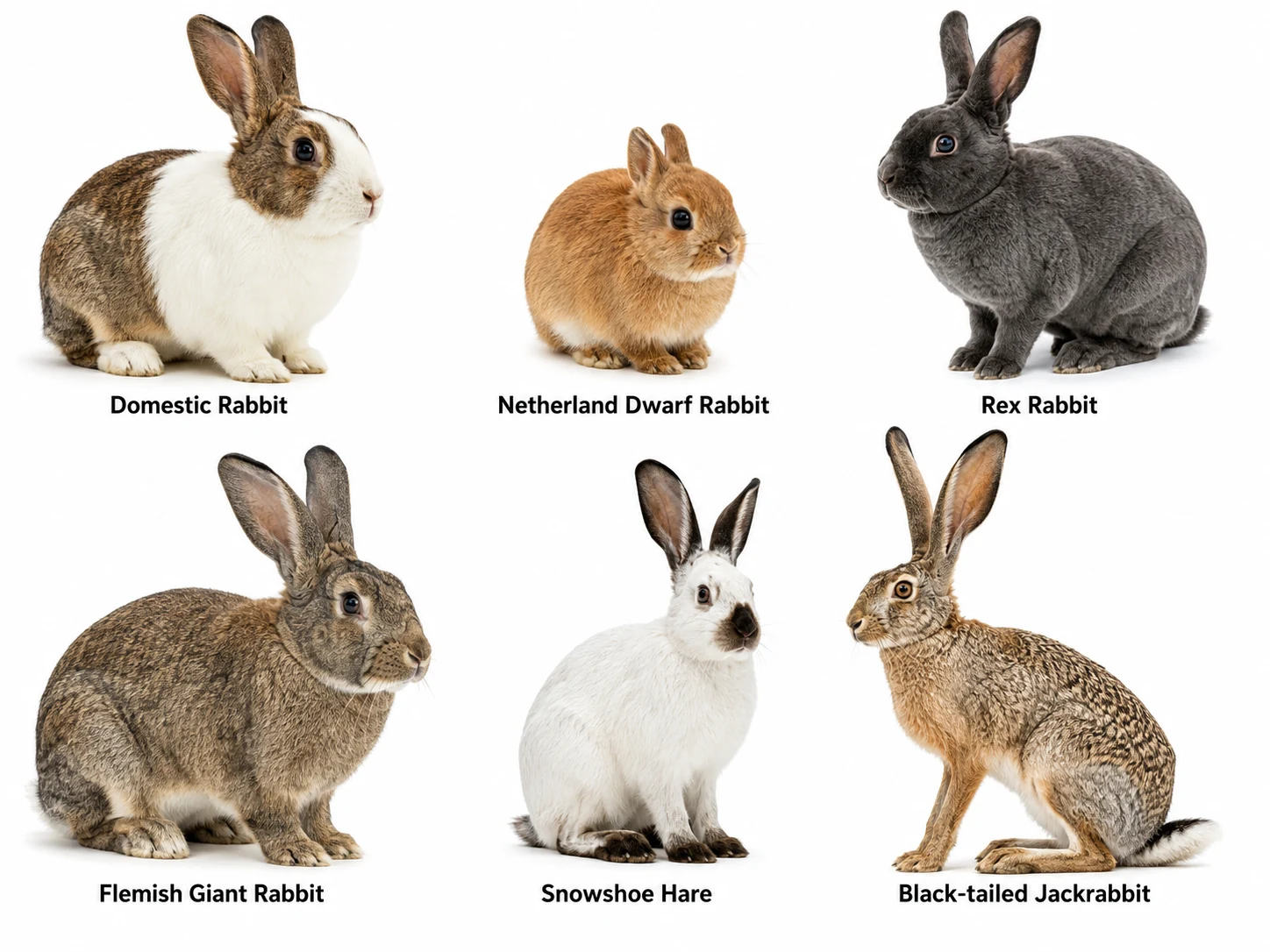
Rabbits vary substantially in adult size and conformation. A Netherland Dwarf may weigh around 1 kg or less, while giant breeds may weigh several times as much. Coat type, ear shape, skull conformation, body size, age, and medical history influence grooming, dental, orthopedic, and housing needs.
Quick Care Snapshot
| Care Need | Recommended Routine | Why It Matters |
|---|---|---|
| Grass hay | Unlimited, 24 hours/day for most adults | Essential fiber for gut motility, cecal health, and dental wear. |
| Water | Fresh water always available | Supports gastrointestinal and urinary health. |
| Pellets | Measured, high-fiber, life-stage-appropriate portion | Provides concentrated nutrients without displacing hay. |
| Leafy greens | Daily variety, introduced gradually | Adds water, micronutrients, and enrichment. |
| Exercise | Daily free movement in a safe area | Supports mobility, weight control, GI function, and behavior. |
| Weight | Weekly; more often during illness or in seniors | Weight loss may precede obvious illness. |
| Veterinary exam | At least annually; often every 6 months for seniors/chronic disease | Helps identify dental, urinary, cardiac, reproductive, and other disease early. |
HOUSING OPTIONS & HOME SETUP
1. Free-Roaming in the House
A properly prepared rabbit may live free-roaming in part or all of the home. Free-roaming does not have to mean unrestricted access to every room. Many households designate one or several bunny-proofed rooms while closing off kitchens, garages, utility areas, bedrooms, or other spaces that cannot be made safe.
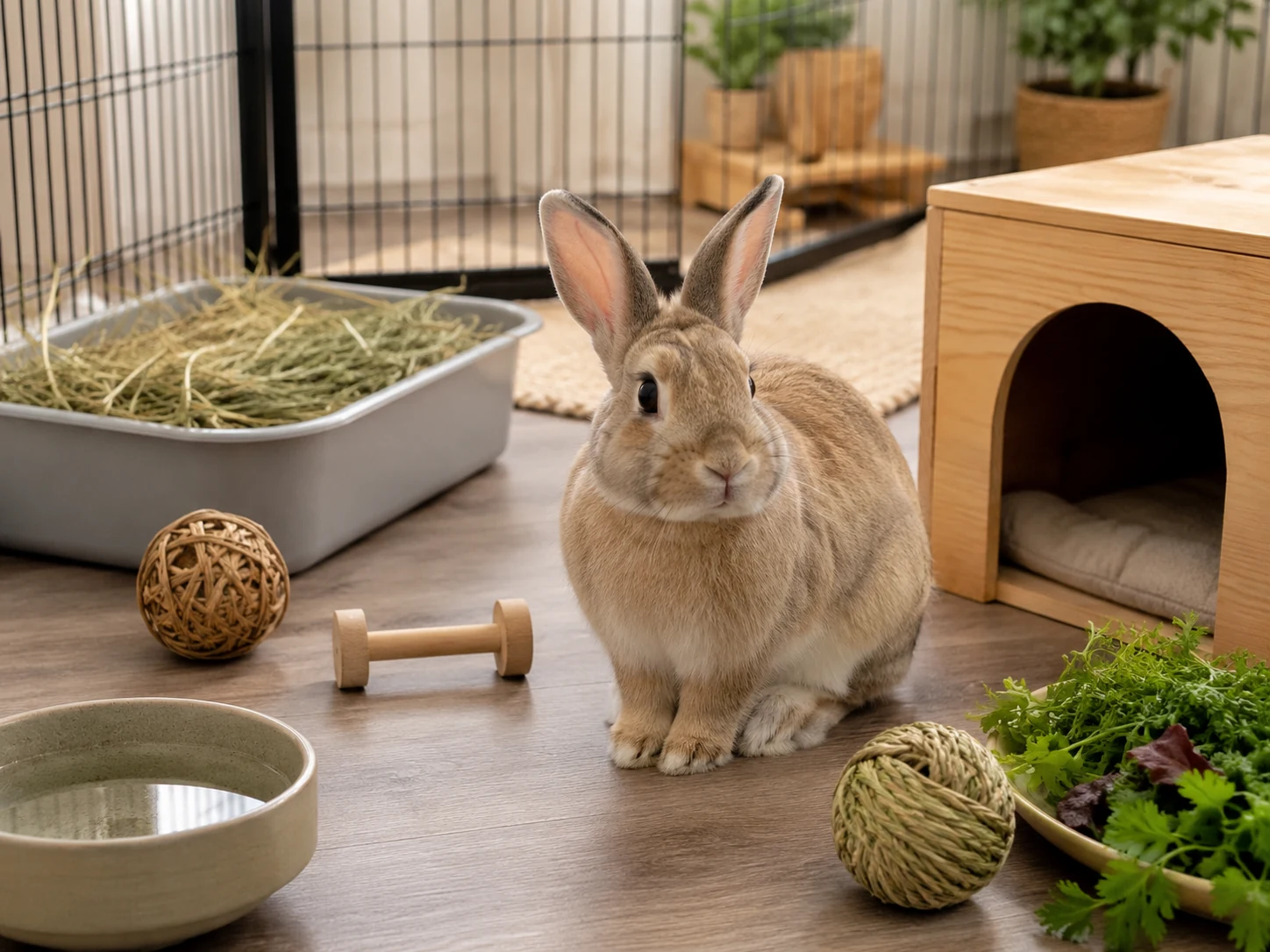
Free-roam housing works best when the rabbit is reliably litter trained, dangerous objects are inaccessible, flooring provides traction, and the household can prevent encounters with dogs, cats, children, open exterior doors, toxic plants, medications, electrical wiring, and other hazards. A free-roaming rabbit should still have a recognizable “home base” containing litter boxes, hay, water, resting places, and hides.
- Protect every accessible electrical cord with rigid barriers or heavy-duty cord protection.
- Block reclining furniture mechanisms, appliance gaps, stair hazards, and unsafe crawl spaces.
- Protect carpet edges, baseboards, foam, rubber, and other materials that may be chewed and swallowed.
- Place litter boxes in the rabbit's chosen elimination areas; larger homes may need multiple boxes.
- Provide washable rugs or other non-slip surfaces on slick floors.
- Maintain a secure room or exercise pen that can be used during illness, recovery, home repairs, visitors, or other situations requiring temporary confinement.
2. Exercise Pen or Dedicated Rabbit Room
An exercise pen or dedicated bunny-proofed room is an excellent primary housing option when full free-roaming is impractical. The area should be large enough for the rabbit to run, stretch fully, stand upright, rest away from the litter box, and maintain separate feeding, hiding, and toilet zones.
Small cages should not be considered complete housing. If a cage is retained as a sleeping or retreat area, the door should open into a substantially larger exercise space for routine daily access.
3. Flooring and Resting Surfaces
Solid flooring with secure traction is preferred. Slippery hardwood or tile can make rabbits reluctant to move and may worsen orthopedic problems. Use washable rugs, mats, or other surfaces the rabbit cannot easily shred and ingest.
Wire flooring can injure the feet and contribute to pododermatitis. If wire is unavoidable in a temporary or specialized setup, provide a substantial solid resting surface.
4. Hides, Rest Areas, and Visual Security
Provide at least one covered retreat where the rabbit can rest without being approached. Cardboard boxes with two entrances, tunnels, wooden hide boxes, and covered sections of an exercise pen can provide security. Bonded rabbits should have enough resources that one rabbit cannot easily trap another.
5. Litter Boxes and Litter
Most house rabbits can be litter trained. Use a box large enough for the rabbit to sit and turn comfortably; many rabbits prefer a box large enough to lounge in while eating hay. Place hay in or immediately beside the litter area because rabbits commonly eat and eliminate at the same time.
- Use paper-based litter, paper pellets, or other rabbit-safe absorbent products.
- Avoid clumping cat litter because ingestion can cause obstruction.
- Avoid strongly perfumed litter and aromatic cedar.
- Scoop or replace wet/soiled material daily.
- A sudden change in litter habits can reflect territorial behavior, but also arthritis, urinary pain, neurologic disease, or other illness.
6. Temperature and Ventilation
Rabbits tolerate cool conditions better than heat. A moderate indoor environment is appropriate for most house rabbits; the supplied reference lists approximately 60–70°F (15.6–21°C) as a target range. Keep housing away from direct sunlight, hot windows, heating vents, poorly ventilated garages, and sustained high humidity.
7. Outdoor Access
Outdoor exercise should be supervised and protected from predators, toxic vegetation, pesticides, extreme weather, mosquitoes and flies, and exposure to wild rabbits. Secure covered exercise runs are safer than unrestricted yard access. Outdoor exposure also increases the importance of RHDV2 biosecurity.
BEHAVIOR, SOCIAL NEEDS & ENRICHMENT
1. Social Companionship
Rabbits are naturally social. Many do best with a compatible rabbit companion after both rabbits are appropriately spayed or neutered. Human interaction is valuable, but it does not fully substitute for the behavioral repertoire of a bonded rabbit pair.
Bonding should occur gradually in neutral territory. Mounting, chasing, and brief dominance displays may occur, but biting, prolonged circling, locking-on, or rolling fights require immediate separation.
2. Normal Behaviors
- Binkies: jumps and twists associated with excitement or play.
- Flopping: suddenly lying on the side, usually a sign of relaxation.
- Chinning: rubbing the underside of the chin on objects to scent-mark territory.
- Digging and chewing: normal behaviors that require safe outlets rather than punishment.
- Thumping: a warning or alarm response.
- Tooth purring: gentle tooth clicking during relaxation; loud grinding with a hunched posture can indicate pain.
3. Exercise and Enrichment
Provide daily opportunities to run, hop, explore, dig, forage, chew, and hide. Enrichment may include cardboard tunnels and boxes, untreated wicker, paper bags with handles removed, safe branches, hay-stuffed toys, digging boxes, and food puzzles.
Exercise balls are inappropriate for rabbits because they restrict normal posture and environmental interaction and can contribute to injury or stress.
4. Handling and Restraint
Rabbits have powerful hind limbs and a relatively lightweight skeleton. A frightened rabbit that kicks while unsupported can fracture the spine or a limb.
- Support the chest and hindquarters whenever lifting.
- Keep the rabbit close to the body and minimize height above the floor.
- Use a non-slip surface for examination or grooming.
- Never lift a rabbit by the ears.
- Never suspend the body by the scruff alone.
- Children should interact on the floor with adult supervision rather than carrying rabbits around the house.
NUTRITION – THE FOUNDATION OF HEALTH
1. Unlimited Grass Hay
For most healthy adult rabbits, grass hay should make up the largest part of the diet and be available continuously. Timothy, orchard grass, meadow, brome, and similar hays provide the long-stem fiber required for normal cecal fermentation and gastrointestinal motility. Prolonged chewing also supports normal dental wear.
Hay should be dry, fresh-smelling, and free of visible mold and excessive dust. Growing rabbits, pregnant or lactating does, underweight patients, and certain medical cases may require alfalfa or a higher-energy diet under veterinary direction.
2. Pellets
Use a plain, high-fiber pellet appropriate to the rabbit's life stage. Adult maintenance diets are often timothy-based. Pellets are nutritionally concentrated and should generally be measured rather than offered without limit to healthy adults.
Avoid muesli-style mixtures containing colorful pieces, nuts, corn, seeds, or dried fruit. Selective feeding can result in excessive calories and an unbalanced nutrient intake.
3. Leafy Greens and Vegetables
Offer a varied selection of washed rabbit-safe leafy greens. Examples include romaine and other leaf lettuces, cilantro, basil, parsley, endive, escarole, bok choy, and dandelion greens from pesticide-free sources. Introduce new foods one at a time and gradually, particularly in rabbits that have not previously eaten fresh greens.
Carrot and fruit are best treated as small high-sugar treats rather than dietary staples.
4. Foods That Do Not Belong in the Routine Diet
- Seeds, nuts, corn, and grain-heavy mixes
- Bread, crackers, cookies, cereal, and other processed starches
- Yogurt drops and sugary commercial treats
- Chocolate, candy, and other human sweets
- Large amounts of fruit or carrot
- Unknown plants or branches
- Moldy or spoiled hay and produce
5. Fresh Water
Fresh water must always be available. Many rabbits drink well from a heavy ceramic bowl because it permits natural drinking posture and a high rate of intake; bottles can also be used if they are checked daily for obstruction or leakage. Some households provide both.
6. Diet Changes
Make significant dietary changes gradually. Abrupt replacement of familiar foods, sudden high-carbohydrate treats, or loss of hay intake can disrupt normal gastrointestinal function.
CECOTROPES, URINE & NORMAL RABBIT FEATURES
1. Cecotrophy
Rabbits produce normal dry fecal pellets and a second type of nutrient-rich cecal material called cecotropes. Cecotropes are usually eaten directly from the anus and may never be noticed by the owner. They supply microbial protein, amino acids, B vitamins, vitamin K, and other nutrients.
Repeated uneaten cecotropes stuck to the coat may indicate obesity, arthritis, dental disease, inappropriate diet, or another problem that prevents normal ingestion.
2. Urine and Calcium
Rabbit calcium metabolism is unusual. A large proportion of absorbed calcium is excreted through the kidneys, so urine can normally appear cloudy or contain creamy white sediment. Pigments can also make normal urine look orange, red, or brown.
However, straining, repeated small urinations, a persistently wet rear end, thick gritty sludge, pain, loss of appetite, or obvious blood requires veterinary evaluation.
3. Teeth
All rabbit teeth grow continuously. The second pair of small upper incisors—the “peg teeth”—sit behind the larger upper incisors. Normal wear depends on tooth alignment and prolonged chewing of fibrous foods, especially grass and hay.
4. Breathing
Rabbits are obligate nasal breathers under normal conditions. Open-mouth breathing is therefore a particularly serious clinical sign.
GROOMING, FEET & DENTAL HEALTH
1. Coat Care
Brush rabbits regularly and increase grooming during heavy molts. Long-haired breeds may require daily combing. Rabbits normally ingest some hair during grooming, but adequate fiber and normal gastrointestinal motility are more important than commercial “hairball remedies.”
Routine bathing is unnecessary and can cause severe stress or chilling. Spot-clean small areas when necessary and seek veterinary advice for a persistently soiled rear end.
2. Nail Care
Check nails every few weeks. Overgrown nails alter stance and may worsen sore hocks. If the nails are dark, severely overgrown, or the rabbit struggles strongly, have the veterinary team demonstrate safe trimming.
3. Sore Hocks (Pododermatitis)
Check the bottoms of the hind feet regularly. Hair loss, redness, scabs, ulceration, or swelling can indicate pododermatitis. Obesity, arthritis, poor flooring, wet litter, and reduced mobility increase risk.
4. Dental Disease
Dental disease can involve incisors, premolars, molars, or tooth roots. Normal-looking front teeth do not rule out significant cheek-tooth disease.
- Reduced hay intake or preference for soft foods
- Dropping food while chewing
- Drooling or a wet chin
- Weight loss
- Eye or nasal discharge
- Facial swelling or jaw lumps
- Overgrown, broken, displaced, or uneven incisors
Complete assessment may require sedation or anesthesia and skull imaging. Teeth should not be clipped with nail trimmers.
PREVENTIVE VETERINARY CARE
1. Establish Care Early
Choose a veterinarian who routinely treats rabbits before an emergency occurs. A new-pet examination can confirm sex, establish a baseline weight, inspect the teeth and feet, assess body condition, and review diet, housing, and parasite risk.
2. Wellness Schedule
| Life Stage | Suggested Monitoring |
|---|---|
| New rabbit | Initial examination and husbandry review. |
| Healthy adult | At least annual examination. |
| Senior rabbit | Often every 6 months, depending on age, breed, and health. |
| Chronic disease | Individualized rechecks plus home weight and appetite monitoring. |
3. Spay and Neuter
Spaying and neutering prevent unwanted litters and often improve litter habits and bonding. Spaying is especially important because intact female rabbits have a substantial lifetime risk of uterine disease, including uterine adenocarcinoma.
Timing should be individualized by breed, size, sex, health, and surgeon experience rather than using one rigid age for every rabbit.
4. Rabbit Hemorrhagic Disease Virus 2 (RHDV2)
RHDV2 is a highly contagious, often fatal disease of domestic and wild rabbits and hares. Transmission can occur through infected animals, insects, contaminated clothing and shoes, cages, equipment, food, hay, or other fomites. The virus does not infect people.
USDA APHIS currently notes that a domestically produced RHDV2 vaccine has received a conditional license. Vaccine availability and recommendations depend on location and individual circumstances, so discuss vaccination with a rabbit-experienced veterinarian.
- Limit contact with wild rabbits and their feces.
- Use dedicated indoor footwear or remove outdoor shoes around rabbit areas.
- Wash hands before and after handling rabbits.
- Quarantine newly acquired rabbits and discuss local disease risk with your veterinarian.
- Check current outbreak information before travel, shows, boarding, or introducing rabbits from other homes.
5. Parasite Prevention
Routine dog and cat parasite products should not be used without veterinary direction. Fipronil is contraindicated in rabbits because severe toxicity can occur. Flea, mite, and other parasite treatment should be selected specifically for rabbits.
REPRODUCTION & LIFE-STAGE CARE
1. Sexual Maturity and Pregnancy
Smaller breeds generally mature earlier than larger breeds, often beginning around 4–6 months. Female rabbits are induced ovulators, and pregnancy lasts approximately 31–33 days.
Does typically nurse their kits only once or twice daily for a few minutes. This brief nursing pattern is normal and does not necessarily indicate neglect.
2. Senior Rabbits
As rabbits age, increase attention to body weight, mobility, dental disease, cataracts, heart and kidney disease, urinary changes, sore hocks, masses, and the ability to groom and ingest cecotropes. Modify housing with lower litter-box entrances, additional traction, and easy access to hay and water when mobility declines.
COMMON HEALTH PROBLEMS
1. Gastrointestinal Stasis
GI stasis is a slowdown of normal gastrointestinal movement and is commonly secondary to pain, dental disease, stress, dehydration, inappropriate diet, urinary disease, systemic illness, or other underlying problems. It can become life-threatening.
Prevention centers on unlimited hay, appropriate diet, hydration, exercise, weight control, enrichment, grooming during molts, and prompt treatment of pain or disease.
2. Gastrointestinal Obstruction
True obstruction can initially resemble stasis but may require very different treatment. Severe abdominal pain, rapid deterioration, marked distension, or a rabbit that suddenly stops eating should be examined rather than treated at home with routine syringe feeding.
3. Urinary Sludge and Stones
Bladder sludge, cystitis, and urolithiasis can cause straining, pain, urine scald, blood, reduced appetite, and repeated small urinations. A blocked urinary tract is an emergency.
4. Respiratory Disease
Sneezing, persistent nasal discharge, eye discharge, noisy breathing, increased respiratory effort, or appetite loss can accompany respiratory disease. Pasteurellosis is one possible cause, but respiratory signs should not automatically be assumed to be caused by Pasteurella; diagnosis depends on examination and testing.
5. Encephalitozoonosis
Encephalitozoon cuniculi can affect the nervous system, kidneys, and eyes. Head tilt, loss of balance, hind-limb weakness, urinary changes, or lens abnormalities may occur, but these signs have many other potential causes and require veterinary evaluation.
6. Uterine Disease
Intact female rabbits are predisposed to uterine adenocarcinoma and other reproductive disease. Signs can include bloody discharge, apparent blood in the urine, abdominal enlargement, reduced appetite, or no obvious signs until disease is advanced.
7. Trauma and Spinal Injury
Falls, rough handling, or powerful kicking while the hindquarters are unsupported can cause fractures or spinal injury. Sudden weakness or paralysis after trauma is an emergency.
MEDICATION SAFETY
Rabbit gastrointestinal health depends on a complex cecal microbial population. Some orally administered antibiotics can cause severe dysbiosis and potentially fatal enterotoxemia.
Current Merck guidance lists oral clindamycin, lincomycin, erythromycin, ampicillin, amoxicillin/clavulanic acid, and cephalosporins among antibiotics contraindicated for oral administration in rabbits. Drug safety depends on the specific agent, route, dose, infection, and patient, so treatment should be prescribed by a rabbit-experienced veterinarian.
- Never give leftover antibiotics from another pet.
- Do not give human pain relievers unless specifically prescribed.
- Do not use flea or tick products intended for dogs or cats unless confirmed safe for rabbits.
- Never use fipronil on a rabbit.
- Report severe appetite loss, diarrhea, bloating, or lethargy after starting medication promptly.
ANESTHESIA, SURGERY & RECOVERY
Rabbits can undergo anesthesia and surgery successfully when managed by an experienced team using appropriate monitoring, warming, analgesia, airway planning, and postoperative nutritional support.
Rabbits cannot vomit and should generally not be subjected to prolonged pre-anesthetic fasting. Follow the treating veterinarian's specific instructions. Eating soon after surgery is important, and pain control helps reduce postoperative anorexia and gastrointestinal slowdown.
WHEN TO CALL THE VETERINARIAN
Emergency — Seek Care Immediately
- Open-mouth breathing or severe respiratory distress
- Collapse, profound weakness, or unresponsiveness
- No food intake with markedly reduced or absent fecal output
- Severe abdominal distension or obvious intense pain
- Straining without producing urine
- Major trauma, uncontrolled bleeding, or sudden inability to use the limbs
- Heat-stroke signs
- Seizures, severe head tilt, rolling, or sudden loss of balance
Prompt Veterinary Visit
- Gradual or sudden weight loss
- Reduced hay intake or changing chewing behavior
- Drooling, facial swelling, or eye/nasal discharge
- Persistent sneezing or noisy breathing
- Repeated urinary discomfort or blood in the urine
- Persistent uneaten cecotropes or a soiled rear end
- Red, swollen, or ulcerated feet
- New lump or abdominal enlargement
- New litter-box problems associated with pain or reduced mobility
TRAVEL, BOARDING & EMERGENCY PREPAREDNESS
Transport
Use a secure carrier with solid footing and familiar bedding or a towel. Provide hay during transport, protect the carrier from direct sun and temperature extremes, and secure it in the vehicle. Bonded rabbits can often travel together when medically appropriate.
Pet-Sitter or Boarding Instructions
Leave written instructions covering normal hay, pellet and vegetable intake, water, medications, litter habits, each rabbit's current weight, veterinary contact information, and emergency signs. Caregivers should confirm that each rabbit is actually eating and passing feces rather than assuming food disappearance means every rabbit ate normally.
Emergency Kit
- Secure carrier
- Digital scale
- Usual hay and pellets
- Current medication list and medical history
- Rabbit-experienced veterinary and emergency contact information
- Veterinarian-recommended recovery food and feeding equipment only if you have been instructed how and when to use it
OWNER CHECKLIST
Daily
- Unlimited fresh grass hay available
- Fresh water available and clean
- Planned pellet and vegetable ration offered
- Confirm normal appetite and fecal output
- Spot-clean litter and wet areas
- Observe breathing, posture, eyes/nose, urine, feet, and activity
Weekly
- Weigh and record the result
- Check nails, feet, coat, skin, rear end, and visible incisors
- Inspect cords, barriers, flooring, and other bunny-proofing
- Clean housing components as needed
Periodically
- Trim nails as needed
- Review hay and pellet freshness
- Reassess body condition and mobility
- Review RHDV2 vaccination and local risk with your veterinarian
- Update emergency veterinary contact information
SELECTED REFERENCES & TRUSTED RESOURCES
- Merck Veterinary Manual — Management of Rabbits.
- Merck Veterinary Manual — Nutrition of Rabbits.
- Merck Veterinary Manual — Noninfectious Diseases of Rabbits.
- UC Davis School of Veterinary Medicine — Rabbit Care and herbivorous small-mammal nutrition resources.
- USDA APHIS — Rabbit Hemorrhagic Disease.
- House Rabbit Society / Rabbit.org — indoor housing, free-roaming, litter training, diet, companionship, and rabbit behavior resources.
- Dr. Bob's Rabbit Sites — additional rabbit organizations, care references, and breed resources.
- Basic Information for Rabbits — supplied source document.
Publication Note
This veterinarian-authored guide provides general educational information and does not replace examination, diagnosis, or individualized veterinary care. Contact a rabbit-experienced veterinarian when a rabbit's appetite, fecal output, breathing, urine, activity, or behavior changes.
Questions or concerns?
Advanced Veterinary Medical Center
3550 San Pablo Dam Road, Suite E – Sobrante Plaza
El Sobrante, CA 94803
(510) 222-7387
AVMCVET2021@gmail.com