Cockatiel Husbandry & Preventive Care
Cockatiel Care Guide
A comprehensive husbandry and preventive-care guide for companion cockatiels, including spacious housing, flight and exercise, balanced nutrition and diet conversion, enrichment and positive-reinforcement training, sleep and night frights, reproductive management, preventive care, and recognition of important cockatiel health problems.
There is a reason cockatiels have remained among the world's most popular companion birds. They combine many of the qualities people enjoy in larger parrots—intelligence, sociability, expressive body language, vocal interaction, curiosity, and the ability to form strong relationships—with a relatively manageable body size.
A relaxed cockatiel may sit beside its owner quietly grinding its beak, lower its head insistently for a scratch, whistle a familiar tune, explore a cardboard toy, or suddenly raise its crest because something across the room has attracted its attention. Once a person learns to read the crest, posture, eyes, feathers, and voice, the bird becomes remarkably communicative.
The domestic cockatiel, Nymphicus hollandicus, is native to Australia. Wild cockatiels inhabit primarily open and semi-arid country, often moving considerable distances as food and water availability change. They are strong fliers and social birds that commonly forage on or near the ground for grass seeds and other plant foods. That natural history matters in captivity. A cockatiel is not designed to spend its life sitting on one perch beside a full bowl of sunflower seed.
Cockatiels are members of the cockatoo family and share several characteristics with their larger relatives, including an erectile crest and specialized powder-down feathers. They are nevertheless their own species with distinctive nutritional, behavioral, reproductive, and medical considerations.
Good cockatiel care means providing enough room to move and fly, balanced nutrition rather than an unrestricted seed diet, clean air, meaningful social contact, opportunities to forage and manipulate objects, a predictable sleep cycle, and veterinary attention before subtle illness becomes severe.
At a Glance
| Characteristic | Cockatiel |
|---|---|
| Scientific name | Nymphicus hollandicus |
| Family | Cacatuidae |
| Native range | Australia |
| Natural habitat | Open and semi-arid grassland, scrub, woodland edges, and areas associated with available water |
| Typical adult length | About 12–13 in (30–33 cm), including the long tail |
| Typical adult weight | Approximately 80–110 g, depending on body size and line |
| Typical lifespan | Commonly 15–20 years with good care; some live well into their twenties |
| Sexual maturity | Often approximately 6–12 months physiologically, although breeding should be delayed until full maturity |
| Typical clutch | Commonly 4–6 eggs, but larger clutches occur |
| Incubation | Approximately 18–21 days |
| Fledging | Usually around 4–5 weeks |
| Activity | Diurnal |
| Social character | Highly social; usually benefits from substantial daily interaction |
| Primary exercise | Flight, climbing, walking, and foraging |
| Vocalization | Whistles, contact calls, chirps, alarm calls; some individuals imitate words and household sounds |
| Diet | Balanced formulated psittacine food plus controlled seed and varied vegetables; fruit in smaller amounts |
| Bathing | Regular bathing or misting should be offered according to individual preference |
| Preventive care | Initial avian examination and at least annual veterinary examinations |
Meet the Cockatiel
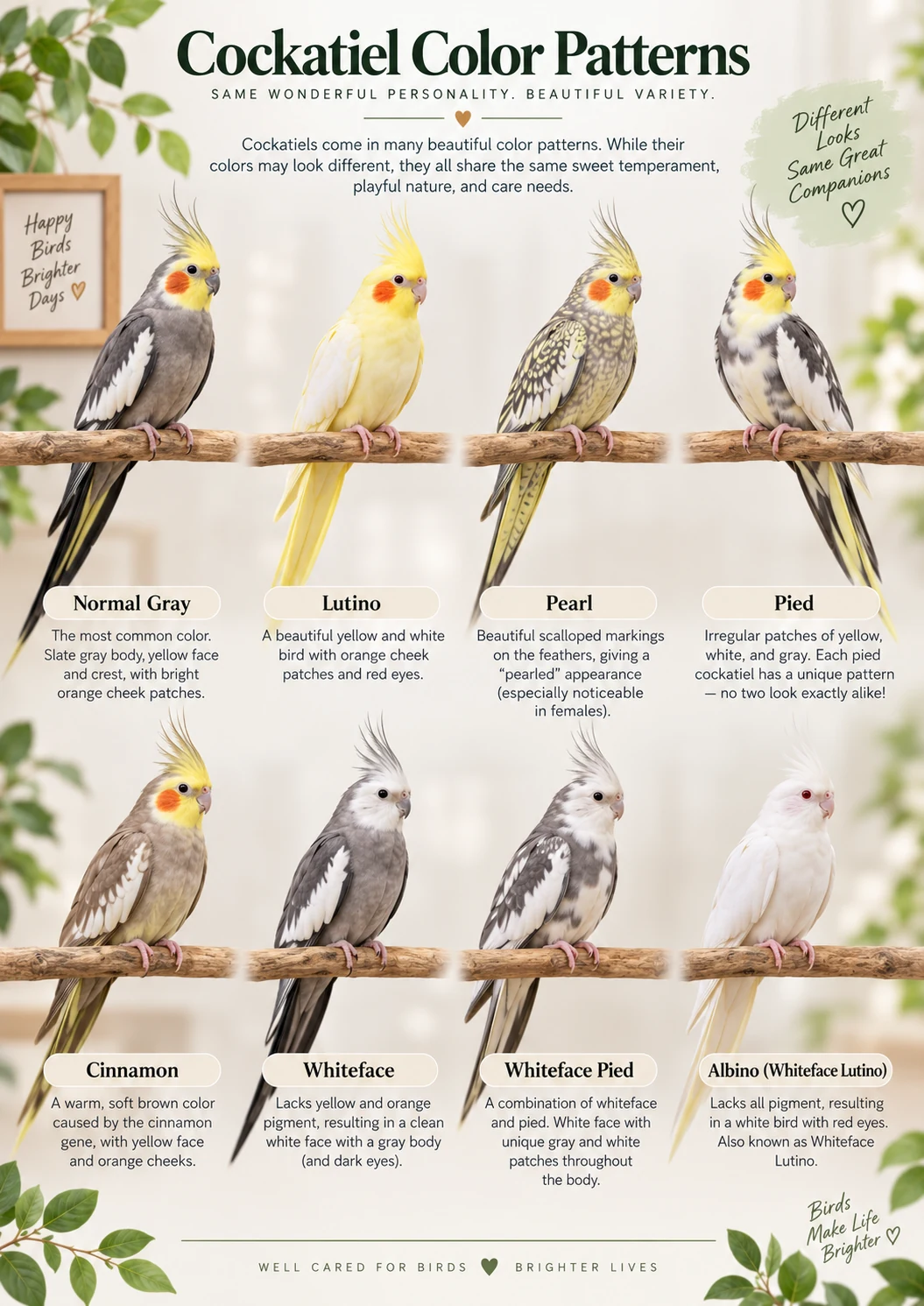
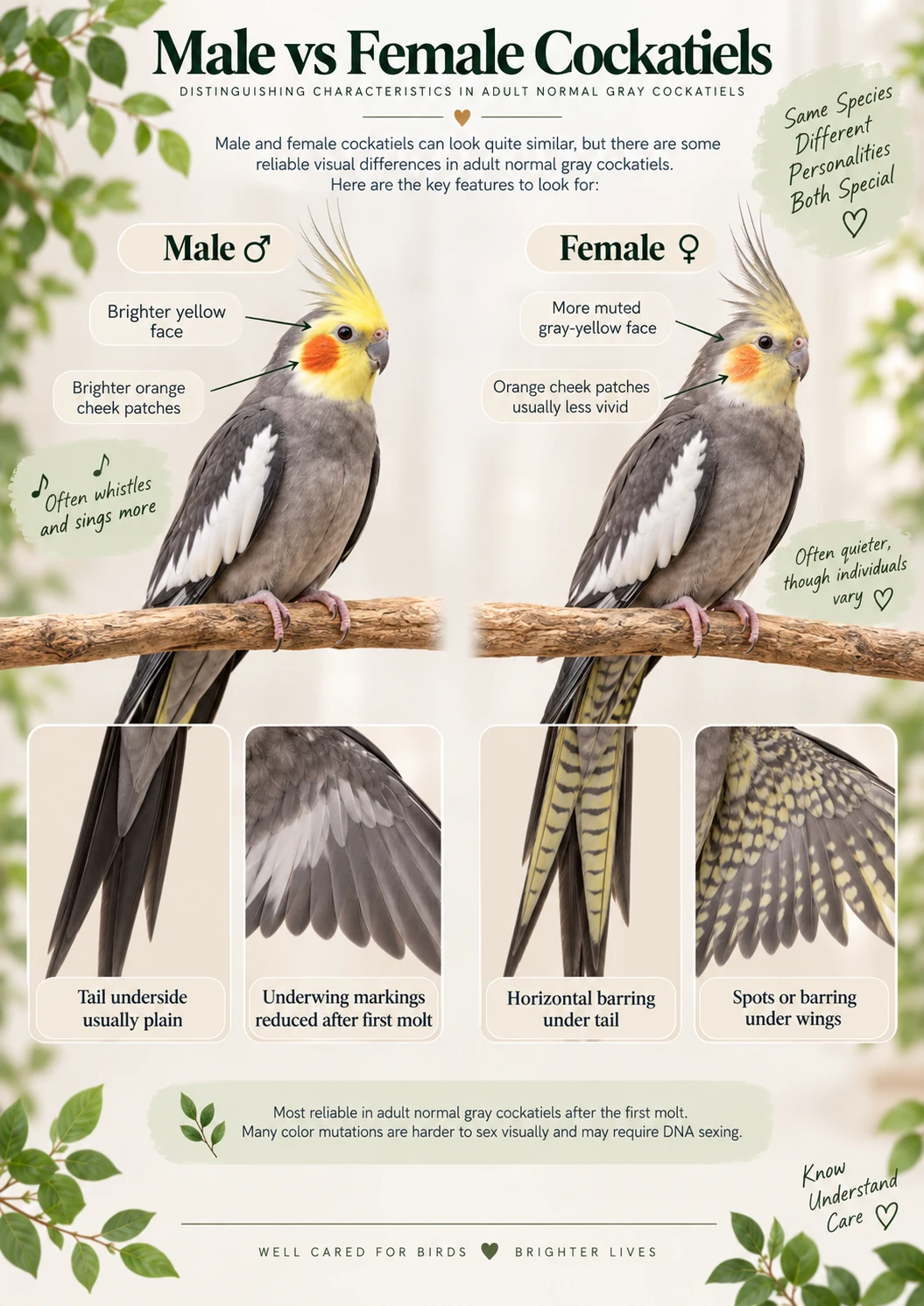
The wild-type cockatiel is an elegant gray bird with a long tapered tail, prominent crest, white wing patches, and orange cheek patches. Adult males typically develop a brighter yellow face after the first major molt, while females retain more subdued facial coloration and characteristic barring or spotting beneath the tail and wings.
Domestic breeding has produced numerous mutations, including lutino, pied, pearl, cinnamon, whiteface, fallow, silver, and combinations of these patterns. Color mutation affects appearance but does not create a different species or fundamentally different husbandry requirements.
The first molt, commonly occurring around 6–12 months of age, often reveals the adult plumage characteristics that help distinguish males from females in mutations where visual sexing remains possible. In some mutations, however, traditional color-based sexing becomes unreliable. DNA sex testing is the most dependable option when knowing sex matters for reproductive management or social planning.
What Wild Cockatiels Teach Us About Pet Cockatiels
Wild cockatiels travel in flocks, fly long distances, and spend considerable time foraging on or near the ground. These behaviors help explain why pet cockatiels are so attentive to their people, why they often enjoy exploring flat surfaces or foraging trays, and why they become physically and behaviorally unhealthy if confined to a small cage with little exercise or stimulation.
The goal of husbandry is not to recreate Australia inside a home. It is to understand what the bird was designed to do and provide safe captive outlets for those behaviors.
Choosing a Cockatiel
A well-socialized young cockatiel can be an excellent companion, but age alone should not determine the choice. Adult birds can also form strong relationships and may already have established personalities that make compatibility easier to assess.
Before bringing a bird home, observe it quietly. A healthy cockatiel should be alert and responsive, move comfortably between perches, maintain a normal upright posture, and breathe quietly. The feathers should be generally smooth and orderly when the bird is awake and relaxed. The eyes and nostrils should be clean, and the bird should be able to grip normally with both feet.
A persistently fluffed bird, one sitting low on the perch or cage floor, a bird breathing with an open mouth at rest, or one showing pronounced tail movement with every breath may be ill.
Also look beyond physical health. A companion bird should show an ability to recover from mild novelty. A cautious bird is not necessarily a poor choice, but one that remains panicked around ordinary human movement may need considerably more patient socialization.
Avoid purchasing an unweaned baby simply because someone claims hand-feeding will create a stronger bond. Weaning is a medically and behaviorally important developmental process. A healthy fully weaned young bird can bond very strongly with a new owner without exposing the inexperienced owner to the risks of aspiration, crop burns, improper formula preparation, crop stasis, malnutrition, and developmental problems.
Quarantine and the Newly Acquired Bird
A newly acquired cockatiel should initially be separated from established birds. A practical quarantine period is approximately 30–45 days, with a separate room preferable to another cage in the same room. Separate food and water bowls, toys, cleaning equipment, and bathing supplies should be used.
An avian veterinary examination early in quarantine is especially worthwhile because clinically normal birds can carry infectious agents. One important example is Chlamydia psittaci, the organism responsible for avian chlamydiosis or psittacosis. Because the organism can infect people, suspected cases also carry public-health implications.
The Cockatiel Cage: A Home Base, Not the Whole World
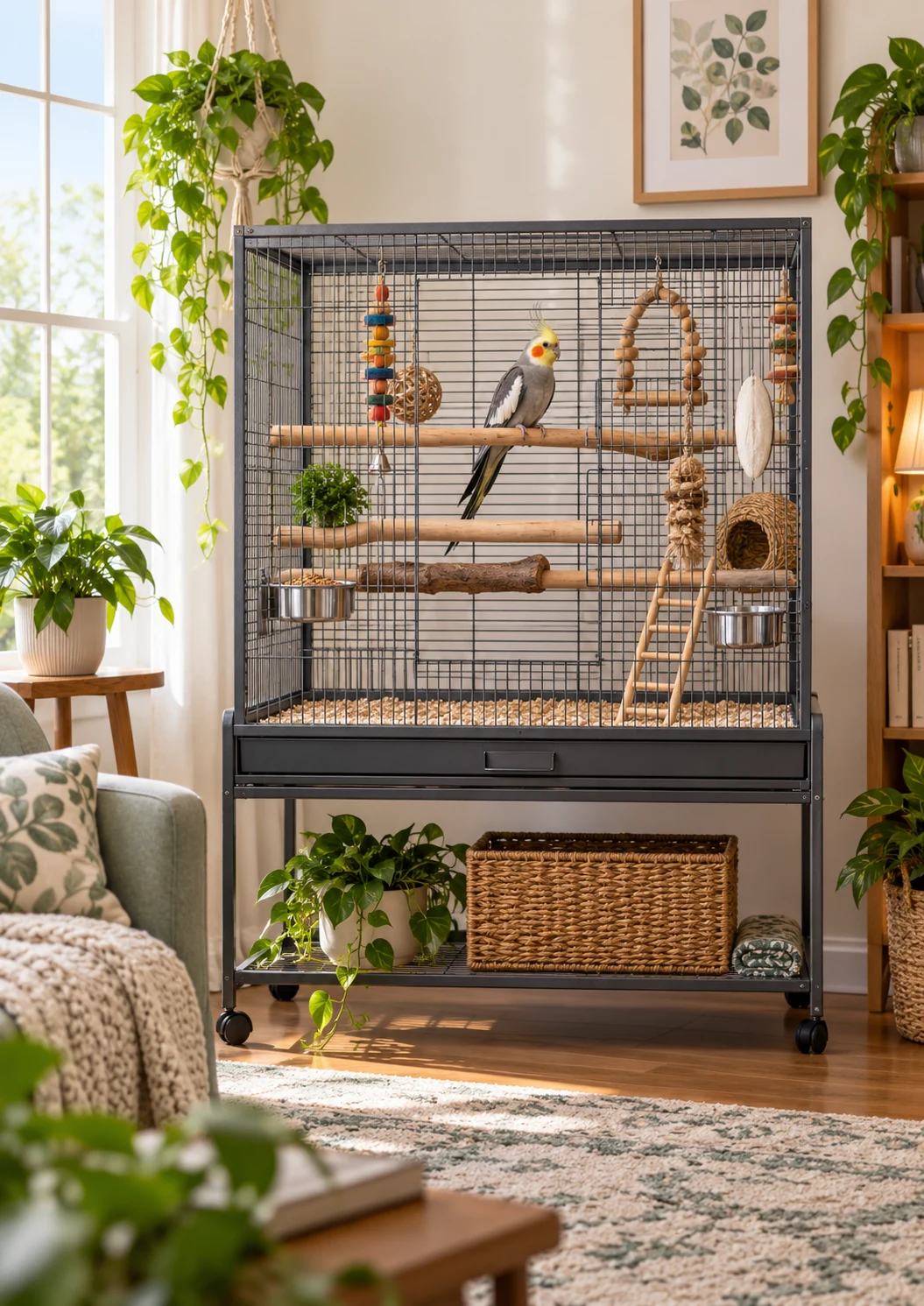
A cockatiel's cage should provide safety, food, sleep, play, and a secure retreat. It should not be the only environment the bird experiences.
Older minimum cage dimensions for cockatiels are often remarkably small. For a companion cockatiel, the practical goal should be simple: purchase the largest safe cage the household can reasonably accommodate, with enough width for the bird to fully extend both wings and move between perches without striking the tail or furnishings.
A cage around 30–36 inches wide or larger is a far better home base than the tiny cages historically marketed for cockatiels, particularly when the bird spends substantial time inside it. Horizontal dimension matters because cockatiels fly laterally. Height is useful for climbing and for accommodating the long tail, but an extremely tall narrow cage is not a substitute for width.
Bar Spacing
Approximately 1/2 to 5/8 inch spacing is appropriate for most cockatiels. Horizontal bars on at least part of the cage are helpful because cockatiels also enjoy climbing. The cage should have smooth welds, secure doors, bird-safe coatings, and no exposed sharp metal or questionable solder.
Furnishing the Cage Without Filling It
Cockatiels benefit from more interior furnishings than canaries, but there should still be enough room to move comfortably. A good arrangement includes several perches, a selection of toys, separate food and water areas, and uncluttered pathways between them.
The bird should be encouraged to move rather than sit beside one food bowl all day. Placing favorite activities at different parts of the cage promotes climbing and movement. A foraging opportunity may be placed at one level, vegetables at another, and a favored resting perch elsewhere.
Perches and Foot Health
Cockatiel feet should encounter different diameters and textures. Natural branches are particularly valuable because they create irregular pressure surfaces and provide chewing opportunities. Select only accurately identified nontoxic woods that have not been sprayed with pesticides or exposed to traffic contamination.
Useful known-safe woods can include appropriately prepared apple, pear, willow, birch, ash, elm, maple, mulberry, manzanita, and other established bird-safe species.
A variety of rope, platform, and manufactured wooden perches may also be useful if maintained safely. Avoid relying on one smooth dowel. Sandpaper perch covers should not be used. Highly abrasive concrete perches should not serve as the principal sleeping perch. Check rope perches frequently for loose fibers that can entangle toes.
Cage Placement
Cockatiels are flock-oriented birds and generally do best where they can observe household activity. That does not mean the cage belongs in the busiest possible location. A position where the bird can interact with the household but also retreat visually is preferable. Having one side of the cage near a wall often provides security.
Avoid heating and air-conditioning vents, exterior doors with large temperature fluctuations, and kitchens. The kitchen is particularly hazardous because of fumes from cooking, overheated nonstick materials, smoke, hot liquids, open burners, and cleaning chemicals.
Clean Air Is Essential
Cockatiels are powder-down birds. Specialized feathers continuously produce a fine keratin powder that helps maintain the plumage. This is normal biology, not dandruff or a sign that the bird needs medication.
For most households, regular cleaning, bathing opportunities, and good ventilation are adequate. In homes with asthma, significant allergies, or other birds with respiratory sensitivity, a high-quality room air purifier equipped with appropriate particulate filtration can be very helpful. Avoid ozone-producing air cleaners.
Airborne hazards include cigarette and marijuana smoke, vaping aerosols, incense, scented candles, aerosol cleaners, spray insecticides, paint and solvent fumes, essential-oil or fragrance aerosols, carbon monoxide, and fumes from overheated PTFE or related nonstick coatings. If the air smells strongly of a chemical or fragrance, the bird should not be breathing it.
Temperature and Humidity
Healthy acclimated cockatiels tolerate ordinary indoor temperatures well. A comfortable household range of approximately 65–80°F (18–27°C) is reasonable for most healthy birds, provided changes are gradual. Avoid abrupt shifts, direct cold drafts, and overheating.
Cockatiels do not require tropical humidity, but excessively dry heated air may increase skin and feather discomfort in some individuals. Regular bathing and normal indoor humidity are usually adequate. A sick, very young, geriatric, or debilitated bird may need a narrower comfort range according to veterinary guidance.
Light and Sleep
A cockatiel that lives with humans may easily become chronically sleep-deprived. Television, conversations, room lights, and household activity can continue long after the bird's natural day should have ended. Most cockatiels do well with approximately 10–12 hours of quiet, uninterrupted darkness each night. A stable light cycle also helps reduce inappropriate reproductive stimulation.
The cage may be covered if this genuinely creates darkness and security, but the cover must not impair ventilation. In some households, a separate sleep cage in a quiet room works very well.
Night Frights
Cockatiels have a particular reputation for sudden nighttime panic. A sleeping bird may abruptly begin thrashing around the cage, apparently frightened by a noise, moving shadow, vibration, insect, flash of light, or something the owner never identifies.
Because cockatiels have long wings and tails, a severe episode can result in broken blood feathers, wing trauma, or other injuries. A useful night-fright setup includes a very dim nightlight, particularly for a bird with a history of these episodes. The light should provide orientation without turning nighttime into daylight.
If a night fright occurs, turn on enough light for the bird to orient itself and approach calmly. Check for bleeding, damaged wings, missing feathers, or inability to perch. Repeated severe episodes deserve additional evaluation of environment, health, and sleep conditions.
Full-Spectrum and UV Lighting
Cockatiels benefit from a clear distinction between bright day and dark night. Safe exposure to unfiltered natural sunlight can contribute to normal behavioral and physiologic cues when climate, temperature, predators, and escape risks are controlled. Window glass blocks most useful UVB.
A properly designed avian UV-producing lamp can be considered for birds with little access to natural light. It should be positioned according to the manufacturer's recommended distance, used only during daytime, and arranged so the bird can move away from it. UV lighting is not a substitute for dietary vitamin D or a balanced formulated diet.
Bathing and Feather Care
Cockatiels vary dramatically in how they feel about bathing. Some enthusiastically bathe in shallow water. Others prefer misting. Some spread their wings when they hear a vacuum cleaner, mist, or shower because environmental cues seem to trigger bathing behavior. Others regard every bath offered by their owner as a personal insult.
Provide choices rather than forcing the issue. A shallow dish, gentle mist from above, or supervised shower perch may all be appropriate depending on the bird. Use plain water for routine bathing. Bathing helps remove loose powder and debris and encourages normal preening.
Exercise: Cockatiels Are Designed to Fly
The long pointed wings of a cockatiel are not ornamental. Wild cockatiels are strong, fast fliers, and captive birds need meaningful exercise to maintain cardiovascular fitness, muscle condition, bone strength, coordination, and healthy body weight.
The best exercise for a physically normal cockatiel is flight in a safe environment. A flighted bird should have regular access to a bird-proofed room or sufficiently large flight enclosure. Windows and mirrors must be made visible. Ceiling fans should be off. Doors should be secured. Hot surfaces, toilets, open water containers, cats, and dogs should be excluded.
Birds that cannot safely fly still need exercise through climbing, walking, training, play stands, ladders, and movement between feeding areas. Routine wing clipping is not required for a healthy companion cockatiel and eliminates the bird's most natural form of exercise.
Nutrition: The Seed Bowl Problem
Cockatiels naturally consume seeds in the wild, but a captive bird sitting beside an unlimited bowl of millet and sunflower seed is experiencing an entirely different nutritional environment. Commercial seed diets are typically energy-dense and nutritionally incomplete when used alone.
Cockatiels maintained primarily on seed are particularly susceptible to vitamin A deficiency, calcium and vitamin D imbalance, obesity, hepatic lipidosis, poor feather quality, reproductive disease, and other consequences of chronic nutritional imbalance.
What Should a Cockatiel Eat?
For practical household use, the most important principle is that formulated food should provide the nutritional foundation. Choose a reputable nutritionally complete formulation designed for cockatiels or small parrots. Seed should be controlled rather than unrestricted. Millet and other seeds can remain valuable foods and excellent training or foraging rewards, but the bird should not be allowed to ignore the balanced food entirely.
Vegetables should be offered daily. Particularly useful choices include kale, collard greens, bok choy, dandelion greens, broccoli, red and orange bell pepper, carrot, pumpkin, squash, sweet potato, peas, green beans, and cilantro. Fruit can provide variety but should remain a smaller part of the diet than vegetables. Berries, papaya, mango, melon, pomegranate, pear, and apple without seeds are reasonable examples.
Converting a Seed-Dependent Cockatiel to Better Nutrition
A bird that has eaten seed for years may not recognize pellets as food. Mixing pellets into an unlimited seed bowl often accomplishes very little because the bird simply selects the seed and leaves the balanced food behind. Never starve a cockatiel into eating pellets.
Before conversion, obtain an accurate body weight and establish the bird's normal fecal output. During active conversion, weigh the bird daily at approximately the same time. A loss approaching 10% of baseline body weight or a meaningful decrease in droppings suggests that the bird may not be eating enough and should prompt veterinary guidance.
Make the New Food Recognizable
Cockatiels are curious but can also be suspicious of unfamiliar food. Use a pellet size the bird can easily manipulate. Place pellets in the familiar food dish, not only in an unfamiliar new bowl. Offer pellets first thing in the morning, when appetite is strongest, and provide the measured seed portion later once the bird has had an opportunity to investigate the new diet.
Spread pellets on a clean shallow plate or tabletop feeding area. Cockatiels naturally forage on relatively flat surfaces, and some birds investigate food on a plate more readily than food buried in a deep bowl. Pretend to eat a separate clean piece. Cockatiels are socially curious and may investigate food their flock member appears to value. Never offer food that has been in the human mouth.
Crush a few familiar seeds over the pellets so the aroma and tiny seed fragments encourage investigation. Mix a small amount of pellet crumble into a favorite moist vegetable mixture so particles adhere to the food. Slightly moisten pellets with warm water to change the texture and aroma, but remove moist food promptly because it spoils rapidly.
Use Foraging to Your Advantage
Cockatiels are naturally ground-oriented feeders. A clean foraging tray containing shredded paper, safe dry vegetation, or other bird-safe materials with a small measured amount of seed mixed among pellets can encourage searching and accidental sampling. Keep the substrate clean and make sure nothing in the tray can be swallowed dangerously.
Reward Pellet Eating
If the bird voluntarily tastes or eats a pellet, reinforce that behavior. A tiny piece of millet, verbal praise, attention, or another valued reward can help make eating the new food worth repeating. Training principles used for stepping up and target training work equally well around diet change: reinforce the behavior you want rather than forcing it.
A Practical Conversion Sequence
- First week: introduce pellets in the familiar feeding area while maintaining the known seed ration. Offer pellets at the beginning of the morning and use vegetable or moist-food bridges.
- Second and following weeks: if the bird is clearly consuming pellets and maintaining weight, begin gradually reducing unrestricted seed and offering a measured daily portion.
- Over subsequent weeks: move toward the individualized maintenance balance, with formulated food as the foundation and seed used in a controlled way.
Seeds, Millet, and Nuts
Millet is extraordinarily useful with cockatiels because many birds find it highly rewarding. That makes it valuable for training, teaching step-up, target training, carrier training, diet conversion, and foraging enrichment. It also means millet should not be available without limit to a sedentary bird that ignores the balanced portion of the diet.
Sunflower and safflower seeds are even more energy-dense and are best reserved as small rewards rather than daily staples. Nuts are safe in small amounts for most cockatiels but are not nutritionally necessary and are calorie-dense. A fragment of almond or walnut can be an excellent high-value training reward.
Cuttlebone, Calcium, and Grit
Cockatiels hull seeds before swallowing the kernels and do not need insoluble grit or gravel to grind their food. Excessive grit consumption can cause gastrointestinal obstruction.
Cuttlebone is different because it is a soluble calcium source and also provides a useful chewing surface. Calcium deserves particular attention in female cockatiels because this species is notably susceptible to chronic egg laying and reproductive calcium depletion.
A nutritionally complete diet supplies baseline calcium, and additional supplementation should be individualized rather than added automatically to every bird.
Foods to Avoid
Cockatiels should not be intentionally offered avocado, chocolate, caffeine, alcohol, heavily salted foods, moldy food, or unidentified plant material. Fruit pits and potentially toxic seeds should be removed. Onion and garlic are best avoided as deliberate concentrated ingredients. Highly processed human foods should remain unusual rather than routine.
Water
Fresh drinking water must always be available. Cockatiels enjoy dunking pellets, seed hulls, vegetables, and occasionally objects of mysterious origin into their water dish, so a bowl that was clean at breakfast may not remain clean all day. Check water more than once daily and wash bowls every day.
Routine vitamins in drinking water are usually unnecessary in a bird eating an appropriate diet and can encourage microbial growth or alter the taste enough to reduce water consumption.
The Cockatiel Mind
Cockatiels are intelligent, highly social animals. A cage that satisfies physical needs but provides no choices, training, exploration, or social contact is incomplete husbandry. A cockatiel's day should include some combination of social interaction, flight or exercise, chewing, shredding, exploration, climbing, foraging, bathing, training, and quiet independent time.
Toys and Chewing
Cockatiels are curious parrots that investigate objects with the beak and feet. Toys encourage movement, provide opportunities to chew and shred, occupy the bird when people are unavailable, and help transform an otherwise static cage into an environment that changes and invites exploration.
Many cockatiels enjoy paper, cardboard, palm leaf, soft bird-safe wood, untreated natural fibers, vegetable-tanned leather, small foot toys, swings, and simple foraging toys. Toys do not need to be complicated to be useful. An object that can be shredded, carried, turned over, or searched for food may provide more meaningful activity than a large decorative toy the bird never touches.
All toys should be inspected regularly. Remove anything with exposed sharp wire, loose chain links capable of trapping toes, frayed fibers that could wrap around a foot or leg, cracked plastic, or openings large enough to trap the head or wing.
Foraging: Turning Food Into an Activity
Wild cockatiels spend a substantial portion of the day looking for food. A companion bird can consume its entire breakfast from a bowl in a few minutes. Foraging restores some of the missing work.
Start simply. Place a few pellets or seeds under loose pieces of paper in a shallow tray. Wrap a favored treat loosely in clean paper. Hide food among bird-safe shreddable material. Place vegetable pieces at several locations instead of in one bowl. The purpose is not to make access frustrating. It is to transform some feeding time into physical and cognitive activity.
Training: Communication Rather Than Control
Cockatiels respond extremely well to positive reinforcement. Training is useful not simply for entertainment but for everyday medical and husbandry care. A cockatiel can learn to step onto a hand or perch, move to a target, enter a carrier voluntarily, step onto a scale, station on a particular perch, return to the cage, and tolerate examination more calmly.
Reward desired behavior promptly with a small valued reinforcer—often a tiny fragment of millet works beautifully. Avoid punishment-based handling. Chasing, grabbing, yelling, spraying with water, flicking the beak, or deliberately frightening a bird may suppress behavior temporarily while damaging trust and increasing fear.
Learning to Read the Crest
A cockatiel carries a remarkably effective mood indicator on top of its head. The crest should be interpreted together with the rest of the bird's body rather than as a single rigid code.
- A very upright crest commonly reflects alertness, excitement, surprise, or uncertainty.
- A relaxed crest held at a moderate angle often accompanies calm interest.
- A crest flattened tightly against the head may accompany fear, defensive behavior, anger, or intense focus.
A relaxed bird may partially fluff its facial feathers, stand comfortably, preen, or grind its beak. A threatened bird may lean away, flatten its crest, open the beak, hiss, or prepare to bite. Respect those signals.
Hissing and Biting
Hissing is normal cockatiel communication. It commonly means “give me space.” A bird defending the cage, a dark corner, a nest-like area, a favored person, or an object may hiss before biting. The useful response is not punishment but determining why the bird feels a bite is necessary.
Some bites occur because subtle warning signals were ignored. Others arise from reproductive territoriality, fear, frustration, learned avoidance, or excessive bonding. Training and environmental management usually provide better long-term solutions than confrontation.
Vocal Behavior
Cockatiels are usually less intensely loud than many larger parrots, but they are not silent pets. Contact calling is normal flock behavior. A bird may call when the owner leaves the room because it is attempting to locate a missing flock member.
Males often whistle complex sequences and may imitate tunes, household sounds, or occasional words. Females can vocalize extensively as well, although sustained elaborate whistling is more characteristic of males.
Excessive screaming should be evaluated rather than simply punished. Possible contributors include inadequate social interaction, boredom, sleep deprivation, reproductive stimulation, separation anxiety, learned reinforcement, fear, or illness.
Social Needs: One Cockatiel or Two?
Cockatiels are intensely social. A single cockatiel can live very successfully with humans if it receives meaningful daily interaction and has opportunities for independent activity.
A second cockatiel can provide species-appropriate companionship, but adding a bird is not automatically an improvement. Two birds may bond closely with one another and become less focused on human interaction. They may also fail to get along, or an opposite-sex pair may become reproductively active.
Every new bird should be quarantined and introduced gradually. Separate cages placed at a comfortable distance are preferable during initial introductions. Never assume that two cockatiels must share a cage simply because they are the same species.
Petting Without Accidentally Creating a Mate
Head and neck scratching resembles social preening and is generally appropriate when the bird solicits it. Repeated stroking along the back, under the wings, around the tail base, or along the lower body can mimic sexual contact and contribute to hormonal behavior.
An owner should aim to be a trusted flock companion, not an inadvertent mate.
Reproductive Behavior and Chronic Egg Laying
Cockatiels deserve special attention here because chronic egg laying is particularly common in this species. A female does not require a male to lay eggs. Captive conditions can create an almost perfect artificial breeding season: abundant high-calorie food, long household lighting, a favorite human perceived as a mate, access to dark enclosed spaces, and nesting material available year-round.
Repeated egg laying can deplete calcium, contribute to osteoporosis, increase the risk of dystocia, and predispose the bird to other reproductive disease.
Reducing Reproductive Stimulation
- provide a long, consistent dark period at night;
- remove nest boxes, huts, tents, drawers, cabinets, and other nest-like spaces;
- avoid access beneath furniture or blankets;
- avoid sexual petting of the back and body;
- reduce intense pair-bonding behaviors with a human;
- provide substantial exercise and foraging;
- avoid unrestricted high-energy foods;
- and modify interaction patterns when needed.
Persistent laying warrants veterinary involvement. Some birds require more than environmental modification alone.
Egg Binding and Other Reproductive Emergencies
Cockatiels are among the pet birds most commonly affected by egg binding. Warning signs include sitting on the cage floor, weakness or closed eyes, repeated straining, abdominal enlargement, reduced droppings, difficulty breathing or tail bobbing, inability to perch, or an abrupt interruption in a laying sequence.
Cockatiels can also develop impacted oviduct, egg-yolk coelomitis, cloacal prolapse, ovarian disease, and other reproductive disorders. A hen with recurrent abdominal enlargement or repeated reproductive problems deserves more than simply another calcium supplement.
Sex Determination
In a normal gray adult cockatiel after the first molt, visual sexing is often reasonably useful. Adult males commonly develop a bright yellow face and vivid orange cheek patches and lose much of the barring beneath the tail. Adult females usually retain gray or muted facial coloration, barring beneath the tail, and spotting beneath the flight feathers.
Young birds of both sexes resemble adult females before the first molt. Color mutations complicate the picture. DNA testing provides reliable sex identification when certainty is important.
Breeding
Cockatiels breed readily in captivity, which unfortunately creates the impression that breeding them is automatically easy. Producing eggs is easy. Producing healthy parents and well-developed chicks is more demanding.
Breeding birds should be healthy, mature, nutritionally well prepared, and free from significant infectious disease. Pairs need appropriate nest-box design, privacy without isolation from monitoring, a nutritionally adequate breeding diet, calcium, and close observation. Hand-feeding should not be undertaken casually by inexperienced owners because mistakes in formula temperature, consistency, hygiene, or technique can be catastrophic.
Powder Down and Household Dust
Cockatiels continuously produce a fine white powder from specialized feathers. Owners often notice it on televisions, furniture, cage bars, and dark clothing. This is normal.
Regular cage cleaning, vacuuming, bathing opportunities, and an appropriately sized HEPA-type air purifier can make the household considerably more comfortable. Do not attempt to eliminate powder production with oils, excessive bathing, or skin products. Powder down is a normal feature of the species.
Molting
Cockatiels replace worn feathers through regular molt. The first major molt is particularly important because it often reveals mature sex-related coloration. During a normal molt the bird may shed numerous body feathers, wing feathers, tail feathers, and crest feathers while new pin feathers emerge.
A normal molt should not create persistent bare patches. Abnormal feather loss, malformed feathers, bleeding feathers, continuous molt, severe pruritus, or extensive feather destruction warrants investigation.
Blood Feathers
A growing feather contains an active blood supply. If a new wing or tail feather breaks, bleeding can occasionally be significant. Apply gentle direct pressure with clean gauze if bleeding occurs. If bleeding does not stop promptly, if the bird is weak, or if a substantial feather has broken at its base, seek veterinary care.
Routine home removal of blood feathers is not recommended unless specifically instructed and trained by an avian veterinarian.
Feather-Damaging Behavior
Feather picking in a cockatiel should not automatically be labeled a behavioral problem. Medical causes must be considered. Possibilities include parasites such as giardiasis, skin disease, nutritional disease, liver disease, pain, reproductive disease, environmental irritation, and behavioral causes.
The correct approach is to investigate before assuming.
Giardia: A Particularly Cockatiel-Relevant Parasite
Giardiasis can occur in many birds but is particularly associated with cockatiels. Some infected birds remain asymptomatic carriers. Clinical disease may produce diarrhea, weight loss, poor nutrient absorption, or large aerated droppings sometimes described as “popcorn-like.” Some cockatiels also develop itching, abnormal vocalization, and feather chewing or plucking.
Diagnosis may require repeated fecal testing because shedding can be intermittent. Good hygiene and reducing fecal contamination are important components of control.
Psittacosis: Important for Birds and People
Chlamydia psittaci deserves special attention because it is both an avian disease and a zoonotic infection. Some birds develop obvious illness; others can carry and shed the organism with few signs. Possible signs include lethargy, poor appetite, weight loss, respiratory disease, eye or nasal discharge, and green or yellow-green droppings.
Because humans can become infected, suspected disease should be managed with appropriate veterinary diagnosis, treatment, quarantine, and hygiene.
Avian Gastric Yeast
Macrorhabdus ornithogaster, often called avian gastric yeast, can affect cockatiels as well as other small companion birds. Some infected birds show chronic or intermittent weight loss despite continuing interest in food. Regurgitation, diarrhea, weakness, and undigested food in droppings may occur.
Because signs can be subtle, regular weight monitoring is valuable.
Respiratory Disease
A healthy cockatiel should breathe quietly at rest. Respiratory signs may result from infectious disease, inhaled toxins, nutritional deficiencies, masses, cardiovascular disease, or environmental irritants.
- open-mouth breathing;
- persistent tail bobbing;
- wheezing or clicking;
- nasal or eye discharge;
- repeated sneezing accompanied by illness;
- loss of voice;
- exercise intolerance;
- or obvious respiratory effort.
A bird struggling to breathe should be handled as little as possible because stress alone can worsen respiratory compromise substantially.
Obesity and Fatty Liver Disease
Cockatiels are quite capable of becoming obese. The combination of unrestricted seed, limited flight, and abundant treats is particularly effective at producing excess body fat.
Obesity can contribute to fatty liver disease, respiratory compromise, reproductive problems, arthritis, pododermatitis, cardiovascular disease, and reduced exercise tolerance. A bird can also be obese and nutritionally deficient at the same time.
Vitamin A Deficiency and Poor Seed Diets
Vitamin A deficiency is particularly relevant to birds maintained on seed-heavy diets. Vitamin A supports epithelial health, including the lining of the respiratory and gastrointestinal systems. Deficiency can contribute to abnormal oral tissues, impaired immunity, respiratory disease, and other problems.
The preventive strategy is not routine high-dose vitamin A supplementation. It is a balanced diet containing a nutritionally complete formulated food and carotenoid-rich vegetables such as dark leafy greens, carrots, pumpkin, sweet potato, and peppers.
Heavy-Metal Exposure
Cockatiels use their beaks constantly and may chew cage hardware, jewelry, old paint, curtain weights, stained-glass materials, fishing equipment, or other metal objects. Lead and zinc intoxication remain important potential problems in companion birds.
Possible signs can include weakness, regurgitation, abnormal droppings, excessive urination, neurologic abnormalities, seizures, or sudden illness. A bird known to have chewed or swallowed metal deserves prompt veterinary assessment even before dramatic signs develop.
Household Hazards
A cockatiel's freedom within the home creates opportunities for both enrichment and accident. Particularly important hazards include:
- overheated nonstick cookware and appliances;
- open doors and windows;
- ceiling fans;
- hot stovetops and open flames;
- toilets, sinks, and open water containers;
- toxic plants;
- electrical cords;
- medications and cleaning products;
- lead and zinc objects;
- cats and dogs;
- and reclining chairs or couches where a small bird may become trapped.
Owners should know where the bird is before sitting, closing a door, starting a ceiling fan, or opening an outside entrance. A cockatiel injured by a cat requires veterinary attention even if the wound appears tiny.
Nails, Beak, and Grooming
Healthy cockatiels usually maintain their beaks through normal chewing and use. A persistently overgrown or misshapen beak should be examined for underlying causes rather than simply trimmed repeatedly. Nails may need occasional trimming. Natural irregular perches help distribute wear but should not be expected to function as nail files.
Avoid sandpaper perch sleeves. Wing clipping should not be considered routine grooming. Flight feathers are functional anatomy, and removing flight ability has consequences for exercise, confidence, escape behavior, and welfare.
Weight and Body Condition
An accurate gram scale is one of the best pieces of equipment a cockatiel owner can buy. Establish the healthy bird's normal weight and monitor it periodically. Weekly weighing is reasonable for many healthy birds. Daily weighing becomes especially valuable during diet conversion, illness, recovery, chronic egg laying, medication, or unexplained appetite change.
Weight alone is not enough. An obese cockatiel can lose breast muscle while remaining apparently heavy. An enlarged liver, egg, mass, or fluid can also alter scale weight. Veterinary body-condition and muscle-condition assessment remain important.
Understanding Droppings
Normal cockatiel droppings contain feces, urates, and urine. Diet influences appearance. A bird eating vegetables or fruit may temporarily produce wetter droppings. Stress can increase urine output. Persistent abnormalities are more important than a single unusual dropping.
- marked reduction in fecal volume;
- blood;
- black tarry feces;
- persistent diarrhea;
- undigested food;
- dramatic increase in urine;
- or very green droppings in a bird that has stopped eating.
Plain paper cage liners make monitoring much easier.
Why Birds Hide Illness
Cockatiels often remain outwardly functional during the early stages of disease. A bird may still perch and even whistle despite significant illness. Owners should therefore watch for departures from the individual bird's normal pattern.
Early changes may include going to sleep earlier, sitting more quietly, interacting less, reduced appetite, unusual clinginess, reluctance to fly, changes in vocalization, subtle weight loss, or different droppings. By the time the bird is persistently fluffed and sitting on the cage floor, disease may be advanced.
When a Cockatiel Needs Veterinary Attention
Prompt avian veterinary evaluation is appropriate for open-mouth or labored breathing, persistent tail bobbing, sitting on the cage floor, prolonged fluffing and lethargy, sudden reduction in appetite, meaningful weight loss, repeated vomiting or abnormal regurgitation, bleeding, seizure activity, loss of balance, inability to perch, major changes in droppings, abdominal enlargement, repeated straining, chronic egg laying, suspected egg binding, significant trauma, predator contact, or toxic exposure.
A cockatiel in respiratory distress, actively hemorrhaging, unable to perch, or severely weak should be treated as an emergency.
Supportive Care While Seeking Veterinary Help
Keep a sick bird quiet and minimize unnecessary restraint. Comfortable supplemental warmth can benefit many sick birds, provided overheating is not suspected. Place food and water within easy reach. A severely weak bird may be safer in a small carrier or hospital-style enclosure with low perches or a padded bottom rather than a tall cage.
Do not syringe-feed water or formula into a weak or dyspneic bird unless specifically instructed by a veterinarian. Aspiration is a serious risk. Do not administer leftover antibiotics, human medicines, or antiparasitic drugs based only on symptoms.
Transport and Carrier Training
The best time to teach a cockatiel to enter a carrier is when there is no emergency. Leave the carrier visible periodically. Place millet or a favored toy inside. Reward approaching, looking into, stepping onto the door, and eventually entering. This positive association can transform an emergency veterinary trip from a chase into a trained behavior.
A travel carrier should be secure, well ventilated, and small enough to reduce uncontrolled flight during transportation. For a stable bird, use an appropriate low perch. For a weak or neurologically abnormal bird, removing the perch may be safer.
Preventive Veterinary Care
A newly acquired cockatiel should receive a veterinary examination soon after purchase or adoption and at least annually thereafter. A thorough preventive visit should consider weight and body condition, diet, droppings, respiratory function, eyes and nares, oral cavity and choana, beak, feathers and skin, wings, legs and feet, reproductive history, behavior, sleep, exercise, and environmental safety.
Preventive care is particularly valuable because many common disorders—obesity, chronic egg laying, vitamin deficiency, fatty liver disease, and some behavioral problems—can often be reduced substantially through early husbandry correction.
The Older Cockatiel
A cockatiel reaching its teens is entering a stage of life in which preventive monitoring becomes increasingly valuable. Older birds may develop arthritis, cataracts, liver disease, renal disease, cardiac disease, neoplasia, or other chronic conditions.
The cage may need adaptation. Provide easy routes between food, water, and favored resting areas. Platform perches may help some birds. Keep climbing distances reasonable. Do not assume that reduced movement, altered posture, weight loss, increased sleeping, or reduced flight are simply old age. Aging increases disease risk; it does not make illness normal.
A Practical Daily Routine
Good cockatiel care is built from ordinary repeated habits. In the morning, notice where the bird is perched, whether it is alert, and whether overnight droppings appear normal. Provide fresh water and the day's balanced food. Offer vegetables and remove them before spoilage. Allow time for flight or active exercise.
Provide foraging and something safe to manipulate or destroy. Spend time interacting, training, or simply sharing the room. Allow periods of independent activity as well; a healthy bird should not need constant physical contact. In the evening, remove perishable food and allow the environment to become quiet and dark.
Useful Cockatiel Equipment
- a spacious bird-safe cage;
- several natural perches of different sizes;
- a play stand or safe exercise area;
- stainless-steel or easily cleaned food and water bowls;
- a digital gram scale;
- a secure carrier;
- bathing options;
- safe chewing and shredding toys;
- foraging materials;
- a timer for consistent lighting when useful;
- and an appropriately sized particulate air purifier if powder-down accumulation is significant.
What a Cockatiel Does Not Need
A healthy cockatiel does not need an all-seed diet, unrestricted sunflower seed, digestive grit, routine antibiotic use, prophylactic antiparasitic medication without an indication, constant vitamin supplementation, routine wing clipping, sandpaper perch covers, mirrors as a substitute for companionship, dark fabric huts, or continuous handling.
It does not need to be petted over its entire body to know that it is loved. It does not need to spend every waking hour attached to its owner. Space, clean air, nutrition, sleep, exercise, enrichment, positive social interaction, and preventive medicine remain far more important.
The Cockatiel in Perspective
Cockatiels are often described as excellent beginner parrots. That description can be useful because they are generally smaller, quieter, and more forgiving than many larger parrots. It can also be misleading.
A cockatiel is not a simplified parrot. It is an intelligent social animal capable of living for decades, forming strong relationships, learning complex routines, experiencing fear and frustration, developing nutritional and reproductive disease, and requiring meaningful daily care.
The crest that rises when something catches its attention, the whistle used to locate a person in another room, the determination with which a cardboard toy is dismantled, and the insistence on having the same head feathers scratched again all reflect a bird actively interacting with its environment.
Good cockatiel husbandry respects that complexity. The goal is not merely a tame bird that sits quietly on a shoulder. It is a physically fit, nutritionally sound, behaviorally engaged companion that can fly or exercise, forage, explore, communicate, rest, and make choices within a safe home.
Selected References and Further Reading
- Association of Avian Veterinarians. Pet Bird Care Series: Cockatiels.
- Association of Avian Veterinarians. Basic Care for Companion Birds.
- Merck Veterinary Manual. Nutrition in Psittacines.
- Merck Veterinary Manual. Management of Pet Birds.
- Merck Veterinary Manual. Nutritional Disorders of Pet Birds.
- Merck Veterinary Manual. Reproductive Diseases of Pet Birds.
- Merck Veterinary Manual. Digestive Disorders of Pet Birds.
- Merck Veterinary Manual. Bacterial Diseases of Pet Birds.
- World Parrot Trust. Cockatiel species and companion-parrot care resources.
- Lafeber and LafeberVet cockatiel husbandry resources.
Educational information: This guide is intended for general education and does not replace examination, diagnosis, or individualized recommendations from a veterinarian experienced in avian medicine.