Canary Husbandry & Preventive Care
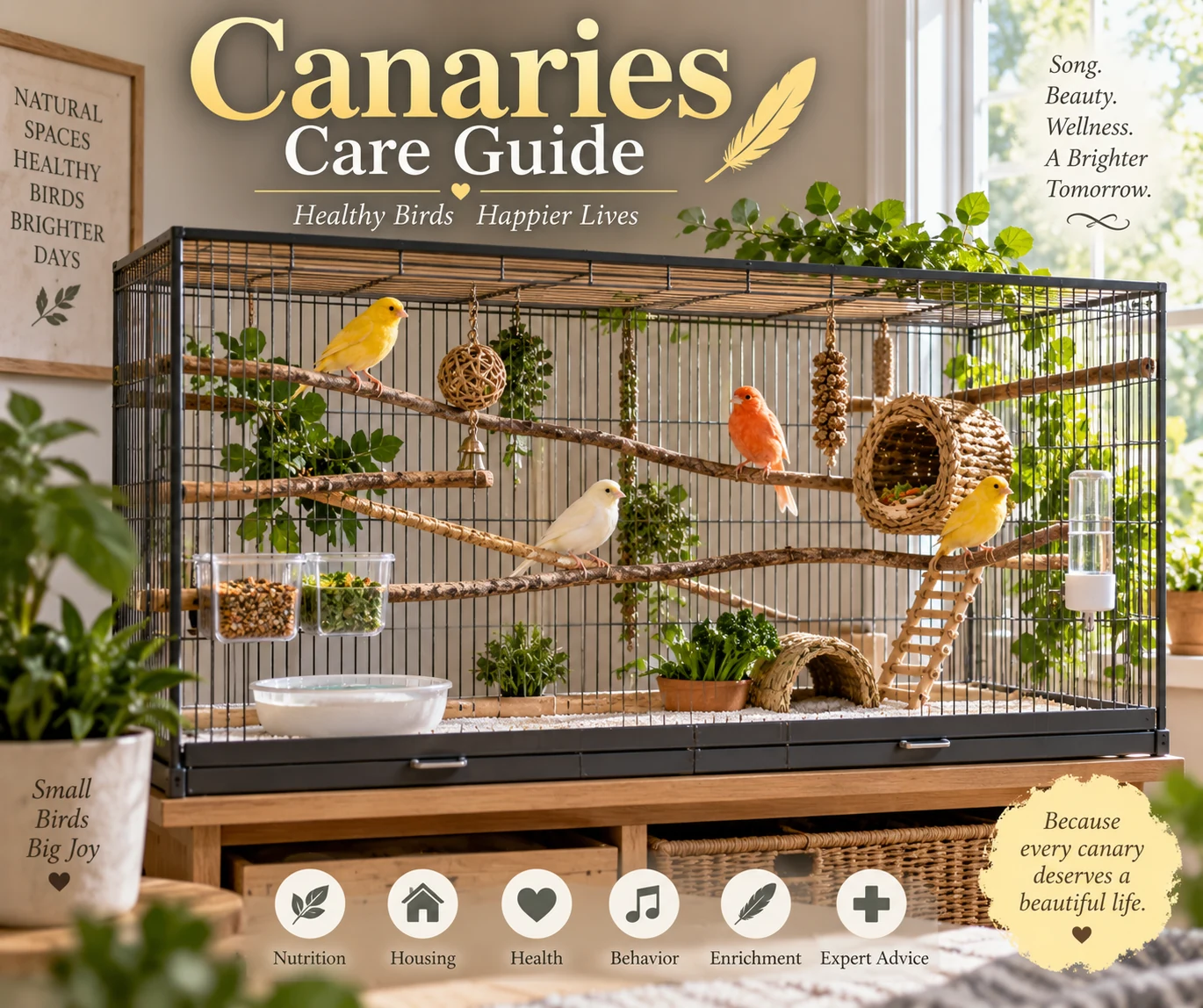
Canary Care Guide
A comprehensive husbandry and preventive-care guide for domestic canaries, including flight-oriented housing, nutrition and safe diet conversion, lighting, bathing, enrichment, song and molt, reproduction, red-factor color feeding, routine monitoring, and recognition of important canary health problems.
A healthy canary can fill a room with far more personality than its tiny size might suggest. It may begin the morning with an elaborate cascade of song, investigate a fresh bunch of greens with intense concentration, cross its cage in a burst of rapid flight, and then turn an ordinary dish of water into a remarkably enthusiastic bathing event.
For generations, however, canaries have also been associated with the image of a little yellow bird sitting in a little cage with a cup of seed. Modern canary care should look very different.
The domestic canary, Serinus canaria, is a small passerine descended from the wild Atlantic canary of the Canary Islands, Madeira, and the Azores. Centuries of selective breeding have produced hundreds of varieties selected for song, color, feathering, size, posture, and form. Underneath those differences remains an active, highly metabolic songbird designed to fly, forage, respond to seasonal changes in daylight, maintain an intricate coat of feathers, and pay close attention to its surroundings.
Canaries are not miniature parrots. Most do not want frequent touching or cuddling and generally should not be expected to spend their lives riding on a person's shoulder. Their relationship with people is subtler. They learn household schedules, recognize familiar caregivers, respond to voices and activity around them, and may become remarkably comfortable in a predictable home. Much of the pleasure of keeping a canary comes from watching the bird rather than handling it.
Good canary husbandry therefore aims not merely to keep a bird alive in a cage, but to create an environment in which it can fly, sing, bathe, forage, rest, molt, and behave like a canary.
At a Glance
| Characteristic | Canary |
|---|---|
| Scientific name | Serinus canaria |
| Family / Order | Fringillidae / Passeriformes |
| Origin of wild ancestor | Canary Islands, Madeira, and Azores |
| Typical adult weight | Approximately 12–30 g, depending on variety |
| Typical lifespan | Commonly 6–12 years; some reach 15 years or more |
| Sexual maturity | Usually during the first year |
| Typical clutch | Approximately 3–6 eggs, with variation among strains |
| Incubation | About 12–14 days |
| Fledging | Usually about 14–21 days |
| Activity | Diurnal |
| Primary exercise | Flight |
| Social character | Social and observant, but territorial behavior varies |
| Handling | Usually a relatively hands-off companion bird |
| Bathing | Frequently enjoyed; offer regularly |
| Basic diet | Balanced passerine diet with appropriate seed, greens, vegetables, and supplementary foods |
| Routine veterinary care | Initial avian examination after acquisition and at least annual preventive examinations |
Canaries have a very high metabolic rate. A typical bird weighing only about 20–25 grams may consume several grams of dry food each day. That helps explain why an apparently minor reduction in food intake can become clinically important much more rapidly than it would in a dog or cat.
Meet the Canary
Wild canaries are not the brilliant lemon-yellow birds many people imagine. Their ancestral coloration is primarily greenish with darker markings, well suited to life among vegetation on the Atlantic islands from which they originated. Europeans began keeping and breeding canaries centuries ago, and selective breeding eventually produced an extraordinary range of domestic forms.
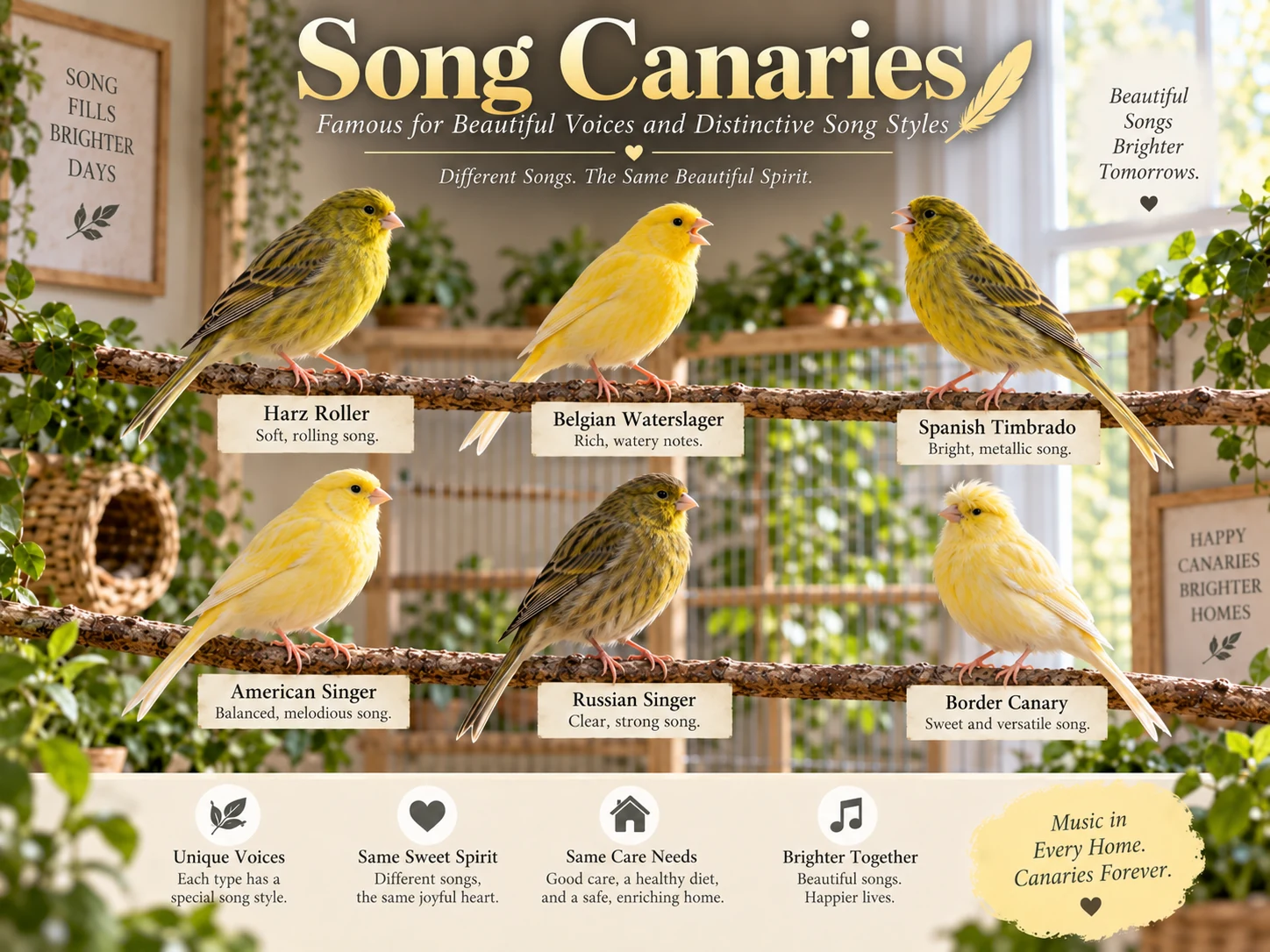
Song Canaries
Song varieties have been selectively bred for the structure, quality, and character of their vocal performance. Among the best known are the German or Harz Roller, Belgian Waterslager, Spanish Timbrado, American Singer, and Russian Singer. Different strains have been selected for genuinely different styles: soft rolling passages, watery or bell-like notes, brighter metallic sequences, or complex combinations of phrases.
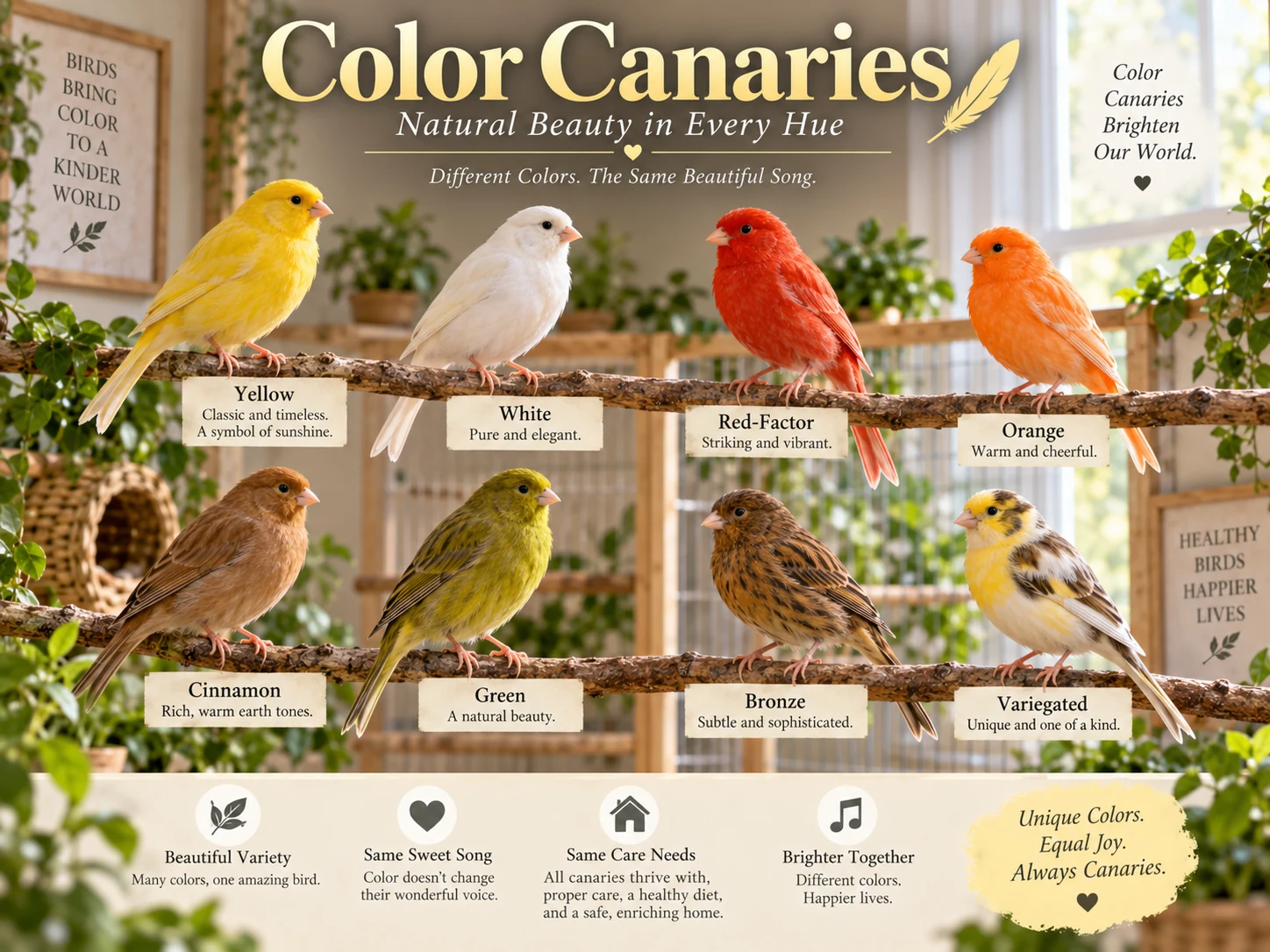
Color-Bred Canaries
Color-bred birds are selected primarily for plumage. Yellow is only the beginning. Domestic canaries may be white, ivory, orange, red-factor, bronze, cinnamon, green, or combinations of melanin and lipochrome colors. Red-factor canaries are especially interesting because the intensity of their final coloration depends on both inherited genetics and the carotenoid pigments available while new feathers are growing.
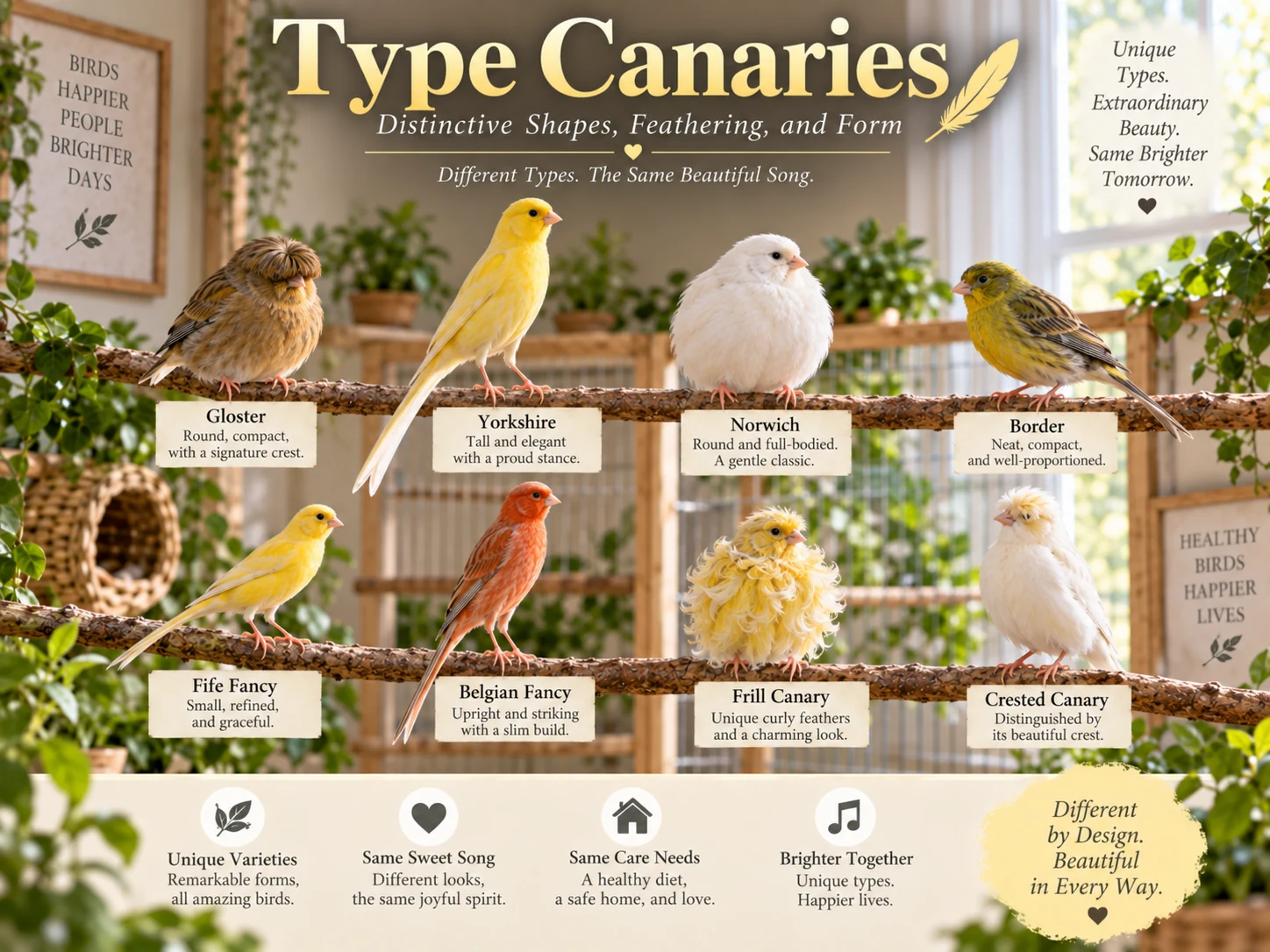
Type Canaries
Type canaries are selected for body shape, posture, feather configuration, size, or crests. Glosters, Borders, Yorkshires, Norwich canaries, Fifes, Belgian Fancy canaries, and various frilled or crested lines fall into this broad category. As with all selectively bred animals, appearance should never be allowed to compromise welfare. A well-bred bird should still be able to see, breathe, feed, fly, perch, preen, and reproduce normally.
Choosing a Healthy Canary
The best time to begin preventive medicine is before a bird becomes sick. When selecting a canary, spend some time watching before focusing on color or song. A healthy bird should appear alert and interested in its surroundings. It should move readily between perches, balance comfortably on both feet, maintain its feathers in good condition, and breathe so quietly that respiration is almost invisible.
The eyes should be bright and free of discharge. The nostrils should be clean. The feathers surrounding the vent should not be matted with feces. The legs should not be excessively crusted or swollen, and the bird should not spend prolonged periods sitting on the cage bottom.
A bird that remains persistently fluffed, sleeps much of the day, repeatedly closes its eyes while other birds are active, breathes with an open beak, visibly bobs its tail with each breath, or seems reluctant to fly warrants concern. Song is useful information but is not a medical examination. Males frequently become quieter during molt, while moving to a new home can temporarily alter vocal behavior. Conversely, early disease does not always stop a bird from singing.
Whenever possible, obtain a canary from a breeder or source that maintains clean housing, good nutrition, accurate flock records, and sensible disease-control practices. A new bird should receive an examination by a veterinarian experienced with birds even when it looks perfectly healthy.
Bringing a New Canary Home: Quarantine Matters
A newly acquired canary should not go directly into the established bird room simply because it came from a reputable source. Some infectious and parasitic conditions may be present before obvious clinical signs develop. This becomes particularly important in homes with several birds or in breeding collections, where a single introduction can expose an entire group.
A quarantine period of approximately 30–45 days is a reasonable general approach, although the appropriate duration and diagnostic testing depend on the bird's source and exposure history. Ideally, the newcomer should remain in a separate room rather than merely in another cage beside the resident birds. Separate bowls, bathing dishes, cleaning tools, and other equipment should be used. Wash hands after working with the quarantined bird and, where practical, care for established birds first.
The Canary Cage: A Small Flight Enclosure
Perhaps the most useful way to choose a canary cage is to stop thinking of it simply as a cage. Think of it as a flight enclosure.
Canaries do not normally travel around their environment by climbing cage bars with the beak and feet as parrots often do. They are passerines, and their preferred way of getting from one location to another is flight. A tall narrow cage may contain a great deal of volume while providing surprisingly little usable exercise. For this reason, length matters more than impressive height.
Many older references list cages around 18 inches long as minimum accommodation, but minimum is not the same as desirable. For a bird that spends most of the day inside its enclosure, a cage approximately 30 inches (76 cm) or longer provides a much more useful opportunity for horizontal flight, and larger is better when the household can accommodate it. The bird should be able to fly several wingbeats between perches rather than simply hop from one dowel to the next.
Bar spacing of approximately 3/8 inch (about 1 cm) is appropriate for most canaries. Rectangular cages generally offer more usable space than round ornamental cages. Most importantly, do not fill every empty area with furnishings. A cage can be large on paper and still provide little useful exercise if the flight path is crowded. A well-designed canary cage has something that is easy to overlook: open air between one perch and another.
Where the Cage Belongs
Canaries usually enjoy being part of normal household activity, but being part of the household is not the same as living in its most chaotic location. A family room, office, or other occupied area often works well. One portion of the cage placed near a wall can provide visual security while still allowing the bird to watch what is happening.
Avoid constant airflow from heating or air-conditioning vents. The kitchen is usually a poor choice because cooking introduces heat, smoke, grease particles, aerosols, and potentially dangerous fumes. Birds are extraordinarily vulnerable to fumes produced when PTFE and related nonstick coatings are overheated. Similar risks can occur with tobacco or marijuana smoke, vaping aerosols, incense, scented candles, aerosolized cleaners, paint and solvent fumes, insecticides, and concentrated fragrances.
The canary's respiratory system evolved to supply tremendous amounts of oxygen during flight. Unfortunately, that same efficiency means airborne toxins can also be absorbed rapidly. The ideal rule is simple: the air around a bird should smell like clean air.
Temperature and Humidity
Healthy adult canaries are reasonably adaptable when temperature changes occur gradually. A typical household range of approximately 65–75°F (18–24°C) is comfortable for most healthy indoor birds. There is no need to make a normal home tropical simply because a canary is present.
Sudden extremes are more important. A bird accustomed to a heated house should not abruptly be placed outdoors on a cold day. Conversely, direct sunlight through glass can transform a cage into a dangerous heat trap. Every bird exposed to sunlight must be able to move into shade. Panting, holding the wings away from the body, weakness, or impaired balance can indicate heat stress.
Normal household humidity is generally adequate, provided the environment is not excessively dry and bathing is available. Persistent high humidity combined with damp organic material and poor ventilation should also be avoided because it favors microbial and fungal growth.
Light, Sleep, Song, and the Canary's Internal Calendar
Few aspects of canary biology are as important—and as easy to disturb—as light. Canaries are profoundly seasonal birds. Increasing spring daylight stimulates hormonal changes associated with courtship and reproduction. Song often intensifies. Later, the annual molt begins, song diminishes, and shorter days help usher in a resting period.
A household can unintentionally create permanent summer by leaving lights on until midnight every night. For a nonbreeding companion bird, a predictable schedule with approximately 10–12 hours of daylight and roughly 12 hours of uninterrupted darkness is a reasonable general goal. Some birds, particularly those showing excessive reproductive stimulation, may benefit from somewhat longer nights. The key is consistency.
What About Full-Spectrum and UV Lighting?
Bright daytime illumination contributes to normal activity and circadian rhythm. Ordinary sunlight through a window provides visible light but window glass filters most useful UVB. When a bird receives little natural light, an avian-appropriate full-spectrum or UV-producing lamp may be useful, provided it is installed according to manufacturer instructions. The bird must be able to move away from the lamp, and the fixture should not create excessive heat. Lighting is an adjunct to good husbandry—not a substitute for balanced nutrition.
Perches: Where a Canary Spends Most of Its Life
A canary's feet may be tiny, but they carry the bird through almost every waking and sleeping hour. Good perch selection therefore affects exercise, balance, nail wear, foot pressure, and long-term foot health.
Natural branches are often excellent because their irregular diameter allows pressure to shift naturally across different parts of the feet. Use only branches that can be confidently identified as coming from a bird-safe tree and that have not been exposed to pesticides, herbicides, roadside exhaust, mold, or other contaminants. Safe examples commonly used for bird perches include properly prepared branches from apple, pear, willow, birch, ash, elm, maple, poplar, mulberry, and manzanita.
Perches should provide several diameters and textures rather than one identical smooth dowel throughout the cage. Sandpaper covers should not be used as routine nail-control devices, and highly abrasive cement or ceramic perches should not serve as the principal sleeping or resting perch. Arrange the branches so that the bird must fly between them while preserving open flight space.
Keeping the Cage Floor Simple
The best cage-floor material is usually not the most decorative one. Plain paper, paper towels, or another safe disposable paper liner allows droppings to be seen easily and can be replaced frequently. Loose organic substrates such as corncob material are unnecessary and can retain moisture, conceal abnormal droppings, and support mold growth.
Change paper frequently—ideally daily—and take a moment to look at what is on it before throwing it away. That ten-second inspection can sometimes identify illness before the bird looks sick.
Bathing: A Small Bird's Great Pleasure
Few husbandry recommendations are as easy to follow as providing a canary with a bath. Many canaries approach a shallow dish with unmistakable enthusiasm, crouching into the water and sending droplets in every direction before retreating to a perch for a long session of careful preening.
Bathing helps maintain feathers and skin, but it is equally valuable as normal behavior and enrichment. A shallow bath can be offered several times a week, and many canaries happily use one every day. Clean plain water is all that is required. Remove or refresh the water after it becomes dirty and allow a wet bird to dry comfortably away from cold drafts.
Food: Moving Beyond the Traditional Seed Cup
Canaries are naturally adapted to eat seeds and other plant material, so seed is not inherently bad. The problem is seed as the entire diet.
Commercial canary mixtures commonly contain canary seed, rapeseed, niger, hemp, linseed, millet, and oats. Such mixtures are often deficient or imbalanced in vitamins A, D, E, and K, calcium, lysine, methionine, and other nutrients. Their calcium-to-phosphorus balance may be poor, and high dietary fat can contribute to obesity and nutritional disease. Selective eating makes this worse because a bowl containing six types of seed does not mean the canary consumes all six.
Over years, nutritional imbalance may contribute to poor feather quality, obesity, liver disease, calcium problems, reproductive disease, impaired immunity, and other illnesses.
What Should a Canary Eat?
There is less justification for prescribing one rigid percentage formula for every canary than there is for describing the goals of a balanced feeding program. A high-quality formulated food intended for canaries, finches, or small passerines can provide a nutritionally consistent foundation. Depending on the product and the bird, this may be offered as a small pellet, crumble, mash, or extruded diet.
Seed can remain part of the diet, particularly because it is biologically appropriate and valuable for normal foraging behavior, but it should not be allowed to crowd out the balanced portion of the ration. Fresh plant foods add nutritional and behavioral variety. Useful choices include kale, collard greens, romaine, endive, bok choy, pesticide-free dandelion greens, broccoli, bell pepper, carrot, squash, peas, pumpkin, and cilantro.
Fruit is enjoyable but should generally be a smaller component than vegetables. Berries, melon, papaya, mango, pear, pomegranate, and apple with the seeds removed are reasonable examples. Moist foods should be removed before they spoil.
During breeding, growth, heavy molt, or disease, nutritional requirements change. Traditional breeders have used enriched egg foods, soaked seed, and soft foods during reproduction. Contemporary balanced breeding formulations can supply higher-quality protein and other nutrients in a more controlled manner. The appropriate diet depends on the bird's body condition, activity, stage of life, reproductive status, molt, and health.
Converting a Seed-Loving Canary to Better Nutrition
Changing a canary from an all-seed or predominantly seed-based diet to a more balanced feeding program can be one of the most beneficial things an owner does—and one of the easiest things to do incorrectly.
A canary that has eaten seed for months or years may not recognize a pellet, crumble, or formulated mash as food at all. To the bird, the unfamiliar item may simply be something that appeared in the food dish. Because canaries are small and have limited energy reserves, the goal is never to make the bird hungry enough that it has no choice. The goal is to teach the bird that the new food is edible while carefully maintaining adequate caloric intake.
Begin With a Healthy Bird and a Baseline Weight
Do not begin an aggressive diet conversion in a canary that is sick, underweight, debilitated, actively losing weight, or already eating poorly. Before changing anything, obtain an accurate baseline weight using a digital gram scale. Weigh the bird at approximately the same time each day, preferably before the morning meal, and record the result. Also become familiar with the normal number and size of the bird's droppings.
During active conversion, daily weighing is strongly recommended. A bird may pick up pellets, crumble them, and scatter the pieces without actually swallowing much. Normal body weight, normal fecal production, and direct observation of swallowing the new food are better evidence that conversion is succeeding.
Choose a Food the Canary Can Physically Manage
Canaries often accept very small granules or fine crumbles more readily than large pellets. Select a nutritionally complete formulation intended for canaries, finches, or small passerines. If the pieces appear large compared with the seeds the bird normally eats, try a smaller granule or crush the food to a coarse crumble. Do not grind it into flour unless the product is designed to be fed that way.
Use Familiar Feeding Locations
If the bird has eaten from the same cup for years, use that familiar cup during conversion rather than expecting it to recognize both a new food and a new feeding location simultaneously. A separate shallow dish of formulated food can also be placed beside the familiar seed dish so the bird encounters the new food repeatedly without losing access to a recognized food source.
A thin scattering of favorite seed over the formulated food can encourage investigation. As the bird searches for the seed, it repeatedly contacts and tastes the new diet. The objective is repeated sampling, not hiding a large supply of seed underneath the new food.
Take Advantage of Morning Appetite
Canaries generally eat promptly after waking. Once the bird is stable and familiar with the new food, offer the formulated diet as the primary food for the first portion of the morning while you can observe the bird. For example, provide the formulated food when the bird awakens and allow it to remain the principal food for an hour or two before offering the measured seed ration if reliable formulated-food intake has not yet been established.
As conversion progresses, that morning period can be lengthened. Do not leave a novice bird without recognized food for prolonged periods, particularly if you cannot monitor it.
Make the Food Easy to See and Explore
Many canaries investigate food more readily when it is spread across a shallow dish rather than buried deeply in a cup. Some also explore formulated granules scattered on a clean feeding platform or clean paper in a designated feeding area, provided the food cannot become contaminated with droppings.
Canaries are observant social feeders. When quarantine and disease-control considerations permit, seeing another healthy bird eating the same food may encourage sampling. Owners can also sit near the cage while eating and manipulate a separate clean piece of formulated food to make it appear interesting. Do not share food that has contacted a person's mouth with a bird.
Use Familiar Foods as a Bridge
A small amount of formulated crumble can be mixed with something the bird already recognizes and enjoys. Useful bridges include finely chopped leafy greens, grated carrot or bell pepper, a familiar high-quality canary soft food, a small amount of appropriate egg food, or hygienically prepared soaked or sprouted seed.
Slightly moistening a crumble with warm water may also make it more acceptable. Another technique is to crush a few favorite seeds and mix the fragments through the formulated food so the aroma and familiar particles encourage exploration. Very fine formulated crumbs can be sprinkled lightly onto moist chopped greens so some adheres to the surface as the bird eats.
These are temporary teaching techniques. The formulated diet should gradually become recognizable and acceptable on its own.
Measure Seed Instead of Keeping the Bowl Permanently Full
One reason conversion fails is that a large bowl of favorite seed remains available at all times. Once the bird is healthy, stable, and being carefully monitored, begin determining approximately how much seed it actually consumes in a day rather than endlessly refilling the dish.
Offer a measured quantity instead of an unlimited supply. As formulated-food consumption increases, gradually reduce the seed allowance. This allows normal appetite to encourage investigation without deliberately depriving the bird of food. For canaries, the distinction is important: controlled access is useful; starvation is dangerous.
Learn to Read the Food Dish
Canary bowls can look deceptively full because empty seed hulls remain on the surface. Carefully separate hulls from intact seed to determine how much edible seed remains. The same caution applies to formulated diets: a pile of powder does not necessarily mean the bird swallowed the food; it may have pulverized and discarded it.
A Practical Conversion Sequence
- First week: place a separate dish of formulated food in the familiar feeding area and mix a small amount—about 10–20%—into the normal seed. Offer a little crumble on favorite greens. Begin daily weighing.
- Second week: if the bird is stable and investigating the new food, increase the formulated portion modestly and offer formulated food alone for the first hour of the morning, followed by a measured seed ration.
- Following weeks: if the bird is clearly swallowing the formulated food, maintaining weight, and producing normal droppings, gradually increase the formulated portion and reduce seed. Continue using shallow dishes, morning feeding, familiar-food bridges, and small seed toppings when helpful.
- Maintenance: continue toward the final balanced feeding plan appropriate for that bird, with formulated food as a nutritional foundation, controlled seed, and fresh greens and vegetables.
This is a guide rather than a deadline. Some birds convert within days; others take several weeks. A canary that has eaten seed for five years may need more repeated low-pressure exposure than a young bird introduced to formulated food during weaning.
Dietary improvement should make a bird healthier. It should never require risking starvation to achieve it.
Seeds, Millet, Sprouts, and Treats
Seed retains a useful role in canary care when used deliberately. A measured amount of high-quality seed can provide dietary variety and encourage normal husking and foraging behavior. Millet sprays are useful as an occasional treat or enrichment item and can be especially helpful when introducing new environments or encouraging a recovering bird to eat.
Sprouted seed can add variety but deserves special attention to food safety. The same warm, damp conditions that encourage germination also encourage bacterial and fungal growth. Sprouts should be prepared hygienically, rinsed carefully, refrigerated appropriately, and discarded if there is any odor, slime, mold, or doubt about freshness. Seed sticks bound with honey or sugar are better viewed as occasional treats than health foods.
Calcium, Cuttlebone, and the Grit Question
Canaries hull most seeds before swallowing the kernel and therefore do not require insoluble gravel to grind their food. Unlimited insoluble grit is unnecessary and may be consumed excessively.
Cuttlebone is different. It provides a soluble source of calcium and also offers a surface the bird can investigate and work with its beak. Calcium becomes particularly important for hens during egg formation.
Replace cuttlebone when heavily soiled or depleted. It should complement—not compensate for—a poor overall diet. Birds with specific reproductive or medical needs may require individualized calcium or vitamin D recommendations from an avian veterinarian.
Red-Factor Canaries: Feeding for Healthy Plumage Color
Red-factor canaries are nutritionally interesting because their brilliant coloration depends on both genetics and diet. A genetically red-factor bird has the biological ability to deposit red carotenoid pigments into growing feathers. If appropriate pigments are absent while new feathers are forming, the plumage may emerge orange, salmon, or yellow-orange rather than the deeper red expected from the strain.
Pigment Changes New Feathers, Not Mature Ones
This is the most important concept in color feeding. Carotenoids cannot recolor a mature feather that has already finished growing. Visible improvement occurs only as feathers are replaced. Therefore, color feeding should begin shortly before the expected molt and continue throughout active feather growth until the new plumage is mature.
Breeders who wish to produce deeply colored young red-factor canaries also provide appropriate pigment while juvenile feathers are developing.
Use a Commercial Red-Factor Product Carefully
For predictable coloration, use a commercial food or supplement specifically formulated for red-factor canaries. Such products commonly use canthaxanthin and may include other carotenoids. Follow the manufacturer's instructions exactly because concentrations vary substantially among products. Do not copy a dose from one brand to another or combine several concentrated color products without knowing the total intake.
Color pigment is not a complete diet. A red-factor bird still needs the same sound nutritional foundation as any other canary: an appropriate formulated passerine food, controlled seed, nutritious greens and vegetables, clean water, and appropriate calcium when needed.
Natural Foods That Contribute Carotenoids
Naturally carotenoid-rich foods can complement the diet. Useful choices include red bell pepper, carrot, pumpkin, sweet potato, dark leafy greens, broccoli, and other red, orange, or dark-green vegetables. These foods support overall nutrition and can contribute pigment, but they usually do not produce the same intense red coloration as appropriately formulated canthaxanthin supplementation in a genetically red-factor bird.
During the Annual Molt
A practical program is to begin the selected commercial red-factor diet or supplement before the expected annual molt, continue it consistently throughout active feather replacement, maintain high-quality protein and a balanced base diet, and continue until pin feathers have matured and active feather growth is essentially complete.
Once mature feathers are fully formed, additional heavy pigment supplementation will not make those particular feathers redder. If show-level uniformity is important, some breeders use a lower maintenance level so occasional replacement feathers do not emerge noticeably paler. For a non-show companion bird, intensive year-round color feeding is usually unnecessary.
Canthaxanthin will not turn a genetically yellow canary into a true red-factor canary. Dietary pigment modifies the expression of inherited feather color; it does not create the genetic trait.
Water: Ordinary but Essential
Canaries consume a surprisingly large amount of water relative to body size, and uninterrupted access is essential. Provide fresh potable water every day and clean the container thoroughly. Open dishes may need to be changed more than once daily if food, feces, or bathing activity contaminates them.
Water bottles can reduce some contamination but are not maintenance-free. Valves should be checked every day to confirm that they actually release water. Routine vitamin supplementation through drinking water is generally undesirable when nutrition is otherwise appropriate because vitamins can degrade, alter flavor, encourage microbial growth, and make actual dosing impossible to know.
Exercise: Flight Is Not Optional Behavior
A canary is built around flight. Its breast musculature, respiratory system, cardiovascular system, skeleton, coordination, and metabolism all reflect that fact. A bird that can only shuffle or hop between closely spaced perches is not experiencing normal exercise.
The enclosure should provide enough unobstructed distance for repeated horizontal flights. This is one reason a long cage with relatively simple furnishings is often healthier than a beautifully decorated but crowded one. Supervised flight in a bird-safe room can provide additional exercise if ceiling fans are stopped, doors are secured, large windows and mirrors are made visible, predatory pets are excluded, and other hazards are removed.
Enrichment Without Turning the Cage Into a Toy Store
Canaries require behavioral stimulation, but their enrichment differs from that of parrots. They generally do not need a cage packed with complex chew toys. For a canary, flying is enrichment. So are bathing, singing, exploring fresh greens, investigating seed heads, choosing among perches, and watching daily household activity.
Useful enrichment may include a swing, natural branches, clipped leafy vegetables, safe seed heads, modest foraging opportunities, or periodic changes in selected furnishings. Avoid changing everything at once. A canary can be curious while still appreciating predictability.
One Canary or Several?
Canaries are social birds, but "social" does not mean every canary wants another bird sharing its bedroom. A single bird can live very successfully when it has an enriched environment, adequate space, predictable interaction, and opportunities to hear and observe normal household activity.
Multiple canaries can also be maintained successfully, particularly in larger flight enclosures, but compatibility should never be assumed. Adult males may become strongly territorial during breeding condition. A male and female may breed if environmental conditions support reproduction. Females can also become competitive.
When multiple birds are housed together, provide enough room and duplicate important resources. Persistent chasing, blocking access to food, feather damage, weight loss, or physical injury means the social arrangement is not working.
Human Companionship and Handling
Canaries recognize their owners and often develop predictable responses to them, but they generally prefer interaction without restraint. A bird may move toward the cage front when a familiar person enters, sing in response to conversation or music, anticipate the morning food routine, or learn that a particular person brings the bath. That is a genuine relationship even if the bird never wants its head scratched.
Most routine care should be designed so the bird does not need to be captured. When restraint is necessary, it should be efficient and gentle. Never squeeze the chest; birds must move the sternum during respiration. A small dimmed room can simplify recapture if a bird escapes during cage maintenance. Repeatedly chasing a frightened canary around a large room is poor handling technique.
Mirrors
Mirrors are neither necessary nor universally helpful. Some canaries briefly sing or display toward a reflection and then lose interest. Others become persistently focused on it, repeatedly courting or confronting the "other bird." If a mirror begins to dominate behavior, remove it and substitute more natural enrichment.
Canary Song: More Than Background Music
The male canary's song is one of the most extraordinary examples of selective breeding in companion animals. Song is produced by the syrinx, and song canaries are capable of complex vocal performance. A male's willingness to sing is influenced by genetics, age, health, light cycle, molt, reproductive state, social surroundings, and temperament.
Many males become markedly quieter during the summer molt. A quiet period during normal molt can therefore be entirely expected. A loss of song accompanied by weight loss, persistent fluffing, respiratory clicks, tail bobbing, decreased appetite, or abnormal droppings is different. In that situation, the change in voice becomes a clinical clue rather than simply a seasonal event.
The Annual Molt
Feathers wear out. A bird cannot repair a damaged mature feather, so old feathers eventually have to be replaced. Canaries normally undergo a substantial annual molt, often after the reproductive season. The bird may become quieter, song may nearly disappear, and loose feathers can make the room look as though something far larger than a canary has exploded.
This is normal provided the bird remains bright, eats well, maintains weight, and produces healthy new feathers. Feather production is nutritionally demanding, particularly in terms of high-quality protein and sulfur-containing amino acids. Persistent bald areas, deformed feathers, severe itching, prolonged or continuously cycling molt, marked weight loss, or abnormal skin are not simply "a bad molt" and should be investigated.
Sexing a Canary
Song gives useful clues but does not provide absolute certainty. Mature males generally sing longer and more complex songs than females. During breeding condition, the cloacal region may also develop characteristic sex-related differences that an experienced breeder or veterinarian can recognize. Outside breeding condition, visual sex determination can be uncertain. DNA sex testing provides a reliable option when definitive identification is important.
Hens, Hormones, and Egg Laying
A female canary does not require a mate to produce eggs. Lengthening daylight, rich food availability, a nest or nest-like location, nesting material, and the presence of a male can all stimulate reproductive activity. Producing eggs demands substantial calcium, protein, and energy. Repeated laying can contribute to nutritional depletion and increase the risk of reproductive complications.
Maintaining an appropriate seasonal light cycle and avoiding unnecessary nesting opportunities can help reduce persistent reproductive stimulation in birds not intended for breeding.
Egg Binding: A True Emergency
Egg binding, or dystocia, occurs when a hen cannot pass an egg normally. Predisposing factors may include poor nutrition, calcium imbalance, obesity, inadequate exercise, abnormal eggs, reproductive disease, and repeated egg production.
An affected canary may appear weak, sit on the cage floor, strain repeatedly, assume a wide-legged posture, develop abdominal enlargement, produce fewer droppings, or breathe with increased effort. Because a canary is so small, deterioration can be rapid.
Breeding Canaries
Breeding canaries can be fascinating, but successful reproduction involves considerably more than putting a male and female together with a nest. The breeder needs to understand seasonal conditioning, pair selection, genetics, nutrition, compatibility, nest management, incubation, chick development, weaning, disease prevention, and recognition of reproductive emergencies.
Most hens produce several eggs in a clutch. Incubation is usually approximately 12–14 days, with young birds leaving the nest roughly two to three weeks after hatching and becoming increasingly independent thereafter. Parents should enter breeding season in excellent body condition—not obese and not nutritionally depleted.
Nails, Beak, and Routine Grooming
Healthy canaries may require occasional nail trimming, particularly if nails begin catching on furnishings or altering normal foot position. Natural branches of varied diameter help distribute wear but do not guarantee that nails will remain ideal.
The beak is different. A healthy canary should generally maintain its own beak through normal use. Persistent beak overgrowth or distortion deserves investigation rather than repeated cosmetic trimming because nutritional disease, trauma, abnormal alignment, mites, hepatic disease, or other medical problems may be involved.
Routine wing clipping is generally inappropriate for a canary because flight is its primary means of normal exercise and locomotion.
The Gram Scale: One of the Best Canary Health Tools
Birds are remarkably good at looking normal while losing weight. Feathers disguise body contour, and a few grams sound insignificant until one remembers that the entire bird may weigh only 20 grams.
A digital gram scale therefore deserves a place beside the food dish and bath as basic canary equipment. Establish a healthy baseline and weigh the bird under reasonably consistent conditions. Weekly or periodic weighing is useful in a healthy established bird; daily monitoring may be appropriate during diet conversion, illness, reproductive problems, or recovery.
The trend matters more than comparing every bird with a generic normal weight because canary breeds vary substantially in size. Veterinary assessment of body condition is still important because body weight alone cannot distinguish muscle from fat, an enlarged organ, abdominal fluid, or an egg.
Reading the Cage Paper: Understanding Droppings
A bird dropping normally contains three components: feces, usually green to brown depending on food; white or cream-colored urates; and a variable amount of clear urine. Fresh vegetables, fruit, drinking, bathing excitement, and stress can temporarily alter the amount of liquid present.
Persistent changes are more important. Owners should pay attention to markedly reduced volume, persistent diarrhea, black or tarry feces, visible blood, large amounts of urine without an obvious dietary reason, very bright green feces in a bird that has stopped eating, or undigested food. Plain cage paper makes these changes much easier to recognize.
Why Canary Illness Can Seem to Appear Overnight
A common story in avian practice begins with, "He was fine yesterday." Sometimes disease truly is acute. Often, however, the bird had been compensating and concealing subtle signs.
Birds evolved in environments where visibly weak individuals are vulnerable. Early illness may therefore produce surprisingly subtle behavioral changes: spending longer at a favored perch, singing less, eating more slowly, sleeping slightly more, or becoming reluctant to fly. By the time a canary is continuously fluffed on the cage floor, disease may be advanced.
Knowing the normal bird is therefore as important as memorizing a list of diseases.
Respiratory Disease: Never Ignore Changes in Breathing
Healthy canary breathing at rest should be quiet and almost effortless. Respiratory disease can result from bacterial or fungal infection, parasites, nutritional disease, irritant exposure, toxic fumes, cardiovascular problems, or other systemic illness.
- persistent tail bobbing with each breath;
- open-mouth breathing;
- repeated clicking, squeaking, or wheezing;
- nasal or ocular discharge;
- repeated neck stretching;
- exercise intolerance;
- loss or alteration of voice accompanied by illness;
- or obvious respiratory effort.
A bird with significant breathing difficulty should be handled as little as possible and seen promptly.
Air-Sac and Respiratory Mites
Few parasites are as closely associated with canaries as Sternostoma tracheacolum, commonly called the air-sac or respiratory mite. These mites may inhabit the trachea, bronchi, lungs, and air sacs. Mildly affected birds may show little, while heavier infestations can cause clicking or high-pitched respiratory noises, sneezing, altered song, tail bobbing, open-mouth breathing, and respiratory distress.
The important caution is that not every clicking canary has mites. Bacterial and fungal infections, environmental irritants, cardiopulmonary disease, and other disorders can cause similar signs. Automatically treating every respiratory problem with an antiparasitic medication risks both missing the real diagnosis and dosing a tiny bird incorrectly.
Scaly-Leg Mites and Other External Parasites
Knemidocoptes mites can cause abnormal thickening, crusting, and lifting of scales on the legs and feet. Outdoor and aviary birds may also encounter red mites, which often hide within cage or nest crevices during daylight and feed on birds at night.
Not every scaly foot is caused by mites. Aging, pododermatitis, bacterial infection, trauma, and other conditions can alter the feet. Routine prophylactic insecticide spraying is neither necessary nor desirable. Identify the problem first.
Pododermatitis and Foot Health
Pododermatitis—often called bumblefoot—is inflammation and sometimes infection of the footpad. Poor perch design, constant pressure on identical surfaces, obesity, trauma, unsanitary conditions, or abnormal weight-bearing can contribute. Early changes may be subtle: redness, a smooth shiny pressure area, slight swelling, or a bird spending unusual amounts of time on one foot.
This is an excellent example of why husbandry is part of medicine. Changing inappropriate perches and correcting obesity may be just as important as treating the lesion itself.
Avian Gastric Yeast
Macrorhabdus ornithogaster, historically called "megabacteria" and now commonly referred to as avian gastric yeast, can affect small companion birds. Some infected birds remain clinically normal, while others develop chronic or intermittent disease. Signs can include progressive weight loss despite apparent interest in food, weakness, regurgitation, diarrhea, and occasionally undigested seed or food in the droppings.
Because weight loss may be one of the earliest clues, routine weighing again becomes valuable. Diagnosis and treatment require veterinary evaluation rather than simply changing the diet.
Isosporiasis and Atoxoplasmosis
Coccidial disease deserves particular attention in canaries, especially in breeding collections and young birds. Canaries can develop intestinal Isospora infection, and systemic forms historically referred to as atoxoplasmosis remain recognized in this species.
Affected birds may show poor growth, weight loss, diarrhea, lethargy, abdominal enlargement, poor feather condition, or mortality within a group. Prevention depends heavily on sanitation, reducing fecal contamination, controlling crowding, and avoiding introduction of infected birds.
Canarypox
Canarypox can be devastating, particularly in outdoor aviaries. The virus may cause several patterns of disease. The dry or cutaneous form produces wart-like or crusted lesions on unfeathered areas such as the eyelids, face, beak margins, legs, and feet. The wet or diphtheritic form affects the mouth, throat, upper airway, or esophagus and can interfere with eating and breathing. A severe generalized form can involve internal tissues.
Mosquitoes are important vectors, so mosquito control becomes a meaningful part of preventive medicine for outdoor canaries. Vaccination may be appropriate in selected breeding or aviary populations after discussion with an avian veterinarian.
Nutritional Disease, Obesity, and Liver Problems
Canaries are small enough that obesity can be surprisingly easy to miss. A bird living in a short cage with little opportunity to fly while freely selecting high-fat seed can accumulate substantial body fat beneath the feathers.
Obesity increases the risk of hepatic disease, exercise intolerance, reproductive problems, and other disorders. Nutritional deficiencies may occur at the same time as obesity—a bird can consume too many calories while still receiving too little calcium, vitamin A, vitamin D, or essential amino acids.
This is why "he eats plenty" is not proof that nutrition is good. Diet, exercise, weight, and body condition should always be evaluated together.
Feather and Skin Problems
Feather appearance is influenced by nutrition, molt, parasites, trauma, genetics, environment, and systemic health. A normal canary should have orderly plumage between molts. Worn feathers before the annual molt are expected; persistent baldness is not.
Abnormal feathering may include broken or deformed feathers, delayed replacement, areas that never fill in, abnormal coloration, excessive scaling, or persistent itching. Red-factor and other color-bred birds add another dimension because dietary pigments affect feather coloration during growth. A change in color does not automatically signify disease, but poor feather structure deserves investigation.
Household Hazards: Tiny Bird, Large World
A canary weighs only a few grams and lives in an environment designed for humans. Many ordinary household objects therefore represent significant hazards.
- PTFE and other overheated nonstick coatings;
- smoke, vaping aerosols, and concentrated fumes;
- aerosolized chemicals and insecticides;
- ceiling fans, open windows and doors, and large mirrors;
- hot cookware and open flames;
- open toilets or deep containers of water;
- toxic plants, rodenticides, medicines, and heavy metals;
- and predatory pets.
Cats deserve special mention. Even a tiny puncture or scratch can introduce dangerous bacteria. A bird that has been caught by a cat should receive veterinary attention promptly even if the skin injury appears minor.
Cleaning and Sanitation
A healthy canary cage should look lived in, not dirty. Daily care includes changing visibly contaminated paper, providing fresh water, removing spoiled fresh food, and cleaning bowls as needed. More thorough cage and perch cleaning should be performed regularly. Organic debris should be removed before disinfectants are expected to work effectively.
Strong aerosolized cleaning products should never be sprayed around the bird. In multi-bird households, sanitation also helps control infectious disease. Food or water containers should not become communal vectors between quarantined and established birds.
Outdoor Cages and Aviaries
Canaries can thrive in well-designed outdoor aviaries in suitable climates, but an outdoor cage is an ecosystem rather than simply an indoor cage moved onto the patio. Birds must be protected from heat, cold rain, wind, predators, wild-bird contamination, mosquitoes, rodents, and escape.
A good aviary provides shade at every time of day, a dry sheltered roost, predator-resistant construction, and enough room for genuine flight. Double-door entry systems reduce escape risk. Outdoor housing also increases exposure to mosquitoes, mites, coccidia, wild-bird pathogens, and environmental fungal spores, so health monitoring and disease prevention become especially important.
The Older Canary
With good care, many canaries live well into their second decade. Ageing does not eliminate the need for normal behavior. Older birds still benefit from bathing, appropriate light cycles, fresh foods, companionship at their preferred distance, and opportunities to move.
The environment may need to become more forgiving. Perches can be placed so food and water remain easy to reach. A bird with reduced balance may benefit from slightly lower perches and less challenging distances. Weight, muscle condition, foot health, vision, feather quality, respiratory function, and the presence of masses deserve increasing attention.
Do not automatically label weight loss, inactivity, difficulty perching, or altered breathing as "old age." Age increases the likelihood of disease; it does not make disease normal.
Preventive Veterinary Care
A newly acquired canary should ideally receive an initial examination soon after coming home and then at least annual preventive veterinary examinations. A good canary examination includes assessment of body weight and muscle condition, feather and skin quality, eyes and nostrils, beak, oral cavity, feet and nails, breathing, abdominal contour, droppings, diet, housing, reproductive history, and behavior.
Testing is selected according to risk. A single long-term indoor bird may not require the same screening as a new bird entering a breeding aviary. The goal of preventive care is not to perform every possible test each year. It is to identify nutritional, environmental, infectious, reproductive, and medical problems before the canary reaches the cage floor.
When to Call the Veterinarian
Canary owners should become comfortable reacting to subtle changes. Prompt veterinary attention is appropriate for open-mouth or labored breathing, persistent tail bobbing, prolonged fluffing or excessive daytime sleep, marked reduction in appetite, unexplained weight loss, repeated vomiting or regurgitation associated with illness, inability to perch, sitting on the cage floor, seizures or loss of balance, bleeding or significant trauma, persistent abnormal droppings, abdominal swelling or repeated straining, suspected egg binding, toxic fume exposure, or predator injury.
A very weak or dyspneic canary should be treated as an emergency.
What to Do While Seeking Veterinary Care
Home treatment should never substitute for diagnosis, but simple supportive measures can reduce stress during transport. Keep the bird quiet and minimize unnecessary handling. A sick canary often benefits from a comfortably warm environment unless overheating is part of the problem. Position food and water so the bird does not have to climb extensively to reach them.
For a weak bird, a small secure carrier with a low perch—or no elevated perch if balance is poor—may be safer than transport in a large cage. Do not force-feed or syringe water into a weak bird that cannot swallow normally or is having difficulty breathing. Do not administer leftover antibiotics, human medications, or antiparasitic products unless specifically directed. The margin for dosing error in a 20-gram patient is exceedingly small.
A Simple Daily Routine
Excellent canary husbandry does not require spending the day hovering over the cage. It does require noticing.
In the morning, look at the bird before replacing anything. Is it where it normally sleeps? Is it bright? Is breathing quiet? Has it produced normal overnight droppings? Replace the water, provide the day's food, and remove spoiled material.
During the day, allow opportunities to fly, feed, investigate greens, bathe, sing, and rest. Notice whether the bird behaves like itself. In the evening, remove perishable foods and allow the household to become dark and quiet at an appropriate time.
Those few moments of observation repeated every day create something no diagnostic laboratory can provide: a detailed understanding of that individual bird's normal life.
Useful Canary Equipment
- a long, safe, flight-oriented cage;
- natural perches of several diameters;
- easily cleaned food and water dishes;
- a shallow bathing dish;
- safe paper cage liners;
- an accurate digital gram scale;
- a secure small transport carrier;
- a timer if household lighting is irregular;
- and a high-quality species-appropriate food supply stored carefully to remain fresh.
What a Canary Does Not Need
Good husbandry is often as much about leaving unnecessary things out as adding things. A healthy pet canary does not normally need unlimited seed, digestive gravel, routine antibiotics, preventive mite medication without an indication, constant vitamin supplementation, routine beak trimming, wing clipping, a cage crowded with toys, or continual physical handling. It also does not need artificial daylight from dawn until the household goes to bed at midnight.
More products do not necessarily produce better care.
The Canary in Perspective
For centuries, people have kept canaries because of their beauty and their remarkable voices. That long history sometimes makes them seem like old-fashioned pets whose care was solved generations ago. In reality, our understanding of avian nutrition, environmental health, infectious disease, behavior, and welfare has changed considerably.
The modern canary should have more than seed, water, and a perch. It should have room to fly rather than merely hop. It should be able to bathe, forage, rest in darkness, experience a meaningful seasonal cycle, and choose where to perch. Its diet should support feather production, bone health, metabolism, and reproduction rather than simply satisfy its preference for favorite seeds.
Its owner should know that silence can be seasonal but can also be a warning, that a gram or two of weight loss matters, that respiratory clicking is not automatically "just mites," and that a hen can become egg-bound without a male ever being present.
Most of all, good canary care requires learning the normal bird. When we provide the right environment and pay attention to the individual living within it, a canary becomes much more than a song coming from a cage. It becomes what centuries of selective breeding never erased: an active, complex little finch with a remarkable biology and an equally remarkable capacity to enliven a home.
Selected References and Further Reading
- Association of Avian Veterinarians. Pet Bird Care Series: Canaries & Other Finches.
- Merck Veterinary Manual. Nutrition in Passerines. Updated September 2025.
- Merck Veterinary Manual. Parasitic Diseases of Pet Birds. Updated June 2026.
- LafeberVet. Basic Information Sheet: Canary.
- Existing veterinarian-authored bird-care and nutrition material on Dr. Bob's Animal Health and Information Site.
Educational information: This guide is intended for general education and does not replace examination, diagnosis, or individualized recommendations from a veterinarian experienced in avian medicine.