Reptile Nutrition
Iguana Diet Guide
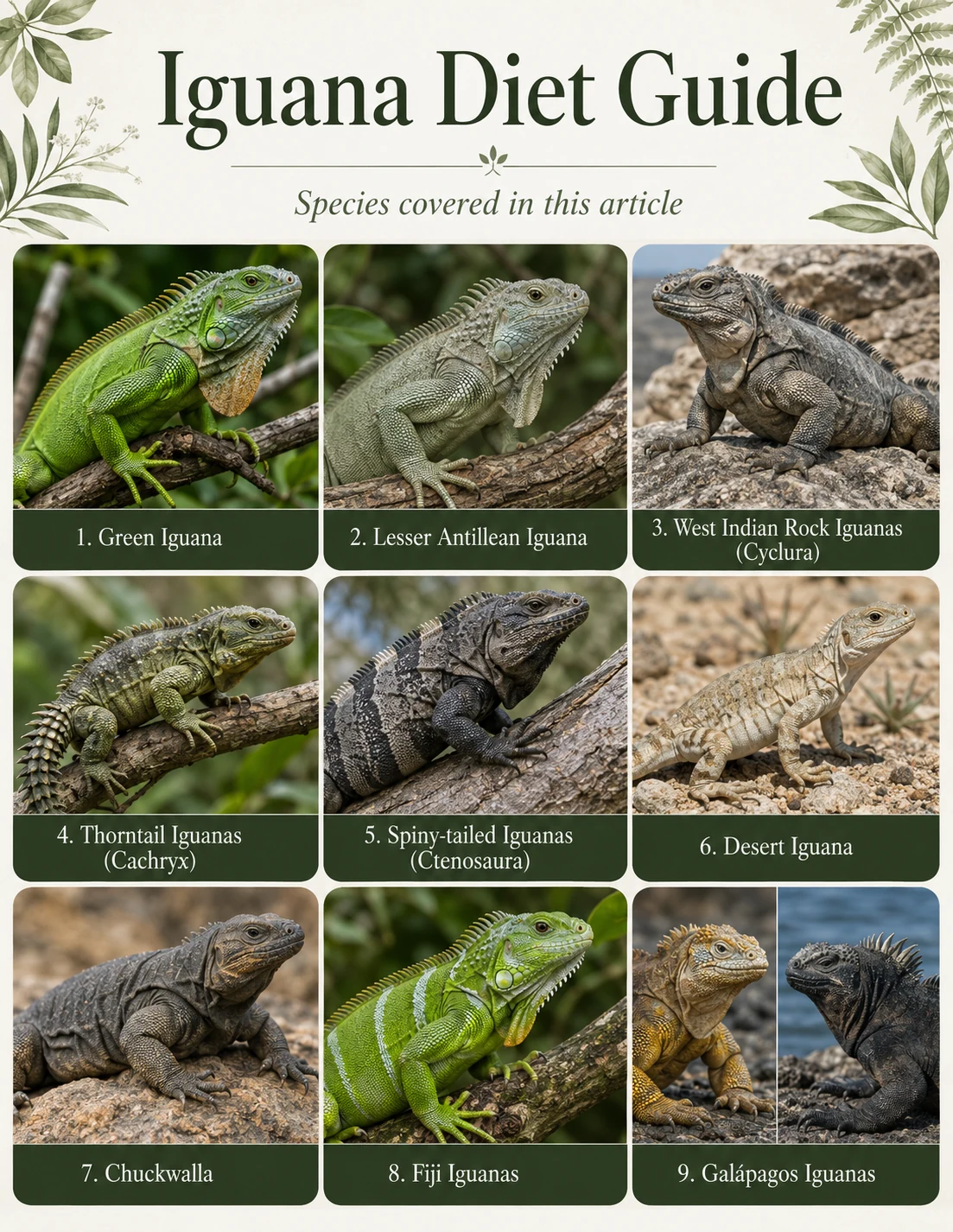
Species-specific nutrition for the major iguanid groups maintained in captivity, with emphasis on natural feeding ecology, hindgut fermentation, life-stage differences, browse and produce selection, calcium and UVB physiology, hydration, body-condition monitoring, and safe long-term feeding.
Diet Overview
There is no single diet that should be applied indiscriminately to every lizard called an “iguana.” Most members of the true iguana family are strongly plant-eating lizards, but the proportion of leaves, flowers, fruit, and animal food varies among genera and sometimes changes dramatically with age. The most important example is the contrast between the green iguana, which is herbivorous throughout life, and several spiny-tailed iguanas in the genus Ctenosaura, whose young may consume large quantities of insects before becoming increasingly herbivorous as they mature.
Successful captive nutrition therefore begins with correct species identification. It then requires an appropriate thermal environment, access to biologically useful ultraviolet B radiation, suitable hydration, sufficient dietary fiber, an appropriate calcium-to-phosphorus balance, controlled energy intake, and enough dietary variety to reduce selective feeding and chronic nutrient imbalance.
Exact nutrient requirements have not been experimentally established for every iguanid species. The recommendations below combine veterinary reptile medicine, controlled nutrition studies, natural-history research, and zoological husbandry protocols. When evidence is specific to one genus or species, that limitation is stated rather than extrapolated to all iguanas.
Which Lizards Are True Iguanas?
Common names can be misleading. This page focuses on members of the family Iguanidae. Current IUCN Iguana Specialist Group taxonomy recognizes several distinct iguanid lineages, and those lineages should not be assumed to share one captive diet.
- Green and Lesser Antillean iguanas: Iguana iguana and Iguana delicatissima.
- West Indian rock iguanas: Cyclura species, including rhinoceros, Cuban, Jamaican, Ricord's, Turks and Caicos, and Grand Cayman blue iguanas.
- Thorntail iguanas: Cachryx alfredschmidti and Cachryx defensor. These Yucatán-lineage iguanas were historically placed in Ctenosaura but are now recognized separately.
- Spiny-tailed iguanas: Ctenosaura species, especially C. pectinata and C. similis for which ontogenetic diet data are available.
- Desert iguanas: Dipsosaurus; this guide emphasizes the commonly referenced D. dorsalis.
- Chuckwallas: Sauromalus species.
- Fiji iguanas: Brachylophus species.
- Galápagos iguanas: land iguanas (Conolophus) and the highly specialized marine iguana (Amblyrhynchus cristatus).
Herbivory, Fiber, and Hindgut Fermentation
Large herbivorous iguanids are not merely lizards that happen to eat salad. Their digestive systems are adapted to extract nutrients and energy from fibrous plant material. Green iguanas possess an enlarged, compartmentalized hindgut in which microorganisms ferment plant cell walls and produce volatile fatty acids that the lizard can absorb and use for energy. Similar hindgut specialization occurs in rock iguanas and other herbivorous iguanids.
This biology has several practical consequences:
- Fiber is physiologically important. A diet dominated by fruit, soft low-fiber produce, or energy-dense commercial foods does not resemble the feeding ecology of most adult iguanids.
- Heat and digestion are inseparable. Fermentation, gastrointestinal transit, appetite, and nutrient utilization depend on the animal reaching appropriate body temperatures. A nutritionally good diet can fail in an inadequately heated enclosure.
- Young green iguanas do not need insects. They remain herbivorous while meeting their greater growth requirements by selecting relatively nutrient-rich plant material and processing food more rapidly.
- Young Ctenosaura are different. In C. pectinata, the smallest juveniles studied in the wild obtained most of their food volume from insects and later shifted toward plant material. This is a genuine ontogenetic dietary strategy and should not be confused with the biology of Iguana iguana.
- Microbial communities matter. Neonatal green iguanas naturally acquire fermentative microorganisms through contact with older animals and their fecal material. Deliberately feeding feces to pet iguanas is not recommended because parasites and pathogens can also be transmitted; any microbial manipulation belongs in a controlled veterinary or zoological protocol.
Building a Plant-Based Iguana Diet
For a primarily herbivorous iguana, the long-term diet should be designed around leafy plant material and browse, with flowers and other vegetables supplying variety and with fruit kept controlled. The precise balance varies with species, age, reproductive status, body condition, whether a nutritionally complete formulated feed is used, and the availability of safe browse.
Core principles
- Use several plant species at each feeding. Rotation is safer than relying on one “best” green.
- Make leaves and browse the nutritional foundation. This better reflects the fiber and feeding behavior of most herbivorous iguanids than a fruit-heavy or root-vegetable-heavy diet.
- Use flowers as foods, not merely decoration. Many iguanids naturally consume flowers, which can provide moisture and nutrients while encouraging normal foraging behavior.
- Keep fruit subordinate. For green iguanas and most rock iguanas, a practical target is approximately 0–5% of the long-term diet unless a species-specific zoo protocol indicates otherwise.
- Do not add animal protein simply to “increase protein.” Growing green and rock iguanas can obtain required protein from appropriate plant and formulated diets. Animal prey has a specific role in juvenile Ctenosaura, not in every young iguana.
- Chop to the animal, not to a fixed recipe. Juveniles benefit from finely chopped mixtures that reduce selective feeding. Large adults can receive coarser pieces and whole or attached browse that encourage natural tearing and foraging.
Greens, Browse, Vegetables, Flowers, and Fruit
Leafy greens suitable for regular rotation
- collard greens
- mustard greens
- turnip greens
- dandelion greens
- escarole
- endive
- watercress
- romaine and other dark leaf lettuces
- kale as part of a varied rotation
- bok choy as part of a varied rotation
No single leafy vegetable should dominate the diet for months at a time. Kale, bok choy, broccoli, and related vegetables are not “poisonous” foods; the problem is excessive reliance on any narrow set of ingredients. Likewise, spinach, Swiss chard, and beet greens need not be treated as toxins, but their relatively high oxalate content makes them poor choices for primary calcium-bearing staples.
Browse and edible flowers
Safe browse adds fiber, behavioral enrichment, and dietary diversity. Commonly used options include pesticide-free mulberry leaves, hibiscus leaves and flowers, grape leaves, dandelion plants and flowers, nasturtium, and spineless prickly-pear cactus pads. Only feed plants that are positively identified as non-toxic and that have not been exposed to pesticides, herbicides, systemic insecticides, roadside contaminants, or fertilizer residues.
Other vegetables
- squash and zucchini;
- green beans;
- okra;
- bell pepper;
- small amounts of carrot;
- sweet potato in moderation;
- broccoli and related vegetables in rotation;
- spineless cactus pads.
Fruit
Fruit is highly palatable and easily overfed. Papaya, mango, berries, melon, pear, fig, apple, and similar fruits may be used in small quantities. For green iguanas and most adult Cyclura, fruit should generally remain a minor portion of the diet rather than the main calorie source. Wild fruit can be much more fibrous and less sugar-dense than cultivated supermarket fruit, so “fruit is natural” does not justify a captive diet dominated by grapes, banana, melon, or other sweet produce.
Commercial Herbivore Diets
Commercial herbivore foods can be useful, but there is no single pellet rule that is appropriate for every iguanid. The 2025 Merck Veterinary Manual gives general guidance for herbivorous reptiles and allows formulated herbivore foods as part of a complete ration. Species-specific managed-care sources are more restrictive in some iguanas: the 2023 EAZA guideline for the Lesser Antillean iguana discourages routine commercial iguana/herbivore pellets, whereas the IUCN/SSC West Indian Iguana Husbandry Manual documents successful Cyclura programs that have incorporated analyzed, nutritionally complete formulated feeds.
These recommendations are not contradictory once the level of evidence is separated. A generic herbivorous-reptile feeding table should be used as background nutrition guidance; species-specific natural history and managed-care evidence should determine whether a commercial ration is appropriate for the individual iguana.
For privately kept green iguanas, fresh leafy plants, safe browse, and edible flowers should remain prominent because they provide fiber, moisture, texture, and normal foraging opportunities. If a formulated feed is used, verify its ingredient and nutrient profile and use it to replace an appropriate portion of the ration rather than simply adding calories to an already adequate diet. Calcium and vitamin supplementation must then be adjusted for nutrients already supplied by the formulated food.
Calcium, Vitamins, and UVB
Calcium nutrition cannot be separated from vitamin D physiology, UVB exposure, temperature, kidney function, reproductive state, and overall diet. Green iguanas are particularly vulnerable to nutritional secondary hyperparathyroidism when calcium supply and vitamin D physiology are inadequate.
UVB and natural sunlight
- Provide an appropriately strong, high-quality reptile UVB source whenever the animal is maintained indoors.
- Measure and manage the usable basking zone rather than relying only on the brand name or wattage of a lamp.
- Follow the manufacturer's tested distance and replacement recommendations and provide a gradient so the iguana can move away from intense UV exposure.
- Glass and most ordinary clear plastics block biologically useful UVB and should not be placed between the lamp or sun and the animal.
- When climate, security, and temperature permit, access to unfiltered natural sunlight is highly valuable. Research in iguanian lizards, including Fiji iguanas, has shown substantially better vitamin D status with natural sunlight than with some artificial-lighting systems.
Calcium supplementation
There is no evidence-based dusting schedule that fits every iguana species, life stage, and ration. Supplementation should be based on the total calcium and phosphorus supplied by the diet, UVB effectiveness, species, age, growth rate, reproductive status, and whether a nutritionally complete fortified food is used. The 2023 EAZA guideline for Iguana delicatissima uses a light calcium-carbonate dusting about once or twice weekly under its specified husbandry conditions, but that schedule should not be treated as a universal iguana prescription. Rapidly growing animals, egg-producing females, animals recovering from nutritional bone disease, and animals eating limited or imbalanced diets may need a different veterinary plan. When a complete formulated feed supplies a substantial part of the ration, calculate supplementation from the total diet rather than automatically dusting every meal.
Multivitamins and vitamin D
More supplementation is not automatically safer. Vitamin D intoxication and soft-tissue mineralization have been documented in green iguanas. High-dose oral vitamin D should not be used as a substitute for proper UVB without a veterinary indication. Likewise, a multivitamin should be used conservatively and in the context of the total diet.
Species-Specific Diet and Feeding Directions
| Group | Natural feeding pattern | Captive emphasis | Animal foods |
|---|---|---|---|
| Green iguana Iguana iguana |
Herbivorous throughout life; leaves dominate, with flowers and fruit varying seasonally. | Leafy greens and browse, vegetables and flowers, very limited fruit; adequate fiber and UVB. | Not a routine dietary requirement, including in juveniles. |
| Lesser Antillean iguana I. delicatissima |
Primarily plant-eating West Indian iguana; arboreal populations use foliage and seasonal plant foods. | High-quality browse and leafy plant material with carefully formulated zoological nutrition. | Not routinely emphasized. |
| Rock iguanas Cyclura spp. |
Generalist herbivores eating leaves, stems, flowers, and fruit; small amounts of animal matter occur naturally. | High-fiber plant diet, browse, greens, flowers, controlled fruit, with complete herbivore feed where appropriate. | Opportunistic and minor; generally not needed as a routine adult food. |
| Thorntail iguanas Cachryx spp. | Plant-dominant based on limited field evidence. C. defensor is reported eating flowers, leaves, and tender shoots, with insects potentially taken; fecal evidence for C. alfredschmidti has been dominated by leaves. | Diverse leafy plants, browse, and flowers; cautious, evidence-limited use of invertebrates rather than a fixed insect percentage. | Possible opportunistic component, but an insect-dominated juvenile phase has not been demonstrated. |
| Spiny-tailed iguanas Ctenosaura spp. |
Species-dependent. C. pectinata and C. similis show a marked juvenile-to-adult shift toward herbivory. | Plant foods from an early age; juvenile animal prey may be nutritionally important in species known to undergo the shift. | Potentially substantial in small juveniles of some species, then progressively reduced. |
| Desert iguana Dipsosaurus dorsalis |
More than 90% vegetation in field studies; leaves, buds, flowers, and seeds. | High-fiber greens, desert-appropriate browse and flowers, cactus, strong heat and UVB; fruit minimal. | Occasional in nature; not a routine captive need. |
| Chuckwallas Sauromalus spp. |
Herbivorous; leaves, flowers, and fruit from annual and perennial desert plants. | Fiber-rich greens, browse, edible flowers, cactus, restrained calorie density. | Incidental rather than a dietary goal. |
| Fiji iguanas Brachylophus spp. |
Primarily leaves, flowers, and fruit; rare insects. | Arboreal browse, leaves and flowers, controlled fruit, excellent UVB or safe natural sunlight. | Rare and not usually necessary as a routine ration component. |
Green Iguana — Iguana iguana
Green iguanas are herbivorous throughout life. This point is important because older husbandry literature often advised feeding animal protein to juveniles. Controlled and field studies instead show that hatchlings and juveniles meet their higher growth requirements by selecting plant foods with greater available protein and by processing food more rapidly than adults.
For home feeding, use a varied mixture in which leafy greens and safe browse clearly make up the majority, with other vegetables and edible flowers providing additional diversity. Cultivated fruit should remain a small adjunct—generally about 5–10% or less of the overall fresh ration—rather than a major calorie source. Exact proportions should be adjusted to the total nutrient profile, body condition, growth, and the variety of browse available.
Portion size should be adjusted to activity, body condition, reproductive status, and whether a complete formulated diet is included. Obesity should be addressed by reducing energy density and excess fruit or pellets rather than by eliminating fibrous greens and browse.
- Frequency: Hatchlings and growing juveniles: feed daily. Healthy adults may be fed daily or every other day according to body condition, activity, reproductive status, and caloric density; fibrous browse can remain available more continuously.
- When: Offer the main meal in the morning or early part of the light cycle after the iguana has begun basking and is approaching its normal active temperature. Avoid placing a large fresh meal just before nighttime cooling.
- Where: Use a stable elevated shelf or feeding platform that matches this arboreal species' normal behavior and keeps food away from substrate and fecal contamination. In group housing, use multiple separated stations so dominant animals cannot monopolize food.
- How: Mix finely chopped leafy foods for juveniles so selective eating is difficult; adults can receive a coarser mix plus whole or clipped browse and edible flowers to encourage natural tearing and plucking. Remove wilted fresh food later the same day.
Lesser Antillean Iguana — Iguana delicatissima
This endangered Caribbean species is primarily maintained in coordinated conservation programs rather than as a routine companion animal. The 2023 EAZA Best Practice Guidelines provide unusually detailed species-specific feeding guidance and should take priority over generic green-iguana recipes when caring for I. delicatissima.
Dietary variety is the central principle. EAZA recommends that dark leafy greens and herbs form the year-round base, with seasonal expansion to safe browse, meadow herbs, weeds, and flowers. One of the most successful breeding programs described in the guideline uses summer cuttings containing roughly 50 species of herbs and weeds. Small amounts of vegetables and fruit can be incorporated seasonally, but they should not displace the diverse leafy plant base; during the winter management period described by EAZA, fruit is largely avoided.
The EAZA guideline specifically advises using plants in the cabbage family (Brassicaceae) sparingly or avoiding them in this species because some institutions have associated heavy use with intestinal gas, impaction, or torsion. This is a species/program-specific precaution and should not be converted into a universal claim that brassica greens are toxic to all iguanas.
Animal protein should not be offered routinely. EAZA also discourages commercial iguana/herbivore pellets as a large or constant component for this species; a small amount may be used temporarily when necessary, but the long-term ration should remain based on diverse food plants.
With effective UVB, supplementation should be conservative. EAZA suggests a light dusting of calcium carbonate about once or twice weekly, with adjustment when food-plant quality is limited or reproductive demands are increased, and recommends avoiding high vitamin D3 supplementation when adequate UVB is supplied. Because these are conservation animals, studbook or EEP protocols, reproductive status, measured body condition, and institution-specific veterinary nutrition plans should take precedence over generalized pet feeding formulas.
- Frequency: Feed hatchlings, juveniles, and adults daily under the EAZA managed-care approach, adjusting the amount to growth, season, body condition, and reproduction.
- When: Feed during the morning/daylight active period after normal warming and basking have started, leaving several hours of appropriate heat and UVB exposure for post-feeding digestion.
- Where: Use elevated branch-mounted trays especially for juveniles or cautious animals; adults accustomed to lower feeding may also use secure high-sided dishes. Provide multiple stations in group enclosures.
- How: Roughly chop and thoroughly mix a diverse selection of greens, herbs, browse, weeds, and flowers so favored items cannot be selected alone. Clip whole browse into the enclosure for additional foraging.
West Indian Rock Iguanas — Cyclura Species
Rock iguanas are primarily herbivorous generalists with gastrointestinal anatomy adapted for plant fermentation. Their natural diets include leaves, stems, flowers, fruit, and seasonal browse from many plant species. Animal matter—such as insects, land crabs, carrion, or other small items—has been documented, but usually represents a small and opportunistic fraction of the total diet.
In captivity, emphasize fibrous plant material and browse rather than trying to reproduce every unusual food item observed in the wild. A good long-term plan uses dark leafy greens, safe browse such as mulberry and hibiscus, edible flowers, squash and other vegetables, and a small controlled fruit fraction. Some managed programs successfully incorporate analyzed, nutritionally complete herbivore feeds; if used, they should replace part of the ration rather than simply add calories.
Do not interpret occasional wild carnivory as a need for routine mice, eggs, meat, or large insect meals. The IUCN/SSC husbandry manual emphasizes predominantly plant-based feeding. Although some institutions have occasionally offered insects to hatchlings, the manual notes that there is no indication that wild hatchling or juvenile Cyclura require the pronounced insect-rich diet documented in Ctenosaura pectinata.
The IUCN/SSC manual also provides useful dry-matter formulation targets for managed Cyclura: approximately 17–26% protein for growing animals and 12–17% for maintenance adults; about 3% fat; 6–10% crude fiber; 13–18% acid-detergent fiber; 1.0% calcium and 0.8% phosphorus for growth; and 0.6% calcium and 0.5% phosphorus for maintenance. These values are targets for a complete ration on a dry-matter basis—not percentages of supplement powder to add to a salad—and they should be interpreted with the rest of the manual and the animal's clinical response.
Rhinoceros iguanas, Cuban iguanas, Jamaican iguanas, Ricord's iguanas, Turks and Caicos iguanas, and Grand Cayman blue iguanas can share this broad nutritional framework, but conservation programs may use species- and institution-specific diets based on local browse, growth targets, season, reproductive management, and measured body condition.
- Frequency: Offer a measured plant ration daily; managed collections commonly feed seven days per week, with quantities adjusted to size, season, body condition, and reproductive demands.
- When: Present food after morning warming has begun and during the principal daylight activity period, not immediately before the enclosure cools for the night.
- Where: Use a sturdy dish or low raised platform for each animal, positioned above sand or other ingestible substrate. Use more than one station and visual separation when social competition is possible.
- How: Chop food more finely for hatchlings and juveniles and more coarsely for adults. Secure browse in clips or holders so animals can pull and tear leaves. If a complete formulated herbivore feed is used, count it as part of the ration rather than an added snack.
Thorntail Iguanas — Cachryx Species
Current taxonomy separates the Yucatán thorntail lineage from Ctenosaura. The IUCN SSC Iguana Specialist Group recognizes two species, the Campeche thorntail iguana (Cachryx alfredschmidti) and Yucatán thorntail iguana (Cachryx defensor). Older husbandry pages may still list these animals as “club-tailed” or spiny-tailed Ctenosaura.
The nutrition evidence is much thinner than it is for green iguanas or Ctenosaura pectinata. A 2022 natural-history review of C. defensor describes consumption of flowers, leaves, and tender shoots and notes that insects may also contribute animal protein. Earlier field work based on fecal samples found C. defensor to be predominantly leaf-eating. Published observations of C. alfredschmidti likewise support a strongly plant-based diet, with leaf remains prominent in fecal material and occasional arthropod consumption considered plausible.
Do not automatically use the juvenile feeding pattern of Ctenosaura pectinata for Cachryx. At present there is no comparable evidence demonstrating an insect-dominated hatchling phase in either thorntail species. A conservative captive approach is therefore a diverse plant-dominant ration emphasizing leaves, safe browse, tender shoots, and flowers. Small, nutritionally prepared invertebrates may be used cautiously when supported by the individual animal's history, established breeding-program practice, or reptile-veterinary guidance, but a fixed percentage such as “40% insects” is not evidence based.
Because both thorntail species are uncommon and conservation-sensitive and their formal nutrient requirements have not been established, serial weight, growth, fecal quality, body condition, reproductive status, and the exact feeding record are especially important. Husbandry decisions should be species-specific rather than extrapolated from the much larger green iguana or from other Ctenosaura.
- Frequency: Because validated schedules are lacking, offer a fresh plant-dominant ration daily while animals are active, especially during growth, and adjust quantity from serial weight, body condition, fecal output, and established breeding-program practice.
- When: Feed during the daylight active period after the animal has warmed sufficiently for normal activity and digestion.
- Where: Use a secure raised or branch-adjacent feeding site as well as clipped browse, reflecting the climbing and perch use documented in these small thorntail iguanas while keeping food away from loose substrate.
- How: Offer mixed leaves, tender shoots, browse, and flowers in a shallow dish and as attached whole plant material. If invertebrates are used, offer measured amounts in a controlled cup or by forceps so intake is known rather than releasing large numbers into the enclosure.
Spiny-Tailed Iguanas — Ctenosaura Species
The genus Ctenosaura should not be given a single green-iguana feeding rule. Research in the Mexican spiny-tailed iguana, Ctenosaura pectinata, demonstrated a true ontogenetic diet shift: insects accounted for 86.5% of the food volume in the smallest juveniles studied, while insects were rare in adult diets. Juveniles also assimilated nutrients and energy from insect prey especially efficiently, whereas older animals made better use of fibrous plant foods.
A similar broad shift is reported in black spiny-tailed iguanas, C. similis. For these species, plant foods should be offered from the beginning, but young animals can also receive an appropriate insect component. As the lizard grows, the ration should progressively move toward leaves, flowers, browse, and vegetables, with adult feeding becoming overwhelmingly plant-based.
Because species within Ctenosaura differ and formal captive nutrient requirements are not established, a fixed rule such as “70% insects until six months old” is not scientifically justified. Use the known natural history of the exact species, growth rate, fecal quality, body condition, and veterinary assessment to determine how rapidly the animal-protein component should decline.
When insects are used, choose appropriately sized, well-fed feeder insects rather than vertebrate prey. Gut-load calcium-poor feeders and dust them as appropriate to the total calcium/UVB plan. Very fatty larvae should be occasional foods rather than staples.
- Frequency: Offer plant foods daily from the beginning. For species with a documented insect-rich juvenile phase, provide measured invertebrate meals regularly during growth and progressively reduce them as plant intake and herbivorous digestion increase. Healthy adults can be managed primarily on plant rations, with meal quantity and frequency adjusted to body condition.
- When: Feed after the lizard has warmed and become active, usually in the morning to early daytime portion of the light cycle. Insects should be offered while the animal is alert and able to hunt normally.
- Where: Place plant food in a stable low or moderately raised dish near the normal basking/refuge area but off loose substrate. Offer insects in an escape-resistant feeder cup or by forceps when practical to limit accidental substrate ingestion and allow intake to be measured.
- How: Keep a mixed plant ration available as the nutritional transition proceeds. Use appropriately sized, gut-loaded captive-reared insects for juveniles of species known to use animal prey; avoid vertebrate prey and avoid imposing a fixed insect percentage or age cutoff across the genus.
Desert Iguana — Dipsosaurus dorsalis
Desert iguanas are primarily folivorous herbivores. Field studies report that vegetation contributes more than 90% of the diet, with leaves, buds, flowers, and seeds making up the major food categories and insects contributing little overall volume.
Captive feeding should therefore emphasize fiber-rich greens, edible flowers, appropriate desert browse, and spineless cactus rather than routine insects. Yellow flowers are especially attractive in the wild, but color preference should be used to diversify healthy plant foods rather than to encourage sugary treats.
This species' unusually high preferred activity temperatures make correct thermal husbandry particularly important for digestion. A cool desert iguana with an excellent salad can still fail nutritionally because normal gut function is temperature dependent.
- Frequency: During the active season, growing animals should receive fresh plant food daily; adults may be offered food daily or every other day according to body condition and actual intake. Seasonal appetite changes should be interpreted with temperature and photoperiod.
- When: Feed once the enclosure has reached the species' high daytime operating temperatures—generally after morning warm-up and through the first half of the active period—so fermentation and digestion occur under appropriate thermal conditions.
- Where: Use a low clean tile, shallow dish, or feeding platform near the normal basking/foraging zone and above sand or other loose substrate. Flowers and safe browse can also be clipped to low branches or shrubs.
- How: Offer a varied high-fiber plant mix with flowers, greens, desert-appropriate browse, and spineless cactus. Present some whole leaves or flowers to encourage natural plucking, and remove produce before it desiccates or spoils in the hot enclosure.
Chuckwallas — Sauromalus Species
Chuckwallas are specialized desert herbivores that consume annual and perennial plants, especially leaves and flowers, with fruit varying seasonally. Their wild diet is relatively fibrous and not energy dense.
In captivity, build the ration around leafy greens, safe browse, edible flowers, and cactus pads. Fruit should be limited and insects are not necessary as a routine food. Because chuckwallas can thrive in harsh environments by using water contained in plants, keep produce fresh and moisture-rich while still providing clean drinking water. Seasonal reductions in appetite should be interpreted in conjunction with temperature, photoperiod, health, and reproductive status rather than automatically countered with high-calorie foods.
- Frequency: Offer juveniles fresh plant food daily. Healthy adults may be fed daily or every other day depending on body condition, season, activity, and intake; do not counter a normal seasonal appetite reduction simply by adding calorie-dense foods.
- When: Feed in the morning after basking has begun, when chuckwallas are entering their normal daytime foraging period and will retain adequate heat for digestion.
- Where: Use a low feeding platform, rock ledge, or shallow dish near the basking and retreat complex while keeping food off sand or gravel. Clip browse and flowers where the animal can reach them from normal climbing surfaces.
- How: Provide fibrous greens, browse, edible flowers, and cactus as both mixed food and larger pieces that require tearing. Keep fruit minimal and replace wilted plant material promptly.
Fiji Iguanas — Brachylophus Species
Fiji iguanas are arboreal, primarily herbivorous lizards that forage on leaves, flowers, and fruit; insects are eaten rarely. Most are conservation-sensitive species and some are subject to strict international trade controls, so this information is most applicable to zoological and legally managed captive populations.
Use leaves and flowers as the dietary foundation, with fruit controlled so that sweet cultivated fruit does not displace fibrous plant material. Because studies in Fiji iguanas have demonstrated lower vitamin D status under some artificial UVB systems compared with natural sunlight, lighting quality deserves special attention in indoor breeding colonies.
- Frequency: Offer fresh plant foods daily, with portions adjusted to age, growth, body condition, reproduction, and the amount of browse consumed.
- When: Feed during the morning/daylight period after warming and normal arboreal activity have begun, leaving ample time under appropriate heat and UVB for digestion.
- Where: Use elevated branch-mounted feeding stations rather than relying on floor bowls. In group housing, provide multiple visually separated elevated sites.
- How: Clip whole leafy browse and flowers to branches so animals can pluck naturally, supplemented with a mixed plant dish and controlled amounts of fruit. Remove soft fruit and other perishable foods promptly in warm, humid conditions.
Marine and Galápagos Land Iguanas — Specialized Non-Pet Species
Marine iguanas (Amblyrhynchus cristatus) are specialized algal herbivores with digestive physiology adapted to marine algae and should never be managed with a generic green-iguana salad. Galápagos land iguanas (Conolophus species) are also specialized conservation animals with diets tied to their island ecology, including fibrous terrestrial vegetation and cactus. These species are included here to emphasize zoological diversity, not to provide private-keeping instructions.
- Frequency: Follow the species-specific conservation institution's feeding and foraging protocol; there is no responsible generic schedule for these highly specialized non-pet iguanas.
- When: Time feeding or managed foraging to the species' natural activity, thermoregulatory, and seasonal cycle under professional zoological management.
- Where: Provide food in an environment that reproduces the relevant natural foraging context—marine algal access for marine iguanas or terrestrial/cactus-based foraging opportunities for land iguanas—rather than a generic bowl-feeding setup.
- How: Use conservation-program diets developed for the exact species and institution. Do not substitute a green-iguana salad or extrapolate companion-animal feeding methods.
Life Stage, Growth, and Reproduction
Hatchlings and juveniles
Growing iguanas have greater nutrient and energy demands per unit body mass than adults. Green iguanas meet these demands while remaining herbivorous, so their plant diet should be finely chopped, varied, and rich in nutrient-dense leaves and flowers. Juvenile Ctenosaura pectinata and C. similis are a major exception because animal prey can be an important natural component during early growth. The same evidence should not be assumed for Cachryx; published thorntail data are too limited to justify an insect-dominated juvenile formula.
Adults
Adult herbivorous iguanids generally require less energy per unit body mass than rapidly growing juveniles. Continue to provide substantial food volume through fibrous greens and browse while controlling fruit, high-energy pellets, and other calorie-dense items. Large adult rock iguanas and green iguanas can become overweight when a captive diet is too energy dense and opportunities for movement are limited.
Egg-producing females
Reproductive females require careful management of calcium, UVB exposure, hydration, body condition, and energy intake. Simply adding large quantities of calcium or vitamin D is not a substitute for a balanced ration and effective UVB. Anorexia, repeated digging, abdominal enlargement, weakness, or prolonged straining in an adult female warrants prompt evaluation for reproductive disease as well as nutritional assessment.
Water, Humidity, and Hydration
Fresh drinking water should be available to captive iguanas even when the species obtains substantial moisture from food in nature. Bowls should be large and stable enough for the individual animal, easy to disinfect, and changed whenever contaminated.
Humidity requirements differ greatly among iguanids. A green or Fiji iguana should not be maintained at the same humidity as a desert iguana or chuckwalla. Hydration therefore has to be managed through both drinking water and species-appropriate environmental humidity. Chronic dehydration can contribute to abnormal urates and may compound renal or urinary disease.
Routine forced soaking is not a substitute for proper environmental management. Therapeutic soaking may be useful in selected veterinary situations, but a healthy animal should be provided with a husbandry system that permits normal drinking and hydration behavior.
Foods and Practices to Avoid or Limit
- Routine animal protein for green iguanas: do not feed crickets, mealworms, eggs, meat, mice, dog food, cat food, or other animal-protein foods as a normal part of the diet.
- Applying the green-iguana rule to juvenile Ctenosaura: the documented ontogenetic insect-to-plant shift in some spiny-tailed iguanas is real and should be respected.
- Applying the Ctenosaura pectinata juvenile rule to Cachryx: thorntail iguanas are now a separate genus, and an insect-dominated juvenile phase has not been demonstrated for them.
- Fruit-heavy diets: sweet cultivated fruit can displace fiber, calcium-rich plant material, and appropriate micronutrients.
- Iceberg lettuce as a staple: it is mostly water and has poor nutrient density compared with darker greens.
- High-oxalate greens as major staples: spinach, Swiss chard, and beet greens are better used sparingly within a broad rotation.
- Unidentified browse or garden plants: “natural” does not mean safe. Avoid plants exposed to pesticides, herbicides, snail bait, systemic insecticides, or roadside contamination.
- Excess supplementation: chronic high-dose calcium, vitamin D, or multivitamin use can create toxicity or nutrient imbalance.
- Gravel or grit for digestion: iguanas do not require grit to process plant food, and ingested gravel can contribute to gastrointestinal obstruction.
- Feeding feces to establish gut flora: although coprophagy has a natural role in neonatal green iguanas, deliberate fecal inoculation in pets can transmit parasites and pathogens.
- Leaving fresh produce to spoil: remove wilted, moldy, fecally contaminated, or insect-infested food promptly and wash food dishes routinely.
Weight and Body-Condition Monitoring
Nutrition should be adjusted from the animal's response, not only from a recipe. Record body weight regularly using the same scale and similar timing relative to meals and defecation. For growing animals, also track snout-to-vent length when practical. Zoological iguana programs commonly use serial body weight and morphometric measurements to evaluate growth and health.
Concerning trends include failure of a juvenile to grow, persistent weight loss, rapid adult weight gain, loss of limb or tail-base muscle, abnormal fat accumulation, prolonged anorexia, reduced fecal output, weakness, tremors, swollen or pliable jaw bones, limb deformity, fractures, or repeated abnormal urates.
Selected References
- Merck Veterinary Manual. Nutrition in Lizards. Full review September 2025. Current professional overview of lizard feeding categories, herbivorous hindgut fermentation, plant-based diets, and nutritional management.
- Merck Veterinary Manual. Nutrition in Reptiles. Current general reference for reptile nutrient balance, calcium, vitamin D, and formulated-diet principles. Generic herbivore targets are treated in this guide as background rather than species-specific iguana requirements.
- Lemm JM, Lung N, Ward AM. Husbandry Manual for West Indian Iguanas. IUCN/SSC Iguana Specialist Group; San Diego Zoo Institute for Conservation Research and Fort Worth Zoo. Detailed Cyclura nutrition, nutrient targets, sample diets, UVB, health, and reproductive management.
- IUCN SSC Iguana Specialist Group. Iguana Taxonomy. Current specialist-group taxonomy, including recognition of Cachryx separately from Ctenosaura.
- IUCN SSC Iguana Specialist Group. Common Green Iguana (Iguana iguana). Current species account and natural-history summary.
- Goetz M, Schmidt J, Weissenbacher A. EAZA Best Practice Guidelines for the Lesser Antillean Iguana (Iguana delicatissima). 1st ed. European Association of Zoos and Aquaria; 2023. Species-specific diet, browse, supplementation, UVB, water, and managed breeding guidance.
- Troyer K. Diet selection and digestion in Iguana iguana: the importance of age and nutrient requirements. Oecologia. 1984;61:201-207. Controlled evidence that green iguanas remain herbivorous through growth while changing plant selection and digestive strategy.
- Troyer K. Structure and function of the digestive tract of a herbivorous lizard Iguana iguana. Physiological Zoology. 1984;57:1-8.
- Troyer K. Transfer of fermentative microbes between generations in a herbivorous lizard. Science. 1982;216:540-542.
- Baer DJ, Oftedal OT, Rumpler WV, Ullrey DE. Dietary fiber influences nutrient utilization, growth and dry matter intake of green iguanas (Iguana iguana). Journal of Nutrition. 1997;127:1501-1507.
- Malone CL, Reynoso VH, Buckley L. Never judge an iguana by its spines: systematics of the Yucatan spiny-tailed iguana, Ctenosaura defensor. Molecular Phylogenetics and Evolution. 2017;115:27-39. Phylogenetic basis for recognition of the Yucatán lineage as Cachryx.
- Monter-Pozos A, Hernández-Hernández JC, Nahuat-Cervera PE, Avilés-Novelo JR. La iguana Chopito (Cachryx defensor), endémica de la provincia biótica de la península de Yucatán. Bioagrociencias. 2022;15(1):77-84. Review of taxonomy, habitat, plant-dominant diet, and possible insect use.
- Morales-Mávil JE, Bello-Sánchez EA, Corona-López CR. Distribution and Natural History of the Campeche Spiny-Tailed Iguanas (Ctenosaura alfredschmidti; now Cachryx alfredschmidti). Herpetological Conservation and Biology. 2016;11(Monograph 6):168-176.
- Durtsche RD. Ontogenetic plasticity of food habits in the Mexican spiny-tailed iguana, Ctenosaura pectinata. Oecologia. 2000;124:185-195.
- Durtsche RD. Ontogenetic variation in digestion by the herbivorous lizard Ctenosaura pectinata. Physiological and Biochemical Zoology. 2004;77:459-470.
- García-Rosales A, et al. Natural history of the black iguana Ctenosaura similis in Isla Contoy, Quintana Roo, Mexico. 2020. Field evidence for age-related dietary change.
- University of Florida IFAS Extension. History, Status, Impacts, and Management of Invasive Black Spiny-tailed Iguanas (Ctenosaura similis) on Gasparilla Island, Florida. Current university natural-history summary.
- Smithsonian's National Zoo and Conservation Biology Institute. Grand Cayman Blue Iguana. Natural feeding ecology and zoological diet.
- Smithsonian's National Zoo and Conservation Biology Institute. Fiji Banded Iguana. Natural history, diet, and conservation.
- Laing CJ, Trube A, Shea GM, Fraser DR. The requirement for natural sunlight to prevent vitamin D deficiency in iguanian lizards. Journal of Zoo and Wildlife Medicine. 2001;32:342-348.
- Animal Diversity Web. Desert Iguana (Dipsosaurus dorsalis) and Northern Chuckwalla (Sauromalus ater). Natural-history summaries and documented food habits.
- Arizona-Sonora Desert Museum. Desert Iguana. Natural history, thermobiology, and feeding ecology.
- Galapagos Conservation Trust. Marine Iguana and Santa Fe Land Iguana. Conservation-oriented natural-history summaries illustrating highly specialized algal and cactus-centered diets.
- Divers SJ, Stahl SJ, eds. Mader's Reptile and Amphibian Medicine and Surgery. 3rd ed. Elsevier; 2019. Clinical principles of reptile nutrition, metabolic bone disease, and husbandry.